

For many years, when Nigerian movie producers wanted to make a film, the choice of location often came down to Lagos, Enugu or other major cities. But somewhere along the line, another city quietly became one of the busiest production centres in Nollywood. That city is Asaba, the capital of Delta State.
Today, the name Asaba is almost impossible to separate from the Nigerian movie industry. Actors travel there for jobs, producers assemble their casts and crews there, filmmakers rent houses and hotels for productions there, and entire businesses have grown around the steady flow of movie projects. The city has become particularly important to the production of indigenous-language films, including many Igbo-language movies, while also serving as a location for English-language Nollywood productions.
But what exactly makes Asaba so attractive to movie producers?
The answer is not just one thing. It is a combination of affordability, accessibility, available locations, accommodation, local talent, a welcoming environment, established industry networks and the sheer speed at which productions can be completed. In other words, Asaba has become a filmmaking destination because it makes the business of making movies easier. Perhaps the biggest reason producers choose Asaba is simple: Money. Movie production is an expensive business, and Nigerian filmmakers have always had to find ways of stretching limited budgets. Every day spent on location means money spent on accommodation, feeding, transportation, equipment, crew salaries and location fees.
Asaba developed a reputation for allowing producers to control many of these expenses better than they could in more expensive production environments. A producer shooting a relatively low-budget movie does not necessarily need a luxury production facility. What the producer needs is a suitable house, hotel, road, office, village setting or other location, accommodation for the cast and crew, reliable local workers and enough space to complete the shoot. Asaba has traditionally offered many of these things at comparatively lower costs. .
Another major attraction is the availability of locations. A movie producer does not need only a beautiful location. The producer needs different kinds of locations. One story may require a mansion. Another may need a modest family house. Another may require a hotel, hospital, police station, office, school, village environment, market or roadside setting. Asaba and its surrounding communities provide a wide variety of environments that can be adapted for different stories.
This has helped create what researchers describe as the “Nollywood house scene”—a production model in which ordinary residential properties become important filmmaking assets. The relationship between filmmakers and property owners has itself developed into a small business. A house that might ordinarily be just somebody’s home can become the residence of a fictional billionaire for five days. A compound can become a traditional palace. A hotel can become a corporate headquarters or a character’s home.
There is another advantage that is easy to overlook. Once a city has hosted thousands of productions, *the city itself becomes part of the production infrastructure. People know filmmakers. Hotels understand the needs of film crews. Location managers know where to find particular types of houses. Drivers know where productions usually operate. Makeup artists know producers. Costume designers know actors. Caterers understand set schedules. Young people looking for work know where auditions and productions are happening. This is one of the reasons established production centres tend to attract even more productions.
A producer arriving in a city where nobody understands the film business has to build everything from scratch. In Asaba, much of the ecosystem is already there. UNESCO now describes Asaba as a major centre of film production and notes that the city is home to many film producers and actors. The organisation also says the city estimates its population of film professionals and actors at around 100,000. That gives producers access to a large pool of people who already understand the demands of production. Asaba has also developed a reputation as a place where new actors can find opportunities.
This is particularly important for the kind of fast-paced productions that have historically defined the Asaba film market. A producer does not always need to fly in an established star for every role. There are actors in Asaba and neighbouring communities who are willing and available to work. Actors from places such as Ogwashi-Uku, Okpanam and Agbor have increasingly gravitated towards Asaba in search of opportunities, according to actress Chidimma Unamba, who described affordability, accessibility, cultural richness and access to local talent as some of the reasons producers favour the city.
Speed is another major reason Asaba works for many producers. The traditional Asaba production model has often been built around relatively short shooting schedules and rapid production cycles. This is different from the increasingly elaborate cinema productions that can spend weeks or months in preparation and production. Many Asaba productions operate within a different commercial logic.
The producer needs to make the film, complete post-production and get it into the market as quickly as possible. That means the entire production ecosystem has evolved around speed. Actors may work on several productions within a short period. Location managers can move from one project to another. Crew members can work continuously. Hotels can accommodate successive film crews. This high-volume model is one of Asaba’s greatest strengths—and also one of its most frequently criticized characteristics. Filmmaking is not only about Cameras and Actors.
When a production arrives in a city, sometimes dozens of people need somewhere to sleep. That means accommodation becomes a significant part of the production budget. Asaba’s hotel industry has consequently benefited enormously from filmmaking. This creates a cycle.
Producers come because hotels are available and affordable. Hotels benefit from producers. More producers hear that the city is convenient. More productions arrive. And the ecosystem becomes stronger. Asaba Is Accessible. Geography also matters. Asaba sits on the western bank of the River Niger, directly opposite Onitsha in Anambra State. That location gives it an important connection to the South-East and its huge commercial and cultural market. For filmmakers producing stories targeted at audiences in the East, Asaba provides a practical bridge between Delta State and the wider eastern Nigerian market. The city is also well connected by road to several parts of the country, making it easier for actors, producers, equipment and crew members to move in and out. That accessibility is important because transportation is one of the hidden costs of filmmaking. The fewer logistical obstacles a producer faces, the easier it becomes to complete a project.
The People Are Used To Filmmakers. There is also the human factor. A film crew can disrupt an ordinary neighbourhood. There may be cameras on the street, actors moving around, vehicles parked outside houses, lights shining into compounds and people gathering around to watch.
In some cities, this can create serious problems for filmmakers. Asaba developed a reputation for being more receptive to movie productions. Producer Chinyere Nwabueze specifically contrasted Asaba’s reception with the difficulties producers had experienced in Enugu, saying people in Asaba were more welcoming to filmmakers. That matters. A producer wants to know that a location can be secured without unnecessary confrontation. The smoother the relationship between the film crew and the community, the faster production can move. Security and the general atmosphere of a city also influence production decisions. A filmmaker needs to move actors and equipment around without constantly worrying about disruptions.
In interviews over the years, filmmakers and industry stakeholders have repeatedly cited Asaba’s relatively peaceful environment as one of its advantages. Veteran actor Jerry Amilo, speaking about his experience in Asaba, said the affordability and security of the city contributed to its attractiveness to filmmakers. He also described how producers, marketers and actors gradually relocated to the city as its film industry expanded.
For a producer working with a tight budget, an environment where production can proceed with fewer disruptions can make a significant difference. Government Support Helped. Asaba’s rise was not entirely driven by private filmmakers.
Successive Delta State administrations recognised that the entertainment industry could contribute to employment, tourism and the state’s economy. Former Commissioner Richard Mofe-Damijo described the government’s support for Nollywood activities in the state and linked the growth of filmmaking to increased hotel patronage and employment.
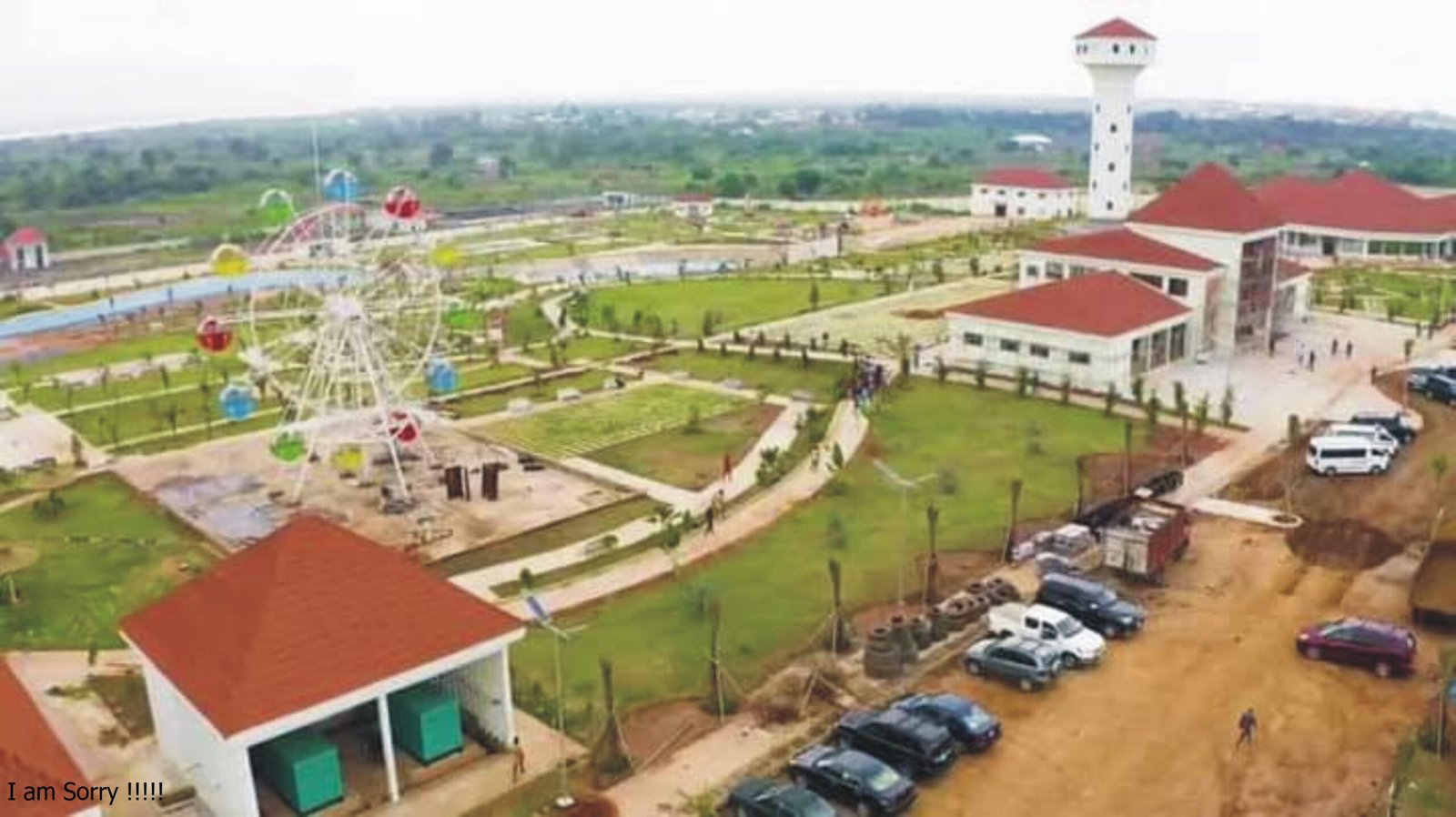
That relationship eventually produced something even more ambitious: the construction of the Asaba Film Village. The Delta State Government awarded a multi-billion-naira contract for the Film Village and Leisure Park, with the idea of creating dedicated infrastructure for an industry that had already established itself in the city.
In other words, government did not invent Asaba as a filmmaking centre. It recognised an industry that was already there and attempted to build infrastructure around it.

The Film Village Could Make Asaba Even More Attractive
The construction of the Film Village could potentially strengthen all the advantages that already attracted filmmakers to Asaba. Instead of producers relying entirely on privately owned houses and hotels, a dedicated filmmaking facility can provide purpose-built spaces and services. The planned Film Village includes studios, editing facilities, workshops, guest accommodation, hostels, shooting huts and other facilities designed around film production. If these facilities are fully utilised, they could reduce some of the logistical challenges producers face when moving around the city.
By Emmanuel Daniji
