

-
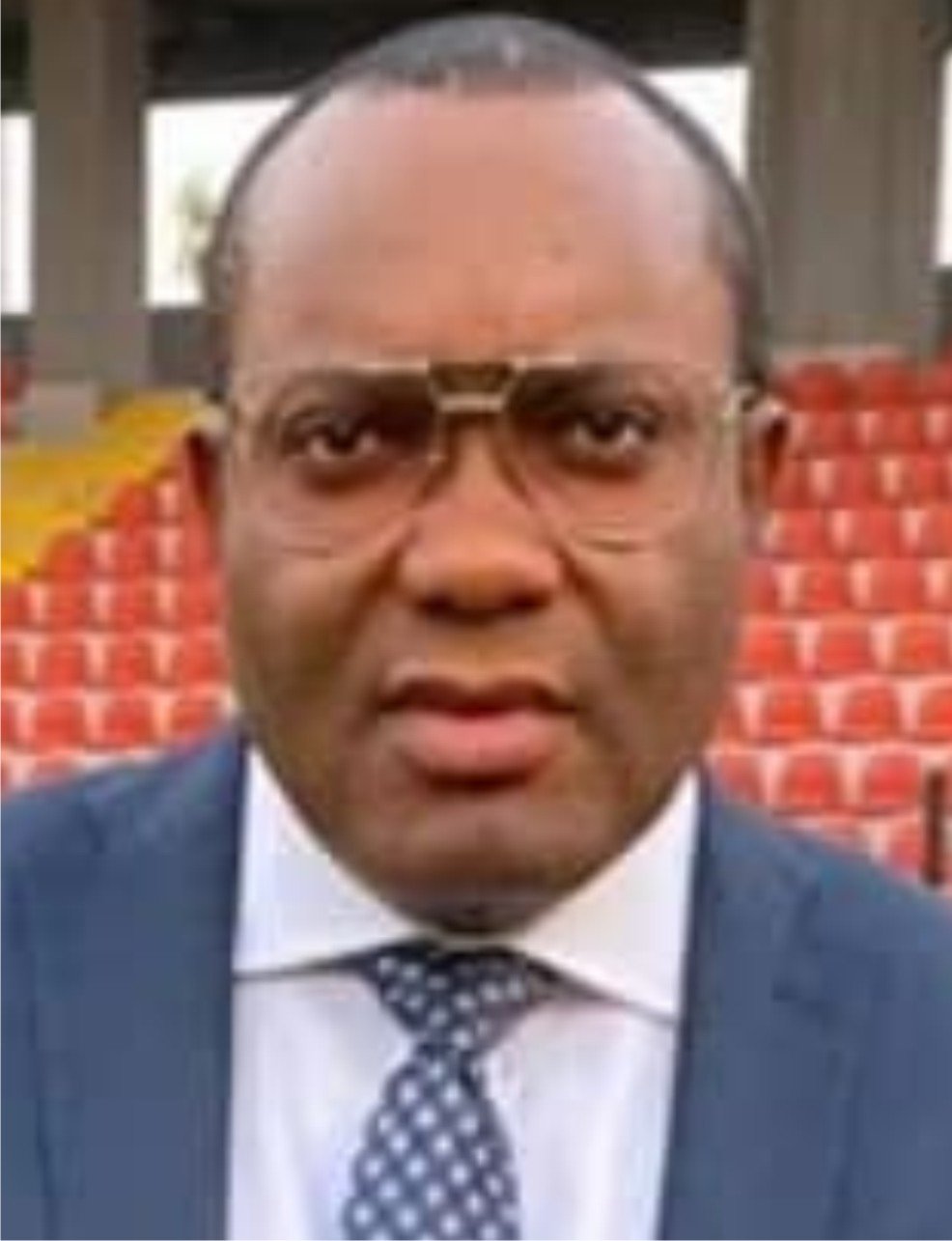
FIFA Contractor, Monimichelle
FIFA-certified contractor and sporting facilities developer, Monimichelle, has opened up on the long-running controversy surrounding the abandoned Ogorodudu (commonly mispronounced as Oborodou) football project in Delta State, explaining in detail why he has taken the Nigeria Football Federation (NFF) and former President Amaju Pinnick to court over alleged unpaid contract fees and what he describes as years of deceit, misrepresentation, and deliberate sabotage.
The dispute began the very moment construction commenced at the riverside site chosen by the NFF. According to Monimichelle, the project location “terminated less than one meter to a river without shoreline protection,” a situation he immediately flagged to Amaju Pinnick. Rather than address the issue, he was instructed to move the project “100 meters towards land,” which pushed the work into a massive heap of sand sloping at 25 percent. To construct properly, he first had to cut the land down by 2.7 metres across more than five hectares.
He moved all his heavy equipment, dozers, payloaders, concrete mixers, to Burundu at his own cost because he intended to deliver the FIFA-supported facility within record time. After months of cutting down the sand and reaching foundation level, the complications deepened. The NFF had earlier given him PATH Foundation drawings, but six months later the consultant returned and, shockingly, instructed him to redesign everything into a full raft foundation, including rafting the fence, without any adjustment to the bill of quantity.
The new drawings were handed to him “on a piece of paper.” He wrote officially to the NFF to raise the issue, but “everybody kept quiet.” Still, he continued working because he said Pinnick assured him that FIFA and even oil giant Chevron would support the project with floodlights, scoreboards and other amenities, promises he now describes as pure deception.
When the controversy started gaining traction, the NFF allegedly stopped funding the work. That forced FIFA officials to take a closer look. Monimichele recounts how two FIFA representatives travelled to Warri with him and former Super Eagles coach, Augustine Eguavoen. They then rode in his private boat, a double 200 horsepower engine vessel, through rough waters to the remote Burundu site. According to him, “the FIFA guys were almost crying because of the sea,” and immediately insisted the project must be completed because they finally saw the real situation on ground, which was completely different from what the NFF had been reporting to them.
A second FIFA visit occurred later in Abuja, where Monimichele presented all construction materials he intended to use, from stabilizing infill to finishing systems. He told them clearly that his company would not deliver a substandard rubber field under any circumstances.
From that point, however, the project became completely stuck. The NFF, according to him, stopped releasing funds three years ago and began issuing “different gimmicks” after he had spent huge sums and deployed massive resources. Despite the abandonment, he says the facility is already 70 percent complete.
Today, he is constructing stadiums elsewhere: in Zamfara, where he is building a 1,000-capacity community stadium for less than a million dollars, and reworking the Mostar Stadium pitch, proof, he says, that he is capable of finishing the Burundu/Ogorodudu project if the NFF pays what they owe.
He insists that the decision to move the project to Ogorodudu was driven purely by “greed, selfishness, and lack of interest in football development.” At the time, there was nowhere to play football in Warri, yet the NFF chose a remote, water-locked location “300 nautical miles” away. He claims Pinnick wanted proximity to Chevron for personal contract opportunities, and that a video exists of community leader Ayeri warning Pinnick that the sandy terrain would cost far more than the approved budget.
He revealed that he had to carry out land reclamation and deal with flooding, tasks not included in the original contract, under constant assurances from Pinnick that “he is FIFA” and that the project would be funded. Now, he says, his heavy equipment has been rotting on site for three years, including dozers, excavators, and concrete mixers.
The NFF, according to him, owes $700,000 on the project, while having fully paid a contractor in Kebbi for another FIFA-related work. He is demanding that the NFF put the funds on the table and allow the EFCC to witness it. If they do, he vows to complete the project in under two months to the highest standard.
He also disclosed that the drawings issued to him were never approved by the Delta State Ministry of Housing, calling them “totally wrong drawings” that he plans to present before the court.
On why he took the matter to court, Monimichelle says: “You can’t just sit down and write a letter terminating Monimichele’s contract. There are procedures. There must be arbitration. I won’t allow them hide their fraudulent activities.”
He insists he will pursue the case to the end, not only to reclaim his money but to expose what he describes as deep-seated corruption in the glasshouse.
Despite the controversy, he remains passionate about the Niger Delta. His company’s headquarters sits in Igboe, and he says he has refused to relocate to Lagos or Abuja because “anything concerning the Niger Delta, I take extremely serious.”
Today, while still battling in court, he maintains that he will never allow the project to be swept under the carpet: “I have a name to protect. I will stand and fight until we finish that project.”
NFF’S RESPONSE
At the time of this publication, Monimichelle maintains that the NFF has not provided any satisfactory response to his allegations or the unpaid balance. Their last major communication was the unilateral termination of his contract, the very action he is now challenging in court. The federation has not publicly released a detailed explanation addressing the claims, the alleged wrong drawings, the abandoned equipment, or the stoppage of funds.
For now, the matter sits before the courts, while the stadium, 70 percent complete, remains in limbo.
By Benprince Ezeh
08068599879
