

-
Regardless Of His Political Party
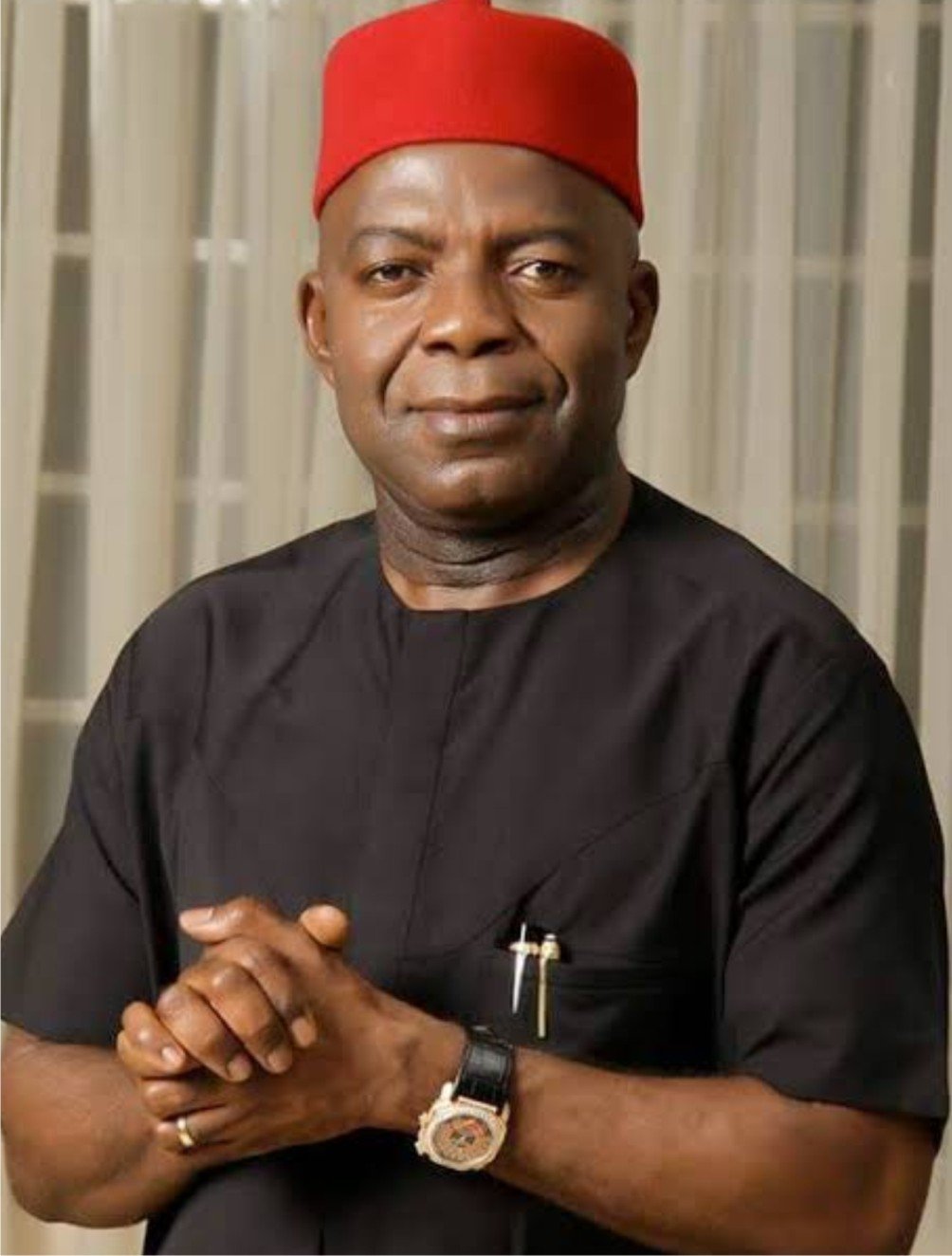
Across the political landscape of Nigeria, very few leaders have been able to build the kind of bond that exists today between Governor Alex Otti and the people of Abia State. What is unfolding in Abia is not merely routine political loyalty. It is a deep emotional, practical, and performance based connection that has made many citizens say openly and confidently that they will vote for Alex Otti at any time and under any political platform. For them, the party label is secondary. What truly matters is the man himself, his record of work, and the new sense of dignity he has brought to governance.
When Alex Otti contested and eventually became governor of Abia State, many residents had already grown weary of repeated promises from politicians who came into office and did little to justify the trust of the electorate. Years of decay in infrastructure, unpaid salaries, abandoned projects, and poor leadership had left the people disillusioned. Then came Otti, a technocrat turned politician, who spoke less about politics as a game and more about governance as service. Since assuming office, he has continuously emphasised that the true mandate of leadership is not to enrich oneself or play endless political calculations but to deliver concrete results that improve the lives of ordinary people. According to him, “Leadership is not about noise. It is about service, sacrifice, and the courage to do what is right for the people who trusted you with their mandate.”
From the beginning of his administration, Alex Otti placed emphasis on roads, healthcare, sanitation, education, security, and the revival of urban centres that had been left to rot. Today, across several parts of Abia State, especially in Aba and Umuahia, citizens point to visible construction work, completed projects, and ongoing upgrades. Roads that had become symbols of government neglect are being reconstructed and reopened for use. This renewed accessibility has affected trade, transportation, and daily living in ways that people feel directly. Commercial tricycles, buses, traders, and shop owners continue to express relief that journeys that previously took hours because of bad roads now take minutes.
A trader in Aba summed up the mood when she said, “Before now we suffered on these roads. Customers could not even reach our shops. Today I can proudly say that a governor has remembered us. Whether he is in Labour Party or any other party, we will vote for him because we are seeing the work with our eyes.” A transporter in Umuahia said, “This is the first time I am seeing continuous work on roads without stories. Alex Otti does not talk too much. He just works. Even if he stands without any party logo, Abians will still support him.”
Healthcare has also been one of the strong areas where Otti’s administration has made its mark. Several neglected health facilities have been revived, rehabilitated, and equipped. Primary healthcare centres in rural communities that once had only empty buildings are now seeing renewed activity. Many parents talk about how easier it has become to access maternal care and immunisation services without travelling long distances. The government has also focused on upgrading major hospitals, thereby restoring public confidence in local healthcare and reducing the pressure of medical travel outside the state. A nurse in one of the refurbished centres remarked, “This is the first administration that came here and did not only promise but actually changed the condition of this hospital. We now have equipment, drugs, and better buildings. For us, this is real governance.”
Workers and pensioners have become strong voices of support for Alex Otti as well. For years, the backlog of unpaid salaries and pensions had been a painful wound in Abia. Retired workers narrated stories of hardship, illnesses, and even deaths linked to the nonpayment of their legitimate entitlements. Otti’s approach to clearing arrears and restoring regular monthly payments has turned many former critics into passionate supporters.
A retired teacher said, “We had lost hope. Nobody remembered us. When Otti came in and started paying us, I cried the first day my pension alert came. Any election he is in, I will vote for him, no matter the party.” Civil servants describe his administration as disciplined, organised, and financially responsible. People feel that there is finally a governor who understands that government must fulfill its basic obligations before engaging in grand political rhetoric.
Beyond infrastructure and salaries, the general tone of governance in Abia has changed. The state has seen a cleaner environment, new waste management systems, and urban renewal projects, especially in Aba which is regarded as the commercial heartbeat of the southeast. Traders in Ariaria International Market and other major commercial centres often remark that the city is beginning to regain its reputation as a centre of production and entrepreneurship. Entrepreneurs, artisans, shoemakers, textile workers, and small-scale manufacturers increasingly believe that they operate in a state where government policies encourage growth rather than hinder it.
One young shoemaker said, “I can now invite customers to come and see my workshop without shame. Before now, dirt and bad roads drove people away. This government is changing Aba and we must support him.”
An important factor behind the strong loyalty Otti enjoys is his political consistency. At different times rumours circulated that he was planning to leave the Labour Party and join other political parties. In response, Otti firmly rejected the story, making it clear that he had not decamped and had no intention of abandoning the platform under which he became governor. He stated clearly, “I have not decamped and I have no intention of decamping. Nobody will decapitate me politically. I remain where the people elected me from and I remain focused on my work.” This choice to remain where he is has earned him respect even among opponents. In a political climate where defections are common and often driven by personal ambition, his refusal to move has made people see him as a man of conviction.
Alex Otti has also openly discussed his future in politics and has repeatedly stated that he does not intend to remain in politics forever. According to him, he has no desire to occupy political offices endlessly. He has explained on several occasions that once he completes his second term as governor, he plans to retire from politics and return to private life. In his words, “When I finish my second term as governor, I will retire from politics. I am not interested in going to the Senate or chasing another office. My mission is to fix Abia and then go and rest.” For many residents this statement carries weight because it contrasts with the behaviour of some leaders who continue trying to occupy public offices for decades. To supporters, this retirement plan suggests that he is not driven by desperation for power but by a genuine desire to achieve specific developmental goals and leave a legacy.
In markets, churches, town halls, schools, motor parks, and online platforms, the voices of Abians continue to rise in support of their governor. People talk about how approachable he seems when speaking publicly, how he explains policies in simple language, and how he acknowledges both challenges and achievements. A student in Umuahia described him this way, “He talks like someone who actually reads and plans. He is not abusing people all the time. He tells us what he wants to do and then he goes and does it. That is why youths like him.” Some say what attracts them most is that he does not boast unnecessarily but prefers to allow his work to speak. Others emphasise his background in banking and economics, arguing that it gives him the competence to manage the state’s finances prudently.
The political environment in Abia is also heating up ahead of the 2027 elections, and one name that often arises in conversations around Alex Otti is that of Orji Uzor Kalu, former governor and current senator. Otti has been very clear in expressing his position regarding Kalu and the coming contest. His statement that he would support the Labour Party candidate in 2027 to defeat Orji Uzor Kalu was made directly in response to the former governor’s declaration that he would ensure Abia becomes an APC state. Reacting to that claim, Otti said, “Anyone saying he will turn Abia into an APC state is free to talk, but the real power is with the people. In 2027 I will support the Labour Party candidate to defeat Orji Uzor Kalu because Abians will choose their future for themselves.” By linking his comment to Kalu’s earlier boast, he made it clear that his stance was both political and ideological, anchored on defending the mandate he believes Abians freely gave.
He has further explained that the way to truly counter such political claims is not with insults but with performance. According to him, “The best answer to noise is good governance. If you work for the people, they will stand with you when the time comes.” This strong stance has attracted attention nationwide and has energised Labour Party supporters in Abia North.
Remarkably, despite these firm political statements, Otti continues to insist that his primary focus remains governance rather than political battles. Many observers believe this philosophy is the key reason he has retained broad popularity across political and social categories. Traditional rulers, community leaders, professionals, students, traders, and transport workers frequently state that they would vote for Alex Otti irrespective of whether he remains in Labour Party or moves to another party. A community leader said, “We are not following party. We are following performance. If Otti runs as independent today, Abians will still vote for him.” Another elderly man expressed, “We have seen many governments here. This one is different. This one is working. That is why we will vote for him again and again.”
There is also a psychological element. Abians feel proud again. For years, the state was often discussed only in negative terms regarding poor infrastructure and financial mismanagement. Today, conversations about Abia are increasingly positive, with visitors noting improvements and residents defending their state confidently. This renewed sense of pride is closely tied to the current administration. When people associate hope and progress with a particular leader, party affiliation naturally becomes secondary.
Today, Abia State stands at a crossroads of transformation. The roads being rehabilitated, the healthcare centres being revived, the cities being cleaned, and salaries being paid have combined to shape a political identity built around performance rather than party loyalty. This is why more and more citizens declare that if Alex Otti contests for office under any platform, they will support him because they are not simply voting for a party. They are voting for a record, for a style of leadership, and for a vision of what their state is becoming. Governor Alex Otti’s tenure has brought a sense of renewal and responsibility to governance, and as long as this continues, the people of Abia are likely to stand firmly with him. To them, he is not just a politician. He is the symbol of a new era in their state, and that is why many confidently believe and say that Abians will always vote for Governor Alex Otti regardless of his political party.
By Benprince Ezeh
08068599879
