

-
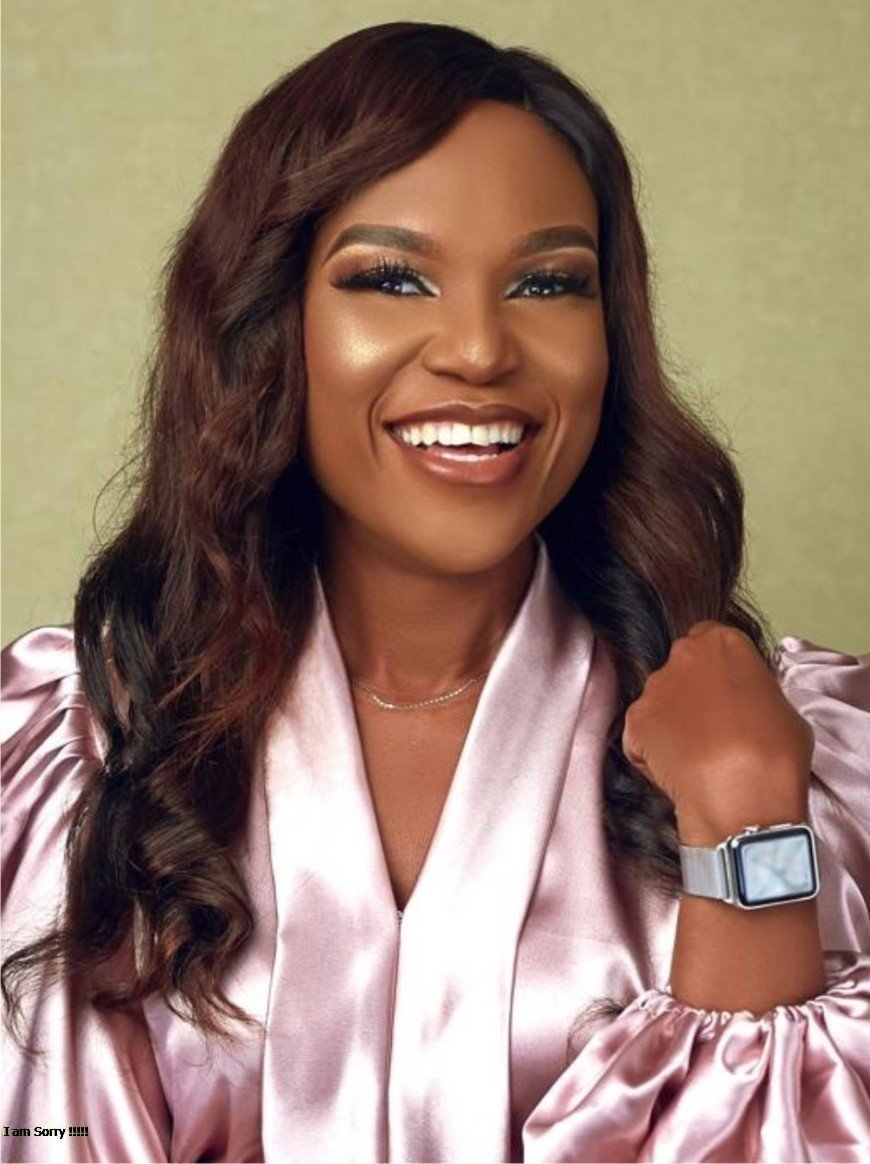
Public Health Physician, Dr. SIMISOLA ALABI
The issue of Menopause has become a BIG one among women, because very many women suffer it. Even young ladies now get into Menopause from an early age, from when they are into their 40s and 50s.
Interestingly, many women don’t know much about Menopause. And there is a lot of misconception about it.
A few days ago, City People’s Publisher SEYE KEHINDE and PROMISE BABATUNDE spent quality time with DR. SIMISOLA ALABI, an expert on these health issue and she explained why women should not worry too much about it. And that it is an issue that can be managed.
Dr. Simisola Alabi is a leading Public Health Physician in Lagos. And she consults for so many women who are going through that experience.
Below are excerpts of the interview.
Not many women are aware about what Menopause is. That is why we are here to speak with you about it.
I think it’s a very important topic today, and there’s not much talk in Nigeria about it.Thank you very much for asking for this and showing interest in it. I’m particularly impressed because you’re a male. And in this part, I don’t often get many men interested in this situation with women. So we’re talking about Menopause and the transition. It’s what I call a Transition.
It’s not a one off event, it’s a transition that happens, we’ve got perimenopause, which is from the early 40s, mid 40s, all the way to the mid 50s and beyond. So it’s a life transition, and there is not much around it in Nigeria. Because I believe people just feel well, you have your children, so what are you complaining about? And women have for a long time just worn it, and say let me just bear it eventually it will pass. And there’s been a lot of suffering. It’s a transition. And that transition should be managed and cared for, the same way you transition from not having periods to having periods. And you have support. It’s the same way that should happen at the other end as well.
So it’s more cultural, different reasons why we don’t have people talking about it. It’s a mix of a socio-cultural context, that’s what I’ll say.
And how long does it take?
So it varies, for me, my role as a primary care physician with a special interest in women’s health. So any woman who’s having perimenopausal symptoms between the ages of 40 and 44, I consider that early. Right? You are going into menopause early.
Because Menopause is when you’ve not had periods for 12 months. So it’s not a one-off. So this perimenopause can go on from the 40s into the 50s. So 40 to 44 is a bit early. 45 and onwards is what you would expect, with an average of about 51, when the periods then stop.
Right? So when a woman is 45, 46, 47, and she says, I haven’t had periods for six months, or it’s irregular, I won’t even do a blood test. Because I know what it is. It’s more around, what do we need to manage it? What symptoms are manifesting for you? Because the symptoms could be very mild and very minimal to being very severe.
So our role as medics, as clinicians, as nurses, doctors, is to say, how is it affecting you? And what kind of support do we need to offer you as you go through this life stage?
Some are also advocating that women have to be prepared for it all.
Absolutely. And they must be extremely informed.
And what I would like to see is that this is taught in schools. Because we’re all taught about menarche in school. We’re taught about menstrual periods in school. But we’re not taught about menopause. And it has the same impact, if not more, on life. So I think this should be taught. And support should be put in even in workplaces. And there are some workplaces in Lagos that actually support their staff.
So how do you define it? How do you define Menopause?
So I’ll define Menopause as 12 months of no period. That’s the easiest way to talk about it. But the symptoms we’re talking about can go on for years. Which is what we call the perimenopausal symptoms.
So from the minute when the periods are irregular. Okay, I missed it last month. It didn’t happen. Or even if your periods are regular, but maybe you’re having hot flushes. That’s what we call the vasomotor symptoms. Or you have night sweats, hot flushes. Or you’re still having periods. Or it’s a bit irregular. That’s perimenopause.
Or it might be joint pain. It might be that you’re having itchy skin. The symptoms are a lot. I mean, that’s why when I moved back to Nigeria, I wrote a little e-manual on it. And I titled it the Menopause Manual for the Nigerian Woman.
Because actually, it’s a very unique set of circumstances Nigerian women find themselves in. Where things are happening to them, but they’re not sure what it is. And they don’t know where to go. And then when they go somewhere, it’s not really clear. It takes a while to get a diagnosis. Even though I wouldn’t call it a diagnosis because it’s not a disease. It’s a transition, right?
For someone to say, oh, you’re perimenopausal. This is what we can do for you. Or you’re non-menopausal. And this is what we can advise you to do.
I mean, we have very competent clinicians in this country. But it’s just something that is seen as a life stage. You don’t have to do anything about it. But women suffer with symptoms.
So, all you have to do is to manage that transition
There is a wide range of things that can be done. Because the Symptoms are so many. So, as I said before, we have symptoms like hot flushes, night sweats. They can have genitourinary symptoms. So, you can have vaginal dryness. You can have pain, difficulty with urine. You can have urinary tract infections. Then you can have mood changes. You can have a woman who is depressed. Or very, very angry.
And I heard that back in the day, before I was born, women were put in mental health homes when they were going through the change because some of them would have depressive symptoms or anxiety. So, they’ll say, I don’t recognize myself. I’m a different person. This was not how I was before.
And I’ve seen many of those in Lagos, where women come and they’re like, I’m definitely a different person. Their husbands will be like, I don’t know who this woman is. It’s a different person.
You can have symptoms that have to do with the skin. You can have symptoms of hair loss. You can have weight gain. Basically, everything from top to toe can be affected. Sleep is a big one. Many women can’t really sleep very well. Their sleep is completely disrupted.
So, what we offer is symptom-based, holistic management. For one woman, it’s very individualized. It’s very personalized. It’s not like every woman has the same treatment. You know, different women have different treatments. You can’t, it’s not a one-size-fits-all.
So, would you also say that the changes that women go through in this part of the world are also similar to what happens abroad?
It is similar. The difference is recognizing it early and the support offered. So, for every woman, your hormone levels start to fluctuate and then they decline. So, you have the estrogen, the progesterone, the testosterone. They start to fluctuate and then slowly peter out.
And in other climates, this has become very big. Women are very supportive because we know that women at this phase are at their most productive. So, women in their 50s, they are CEOs, they are VPs, they are women who are in government. That’s the age where you need to be sharp. And that’s the age when this happens. And some women have even said, “I’m going to leave work. I can’t cope.”
So, we know that this is the most productive time of life. This is a time when that support should be offered. In the West, in the developed world — I don’t really want to say the developed world, we are developed as well — they take it very seriously.
Women have access to all forms of support from CBT, cognitive behavioral therapy, to non-hormonal alternatives, to hormonal alternatives. It’s available. Freely available. In fact, so available to the point where it’s almost free.
So, we need the same level of access for women here. And it might be a journey, but it’s a journey that we have to go on.
I also want to ask about why hormonal health is central to a woman’s well-being.
Yes. I mean, it’s not just women. Even for men. Our hormones control a lot of our well-being.
Hormones regulate our reproductive system for women. Estrogen and progesterone regulate our cycles. For a woman to have a period at different points of the cycle, it goes up and down. It regulates egg production and how the follicles present in the ovaries.
But the same hormones, if they are out of balance or reducing, will also give us other symptoms. But it’s not the only thing that’s central to our well-being. We have other hormones in the body— thyroid stimulating hormone and many others — that keep the body going, both male and female. We thrive on balance.
If you can get this right, women will have improved quality of life. You don’t want to just live; you want to live a life that is great, fun, and enjoyable with your family — not suffering, not being avoided because you’re angry.
Some women have very little symptoms, but many have serious symptoms, and it should be tackled.
When I think back to the time of our parents, the general belief was that this phase happened to women in their 60s. It was made to look like an old person’s issue.
It hasn’t changed. I think our parents sought of appeared older even when they were in their 40s, and 50s. It hasn’t changed, it’s not as if the age of menopause has reduced from 60 to 50s, it’s been that way.
Perimenopause starts in the mid-40s and goes into the 50s. By the time you’re in your 60s, you’re post-menopausal, though symptoms may still persist and can be managed with medication or lifestyle.
I think our parents experienced it but they were taught to “bear it.” You’re a woman, deal with it. You’ve had your babies — what are you looking for again? But now women want to enjoy life. Not just live, but live well. So i dont think they were older, they were less aware and now with science and medicine, we know what it is and what we can do about it.
What role does Birth Control play in Menopause?
Those are two different things. Before talking about birth control, I want to mention premature ovarian insufficiency because some women are under 40 and they experience menopausal symptoms. It’s not menopause, it is what we call premature ovarian insufficiency, but it presents similarly because they lose estrogen and progesterone as well. These women need specialist care. You need to speak to someone who understands perimenopause and menopause, POI (premature ovarian insufficiency) and get help.
Now to your question, birth control is different. You can be on HRT (Hormone Replacement Therapy) and still be on contraception. Birth control or what we call Contraception is when a woman doesn’t want to get pregnant and uses it, just like we have condoms for men and other options to prevent pregnancy, and women can still get pregnant in their 40s — even with irregular periods. We’ve all heard of women who got pregnant and said I wasn’t expecting this, I am 45 and having irregular periods. Even if you are having irregular periods you can still ovulate and get pregnant.
The research we are seeing now is that the quality of the eggs are still good, so you still have a nice normal baby at the end of it, so if a woman is in her late 40s and is experiencing perimenopausal symptoms, or menopausal symptoms, we still give hormone replacement therapy if she meets the crIteria.
But Birth Control has to continue till you are 55, because we know that you can still ovulate up till 55. Perimenopause does not mean pregnancy is impossible.
Does it mean that when you are going through menopause you can also get pregnant?
You can. Yes. So it can be perimenopause. So menopause, by the time you get to a point where you have 12 months of no periods, we say, okay, she’s menopausal.
We wouldn’t expect you to have babies or get pregnant. But because it’s a spectrum, that whole period, when we say it’s the perimenopause, everything around the menopause, you might not have a period for three months or four months or five months. But on the sixth month, you might ovulate and get pregnant.
So you can’t say, because I’ve not had a period for five months, oh, I’m no longer fertile. You can still. So during the perimenopausal period, before you get to that point where you’re 12 months of no cycles, there’s still a possibility of pregnancy.
And somehow, does it change the menopausal behavior of the woman who gets pregnant after pregnancy?
Yes, you will go back to continue perimenopause after pregnancy. So you get pregnant at a time. Obviously, it’s a different kind of care you have if you are 48 and you’re pregnant when you’re 47 or 45. You have to have specialist care, what is known as looking after you properly because of chances of miscarriage, particularly also the man’s sperm quality is also reduced.
So you have different care. But once you’ve had your baby, you’re going back to your perimenopausal journey after that. But during that time, you have the supportive hormones, you have the supportive care to keep that pregnancy viable so that you don’t get miscarriage or you don’t lose that pregnancy.
So what would be your message to women who are reading now in terms of how to handle menopause?
My message is you don’t have to suffer. There’s so much you can do.
The first thing is to be aware of what’s happening to you. I’ll give you a story. When I have my clinics here, women come and say, oh, this, that, and many times they come with their husbands, which I really find very impressive because in the West, I don’t really see women coming with their partners.
In Nigeria, I see more women coming with their husbands. I would have thought it would have been the other way around. And when the men start to complain about the woman and saying, oh, she’s not interested in sex anymore, she’s not doing this, and the woman is there, she rolls her eyes, you can see that she doesn’t know how to articulate the issue to her husband, and the husband does not know what’s happening.
So my message is that both people, if you’re in a relationship or if you’re single, you need to understand what’s happening first, so that knowledge gathering and understanding that. And then you need to find yourself a primary care physician that understands menopause or a gynecologist that understands menopause.
Gynecologists are specialists, and they deal with this, they understand it, so you need to find someone that really understands it.
Menopause or perimenopause is a holistic, it’s a multidisciplinary thing. We have dieticians on board, we have primary care physicians, gynecologists, different people give you the holistic care that you need. So first of all, understand what’s going on.
Then seek help, because most of the care for perimenopause is not even hormonal. Most of it is multidisciplinary. If you have joint pains, if you have arthritis or pain, we deal with that with a physiotherapist. If it’s sort of your weight, a dietician.
So there is so many things you can do. We talk about exercise, very important. We talk about people just being open and honest and being able to have that mental health support. There are so many things that can be done so you don’t have to suffer.
We haven’t talked a lot about testosterone, which is also very important. I mentioned about libido and couples coming and saying she’s no longer interested. Sometimes you correct the estrogen, you correct the progesterone, and the woman still has a low libido. At that time, we find out, we actually know that testosterone may be low.
So we can also replace testosterone as needed. For some women they only need testosterone. Some women will need estrogen, progesterone, and testosterone if we get to that point of hormone replacement.
And if a woman has had a hysterectomy, for instance, you only need estrogen, which does not increase any risk of breast cancer or anything. So just estrogen. If you still have your womb in place, you will need estrogen and progesterone to protect the womb.
For me speaking, it’s not complex because I’ve done it for so long. But for those who are listening, it sounds like a lot. So educate yourself.
Read, get to know about it. I’ve got a manual. Get that on Sella. It’s like $1 or something. You know, read it. Find other platforms to study, and then go and speak to somebody. If you speak to a doctor and they’re like, oh, don’t worry, go to another doctor until you find somebody who understands it and who can support you through it. Because the most productive years of your life is around that time. When you’re at the top of your career, you don’t want something that will derail that.
So my message is that please, please, go and speak to somebody. Get your knowledge first. Speak to somebody. Exercise. And have Compassion on yourself. I think women are also very hard on themselves.
So have Compassion on yourself. Self-care, self-love is so important, is what I would say. But find the knowledge, find the right clinician, and then care for yourself is what I would say.
