

-
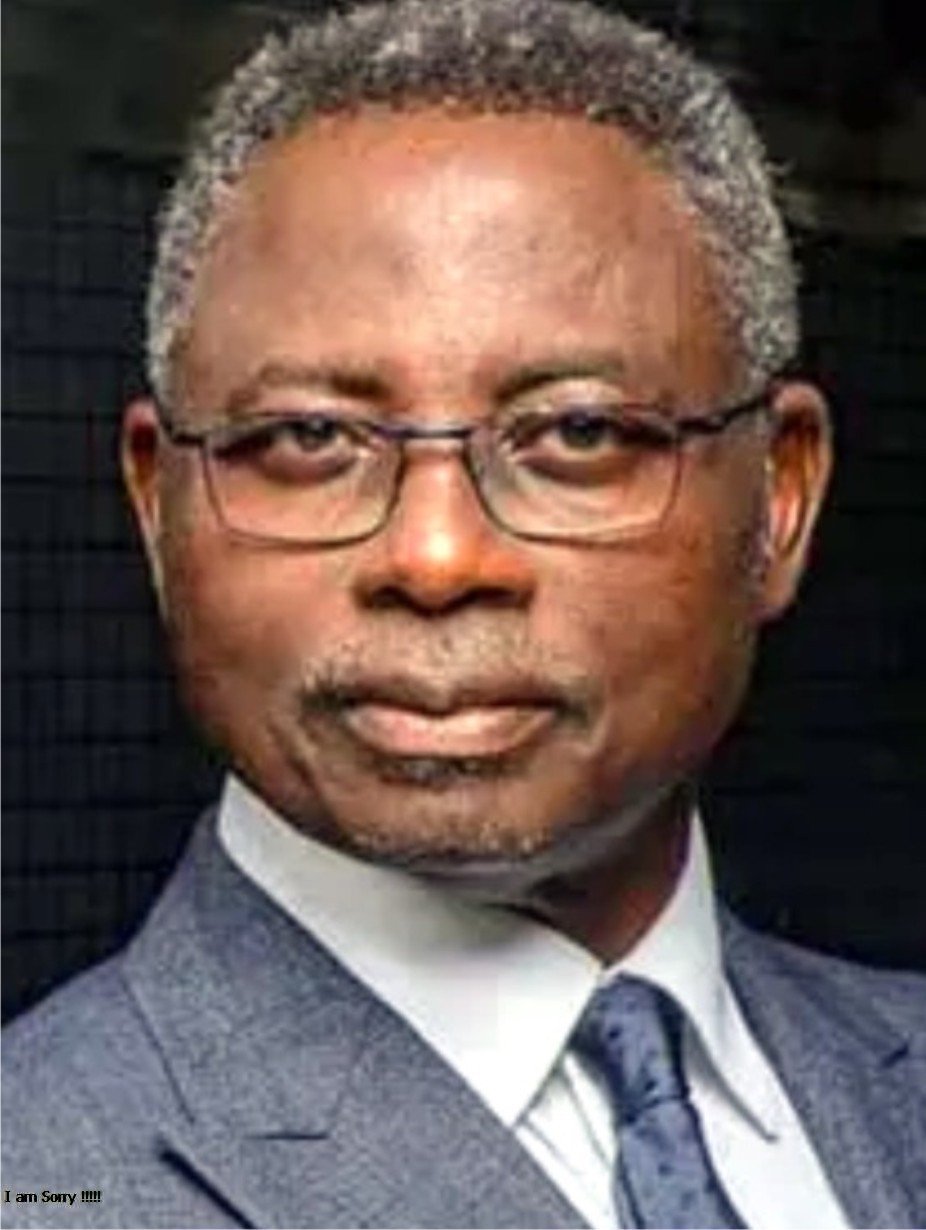
Pastor MATTEW ASHIMOLOWO Explains
Pastor Matthew Ashimolowo is not a politician. And he does not dabble into Politics. But he is quite knowledgeable about Governance and Leadership issues.
Though he still travels to London every week for churcch work, he spends more time in Nigeria, where he manages a lot of roles he is involved in.
Last Friday, City People interviewed him, as he clocked 74 and we got him to talk about the state of the nation.
Pastor Matthew Ashimolowo spoke openly about life, the lessons he has learned, and his journey over the years.
During the interview, he shared his thoughts about Nigeria, how things were, in the past and how they are today. He pointed out some of the challenges the country is facing but also believes there is hope for the future.
He made a bold statement by describing President Bola Ahmed Tinubu as “one of the best things that has happened to Nigeria,” explaining that he believes the president is taking strong steps to fix the country’s problems.
Overall, he shared simple but powerful insights about life, leadership, and the future of Nigeria.
Below are excerpts.
Can you share with us the Lessons life has taught you at 74?
The lesson that life has taught me is uncountable. Number one lesson is that life is short, death is sure—so life must prepare us for eternity. That’s number one.
Number two, you cannot do life without your family. So whatever you do, whatever friendship you create and show, you must sustain family.
Number three, allow room for people’s humanity. So if they disappoint you, just know that the best of men are men at best, so that you have made room—they are humans, not angels.
The next thing again is to also realize that there is no perfect Nation. Nigerians want to japa. Those who have Japa want to come back home. Those who live in certain places know the weaknesses. So you must learn to find your laughter, your love, your family, your relationships, your joy in the place where you are.
And then I guess one other lesson is that you must make your life count, so that you are missed when you are gone. Some people don’t think about that. They don’t think of the fact that they need to make their lives count—count for good, count for impact, count for contribution, count for whatever you have given, count for touching people in your own way, so that in fact you didn’t even know how many, and you are doing it because you love it.
We were to interview somebody who would be COO of our crusade and my friend, Mr. Akeem Oguniran,borrowed an office on Opebi road as we were sitting to start the interview, somebody brought water for us. As he brought the water, he was greeting us, especially me in particular. I greeted him and said, “Okay, do you know me?” He said yes. He said, “I paid his school fees, he said he used to be one of the caddies who carried your bags when you played golf at Ikeja.”
And I was to read accounting and you sent me to school for all the four years, I didn’t even remember it. He said so. Those are impacts that you make.
Then I went to speak in Toronto, Canada, and a young man was at the door of the church and said, “My name is Samson. I went to KIM University, which is our university.” He said, “I paid about 40 or 50 percent of his tuition.”
So you live in those things. You cannot buy them in the market, and you cannot pretend to have them.
How do you feel about the development of Nigeria?
I don’t know if I got your question, because the development of Nigeria is very broad. And I’ve been in Nigeria for 74 years—so how old was I at independence? That was eight years old.
I can remember when Nigeria got independence. Ninety percent of those in the Senate were not born. Ninety percent of those in the House of Representatives were not born.
I can still see 1960, and I can see 1963 when Nigeria became a republic. Looking at Nigeria, it is a very interesting nation. It is really very sad to see.
When we were younger, some things worked. And then when the nation had more money, things were no longer working. I mean, when we traveled to the South every year, we used the train. That train journey was our biggest holiday experience on the way to Yorubaland. It stopped along the way.
You know, when you get to some places around 1 a.m., you would wake up to the sound of people selling food. All those experiences are gone now.
There were not many supermarkets, but things worked. Nigeria didn’t have much. Even at that time, we thought it was bad. I think right now, Nigeria is a prosperous nation.
However, unfortunately, there is an oligarchy that has seized the nation. And that oligarchy has made the nation unstable. You see a lot of noise from the EFCC, but we only see one or two governors who have ever faced consequences.
We hear of things that are not really in our system, like plea bargains, yet they are being practiced.
I honestly think that one of the best things that has happened to Nigeria is Bola Ahmed Tinubu. I’ve said I’m going to be controversial by saying that.
Because I know him on a personal level. He is on the board of our university. He is a very good person.
I think he is a politician’s politician. On the day he became president, he should have let Nigeria know that the business called Nigeria was bankrupt when he took over.
He is trying to fix it. I think what he is doing is bold.
I remember being at a press briefing, and someone asked me, “What do you think about the Coastal Road?” I asked, what economic value, what social value, what financial value does it bring?
A project must create value. A train that connects states is one of the best things. In two hours, you are in one place. In three hours, you are in another place. That is development.
Some people criticize, but they don’t understand governance. The average Nigerian is an amateur critic. They have families, yet they criticize everything.
Managing 40 million people is not the same as managing a family.
We were living a lie before. That is why petrol was cheap. Subsidies were removed.
The man came and began to put structures in place. When he is gone, the system will work.
A train leaving Lagos and reaching many states connects the nation economically.
If you leave Lagos, you can reach other cities in a few hours. That is vision.
A leader must think long-term. Some projects take 10–20 years to complete.
It is not about today. It is about the future.
You cannot resist change. Change is constant.
The only person who likes change is a baby in a wet diaper.
If Alexander Graham Bell were here today, he would not recognize what we have.
Change is inevitable, and those who refuse to change will be left behind.
–Promise Babatunde
