

-
Says: Our Leaders Can Still Do Much Better
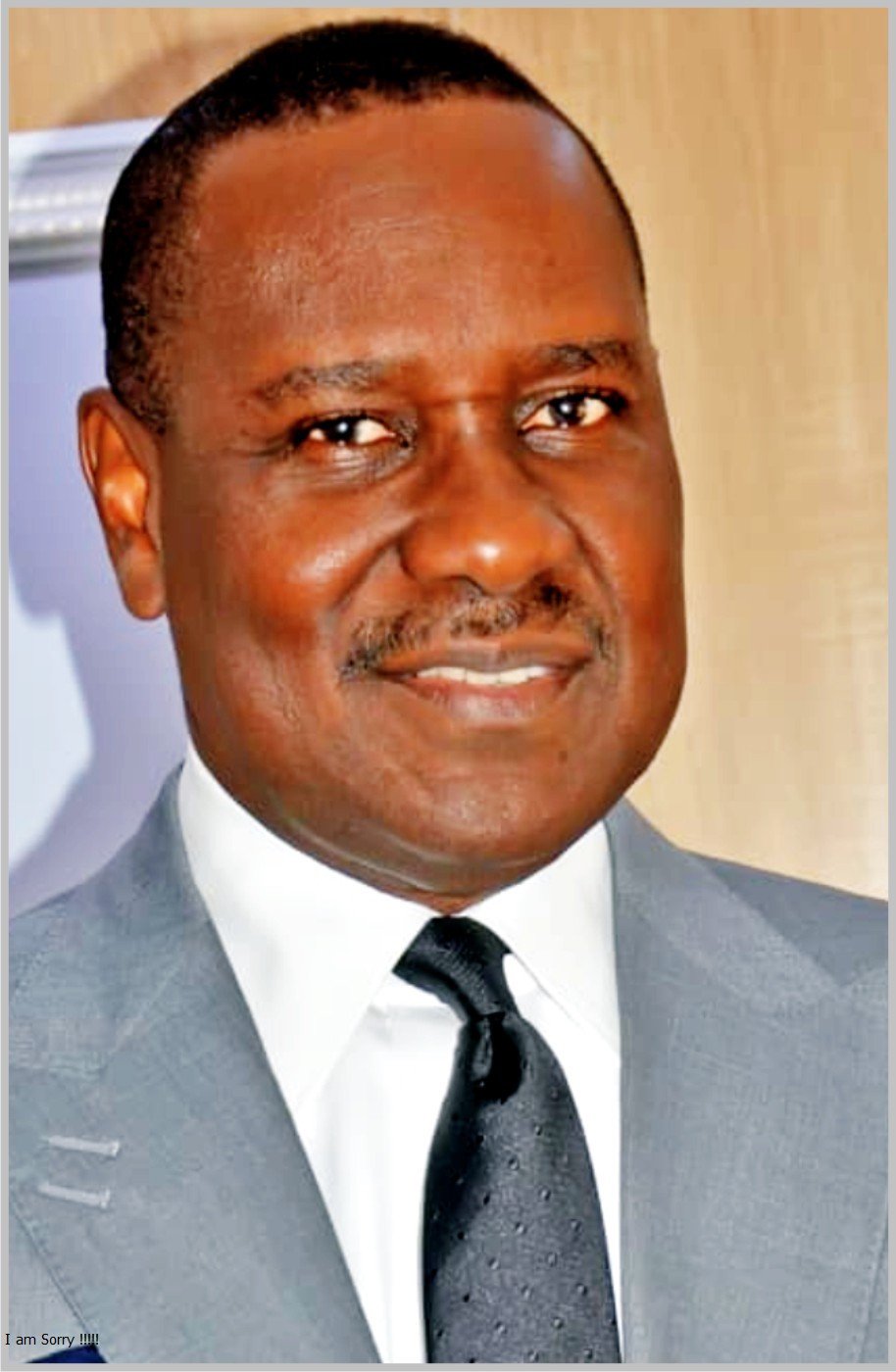
Pastor Ituah Ighodalo is a man who juggles so many roles. He is the Pastor -in-charge of TRINITY House, a non-denominational free flow worship center, powered with a vision to build leaders, professionals and leader to be.
The Mission of the church is to build people of change, influence and impact; for people to take their various leadership roles and fulfil their purpose on earth; to make the world a better place where everyone can fit in, to bring the impact of Christianity beyond Christians and the church into the larger society.
He is also a Chartered Accountant who runs a vibrant accounting firm in Lagos. Pastor Ituah commenced his professional career in September 1982 at Pricewater House, now Price Waterhouse Coopers (PWC) and later founded Ighodalo & Co., a professional Public Accounting firm in January 1987. In October 2004, Ighodalo & Co merged with 3 other firms to form SIAO Nigeria, becoming argubaly the 5th largest accounting practice in Nigeria today.
He is the Chairman & Founder of the Africa Leadership Group, a group born out of passion for good governance, accountability, equitable and judictious use of both human & natural resources and created to address the leadership dilemma on the African continent.
He is the President & Founding member of Rebuilt Nigeria Initiative RNI, a group of concerned Nigerians around the world who have come together to form a global coalition of stakeholders and partners with a Vision to accelerate progress towards a new Nigeria where the rights and well being of all citizens are upheld.
He is also often invited to officiate at events and be part of seminars on Leadership & Governance. He is also committed to Philanthrophy.
How does he see the state of nation?” What are his views about Nigeria today?
“Well, what is actually going on is that Nigeria is going through a retreat. And whether we like it or not, with each political process, we seem to make a little improvement. It’s not that we make a little improvement and then go into some abyss.”
“Right now, I am thinking that we can still do much better, even with the present government, with what we have. If the present government could have a real sense of living purpose to do something great in Nigeria—that passionate purpose—I don’t really see it.”
“What I see is an attempt to balance Nigeria, to do a few good things, but also for those in power to benefit themselves as much as possible. Because government, first of all, is about benefiting yourself, playing politics, remaining in power, and exerting influence. Then, if they can do some good things in the direction of the people, they will.
But the focus seems to be on consolidating political power first, which is not the kind of narrative Nigeria needs to truly become what it should be.
What you need to see is a passionate urgency—how can we unleash this economy? Sacrificially, with no nonsense, no corruption, and no time to waste. Everyone working together to find resources, build capacity, change our thinking, bring in technology, and develop Nigeria.
There is no sense of that urgency or desperation. It feels more like managing the economy—stabilizing exchange rates, calming things down—while still focusing on politics. And that is what is making people despondent.
People are discouraged because they are not seeing the drive and determination they expected to make Nigeria great.
The last time this country felt that kind of push was probably during Murtala Muhammed’s era. When he came up with Africa as a center, you know, he was there for six months, but you could see that seeming urgency to push this thing forward. Although he also made a few administrative mistakes with the civil service, which in one way or the other, affected their stability. But you felt that, by the time Obasanjo came in as military head of state, he just wanted to stabilize the place, calm people down, hand over to politicians, and go back to his farm.
The second time that we felt that desire to bring Nigeria out of the woods was in Obasujo’s second coming. He did a lot of work to bring Nigeria out of the woods, but he needed to bring Nigeria out of the woods before we start setting the country on the direction. And he succeeded to a large extent, paid off our debts, stabilized things, calmed things down, stabilized the exchange rate, and so on and so forth.
Where he probably didn’t quite get it right was in his succession. He could have had a succession that brought about another set of leaders with similar drive. But the two leaders that succeeded Obasanjo didn’t quite have that drive.
They say Yar’Adua was honest and straightforward, but we needed something more. Not just being honest and straightforward and saying that your own election process was faulted. We want an aggressive, driven leader, like Li Qua Yuu, like Jerry Rawlings tried to do in Ghana, like Nkrumah tried to do in Ghana.
A driven leader who is saying to Nigeria, sacrificially, this is where we’re going. Leave me alone, I don’t want anything from Nigeria. But all of you must wake up and go in this direction.
And it’s very simple. We want to unleash all our economic potential. We want to unleash the bauxite, we want to unleash the gold, we want to unleash the tin, we want to unleash the columbine, we want to unleash agriculture. Everything that can make money in the soil of Nigeria must be brought out.
Anything we can do to make these things work, including Chinese technology, Russian technology, Japan, let them all come and help us bring our resources out of the ground so that we’re making money in Nigeria.
I want to do value-added production. We don’t want to be bringing out cocoa and sending cocoa to London for them to process for us. We want to process it here. Any Oyinbo man that wants to eat chocolate, let him come here.
So there must be value-added production because that’s where the money is. The money is not in raw materials. The money is in value-add. And that’s what China has done successfully. That’s what Singapore did successfully. And that’s what Taiwan is doing to make sure that there’s value-add in Nigeria and stop exporting our jobs.
Honestly, if you can unleash our economic potential, if you can add value addition supported by infrastructure, roads, and even power, you’ll be amazed. Because Nigerians, on the average, have the intelligence and the vision. At least a few of them. The 80-20 principle has that to push this economy forward.
And they’ve done it in Music. They’ve done it in the media space. They’ve done it in the social media space. They’ve done it in Nollywood. All those things that have legal, government intervention, and that they’re available on the international scale, those who have the competence have done it. Because the world is waiting. So that’s what we need to do.
That leader that is very nationalistic, that is for every one of us and wants to push us forward, that has the energy, that has the drive, that has the determination, that has the discipline. That’s what Nigeria needs right now. Not politics as usual.
We want a strong leader that really is passionate about this collection of people called Nigeria.
As we move closer to 2027, what’s your view? Are you going to be involved in helping us get it right?
In the way of advice, I want to play more going forward, with my pastoral and advisorial role. Identification of good leadership, encouraging good leadership.
I’m not sure I want to play politics, front line politics anymore. At my Age and stage, and seeing what I’m about to be a father to the Nigerian nation, be able to engage people, correct those who are wrong, encourage those who are right, stop the boys fighting, and tell some people that this nonsense must stop. It’s nothing personal. It is just that this is what I think.
So I want to play a more advisory, nationalistic, fatherly role. I don’t want to get into partisan politics at all. I want to be able to talk to each of the parties. I want to be able to deal with each one of them. I want to be able to encourage the ones that are doing well, warn the ones that are not doing so well, and just play a balancing role and then do a similar thing in Africa. That is my desire.
He has a Daily Leadership program Online, either doing interviews or talking about issues, That shows he is very passionate about Nigeria getting it right. How far has he gone in terms of results? How has that impacted society?
“We are getting results. It started like a little candlelight, and now it’s growing so fast that even I am amazed at what we’re doing.
It’s called the African Leadership Group. We also have different leadership series—the Nigerian Leadership Series, the Ghana Leadership Series, the South African Leadership Series, and so on. The overall goal is to transform leadership thinking in Africa.
We meet every Thursday at 5 o’clock to learn, gather advice and opinions, discover talent, identify leadership competence, and inform people. We have many participants from the diaspora and within Nigeria joining in, and we’ve discovered a lot of talent.
We’re also producing a “Green Book” that will be used to advise whoever is in leadership in Nigeria.
In addition, we have a very strong Youth arm that is mobilizing young people, speaking to their minds, and helping to change their thinking.
The first thing we are trying to address is helping them recognize right from wrong, good from bad. Many Nigerians today cannot clearly tell whether a leader is good or bad. Often, they are persuaded—by money, coercion, relationships, or tribal ties—to follow a leader.
People follow because “he’s our tribe,” “he’s our son,” or “he gave us something,” without evaluating performance. There is little independent thinking.
So part of our mission is to help people, especially young people, think for themselves.
Secondly, we aim to encourage and motivate those with the right mindset to step into leadership, politics, and other areas where they can help change the nation.
Thirdly, to bring the diaspora back. Let them bring their intellect, let them bring their knowledge, let them bring their technology back to Africa and help the people of Africa.
So we’ve made a lot of progress there. We also have a corporate angle that is speaking to leadership in corporations, leadership in government, leadership in places of leadership, and getting them to say, you know what, we can still try and do this thing better.
But until we can transform the average mind of the average Nigerian, it’s going to be tough. It’s going to be tough. But we’re going to continue until we get to where we’re going.
And so what I’m trying to do is to build an organization that will succeed me, that will be self-sustaining and continue to make this impact, and have corporations with other organizations that have a similar ilk, and so on and so forth.
So that’s basically what we’re doing. And as long as I keep doing the effort, even if I don’t see the results, I know that I am along a path. And that’s satisfactory for me.
You know, you are trying to break steel. And you are hitting the steel. You are hitting the steel. You may not see any shift. But one day you hit that steel and the thing will crack open. And that’s what I understand.
So I’m continuing that way. And a lot of people, they are benefiting from this, and testimonies here and there. So I’m quite grateful to God.
