

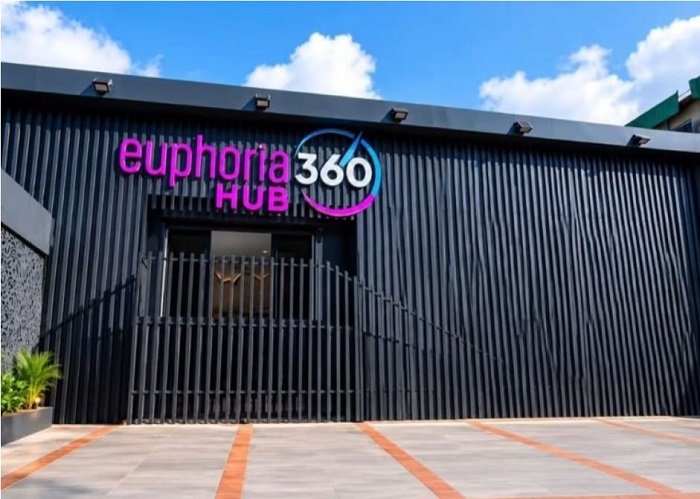
Photo Credit: Euphoria 360 Hub
By Kemi A. | Entertainment and lifestyle writer, 6 years covering Nollywood business moves. Tested October 2026.
Why Nollywood’s Biggest Names Are Betting On Their Media Empires (And What It Says About High-Stakes Entertainment)
Last weekend in Lagos, Oga Bello got emotional. Not at a movie premiere. Not at an award show. At the opening of a creative hub that belongs to Femi Adebayo, one of Yoruba cinema’s most bankable stars, now reportedly sitting on a media house valued at N40 billion. Adebayo didn’t just build a production company. He built a headquarters.
That number has been doing laps around Nigerian entertainment circles for days now. Some people are calling it inflated. Others are calling it overdue. Both reactions miss the actual story.
The real shift here isn’t the valuation. It’s the mindset behind it.
For years, Nollywood’s biggest names made their money the obvious way. Act in films. Collect appearance fees. Maybe produce a project here and there if the budget allowed. Simple, linear, low-risk. Adebayo’s move, and the moves of a handful of others before him, signal something different. These stars are no longer content being the talent. They want to own the infrastructure around the talent too, the distribution, the studio space, the IP library, the whole ecosystem.
That’s not a creative decision. It’s a portfolio decision.
And portfolio thinking is exactly what separates casual entertainment spending from serious, calculated risk-taking. The same instinct that pushes a star to diversify beyond acting fees into a nine-figure media conglomerate is the instinct that governs how disciplined players approach any high-stakes environment, including online poker, where bankroll management and calculated exposure matter more than raw talent. For readers curious about that same mentality applied somewhere a little closer to the felt, a Pokertube review of how a US market like Washington handles regulated online play is a useful look at how structure and risk appetite interact when real money is on the table.
Think about what Adebayo actually did here. He didn’t just announce a studio. He built something with Oga Bello in attendance, signalling continuity with Yoruba cinema’s old guard while clearly positioning for a future that looks nothing like it. That’s a hedge. You keep the legacy audience onside while building toward something that plays on an entirely different financial field.
He’s not the only one making this calculation.
The Nollywood-To-Nile Pattern Isn’t New, It’s Accelerating
Nollywood pioneers have been quietly doing versions of this for a while. A Nollywood veteran recently unveiled a multi-subsidiary venture under the Nile Media Entertainment Group banner, consolidating production, distribution, and talent management under one roof rather than chasing project-by-project deals. That’s not a coincidence. That’s a pattern.
What’s changed is the scale of ambition and the willingness to talk about it in billions, not millions.
There’s also an international signal buried in all this. A few years back, Amazon Prime Video locked in a three-picture deal with Nemsia Films, a Nollywood-founded production house, proof that global streamers see standalone Nigerian studios as investable, not just as content suppliers. Netflix’s earlier push into Nigeria reshaped the whole distribution conversation too, and The Conversation broke down how that shift gave local creators more leverage over their own output rather than leaving them dependent on foreign gatekeepers.
So when Adebayo built his own hub instead of waiting for a foreign platform to come calling, he was playing the same hand smarter. Build the asset first. Let the streamers come to you.
This isn’t unique to Nigeria, either. Hollywood has its own version of this exact migration. A growing list of actors and directors have quietly become venture investors, putting money behind startups the same way they once put their face on a poster. TechCrunch documented a wave of entertainment names doing exactly this, treating their fame as capital to be deployed rather than a paycheck to be collected. Nollywood is simply running the same play with a Lagos accent.
What N40 Billion Actually Buys You
Here’s the thing most coverage of this story gets wrong. The number itself matters less than what it represents structurally.
A media house at that scale isn’t one bet. It’s dozens of smaller bets stacked together: production slates, distribution deals, talent contracts, physical real estate, brand licensing. Any single piece can underperform without sinking the whole operation. That’s diversification doing exactly what it’s supposed to do.
Compare that to the old model. One film flops, the actor eats the reputational hit directly. One media empire has a bad quarter; it absorbs the loss across a dozen revenue streams and keeps moving.
That’s the calculated part. The risk isn’t eliminated. It’s distributed.
And distributed risk is the entire logic behind serious bankroll management in any high-stakes setting, poker tables included. Nobody serious pushes their whole stack on one hand. You size your bets against your total position, you walk away from spots with bad odds no matter how tempting they look, and you let variance even out across volume rather than one dramatic moment. Adebayo’s N40 billion hub is, structurally, the entertainment-industry version of that exact discipline.
Not Everyone Is Convinced, And That’s Fair
I’ll say the sceptical part out loud because it needs saying. N40 billion is an enormous figure for a Nigerian media house, and reported valuations in this space have a long history of being generous. Some of that number is almost certainly brand value and future-earnings projection rather than hard assets sitting in a vault.
But even if you discount the figure by half, the underlying behaviour still holds. Stars with box office pull are choosing infrastructure over appearance fees. That’s the headline, not the exact naira figure attached to it.
Nollywood film Agbara Nla grossing N71 million and topping the weekend chart this month is a good reminder of how fast box office can move when a project lands right. But box office is a single-film outcome. A media house is built to survive the films that don’t land right, which most films eventually don’t.
The Bigger Question For Nigerian Entertainment
Where this gets interesting is what happens next. If Adebayo’s hub performs, expect a rush of copycats. Every A-list Nollywood name with enough capital will start eyeing their own version, their own hub, their own vertically integrated operation.
That’s good for the industry overall. More infrastructure means more jobs, more production capacity, less dependence on any single studio or streamer’s goodwill. It also means the entry bar for building real staying power in Nollywood just got a lot higher. Acting talent alone won’t cut it. You’ll need the business instincts too.
Fans watching this unfold from the outside should read Adebayo’s move less as a flex and more as a signal. The stars who last are increasingly the ones thinking three moves ahead, structuring their careers the way a sharp player structures a session, with exposure managed, downside capped, and upside left uncapped. The actors who skip that step are betting everything on one hand, and eventually, one hand goes wrong.
FAQ
What is Femi Adebayo’s media house actually worth? Reports put the figure at around N40 billion, though exact valuations for private Nigerian media ventures are rarely independently verified. The number likely blends physical assets, brand value, and projected future earnings rather than pure liquid capital.
Why are Nollywood stars building media companies instead of just acting? Acting income is project-based and inconsistent. Owning production infrastructure, distribution deals, and brand assets creates recurring revenue and spreads risk across multiple income streams rather than one paycheck at a time.
Is this trend unique to Nigeria? No. Hollywood actors and directors have increasingly moved into venture investing and studio ownership too, treating fame as deployable capital rather than a one-time payday, mirroring exactly what’s happening in Lagos right now.
Did Netflix or Amazon influence this shift? Partly. Streaming platforms proved Nollywood content has global commercial value, which gave local stars the confidence and leverage to build standalone studios rather than waiting on foreign deals to validate their work.
How does this compare to Agbara Nla’s box office success? Agbara Nla’s strong opening weekend shows how lucrative a single hit can be, but media empires like Adebayo’s are built precisely to survive the films that don’t hit, spreading risk across a wider portfolio.
If there’s a lesson buried in all this Nollywood news cycle noise, it’s that the smartest people in any high-stakes industry stop gambling on single outcomes the moment they can afford to. They build structure instead. Whether that’s a billion-naira media hub in Lagos or a well-managed bankroll at a poker table, the underlying math doesn’t change much at all.
Anyone exploring entertainment or online wagering platforms as part of their own leisure spending should always play within their means. Gambling involves risk. Please play responsibly and only wager what you can afford to lose. If you feel gambling is becoming a problem, visit BeGambleAware.org or call 1-800-GAMBLER.
For more on the personalities and relationships shaping Nigerian celebrity culture right now, check out City People’s coverage on how public figures navigate love and loyalty under intense public scrutiny, a theme that keeps resurfacing as Nollywood’s biggest names build bigger and more public lives.
