

-
As OGUN Campaign Council Begins Work
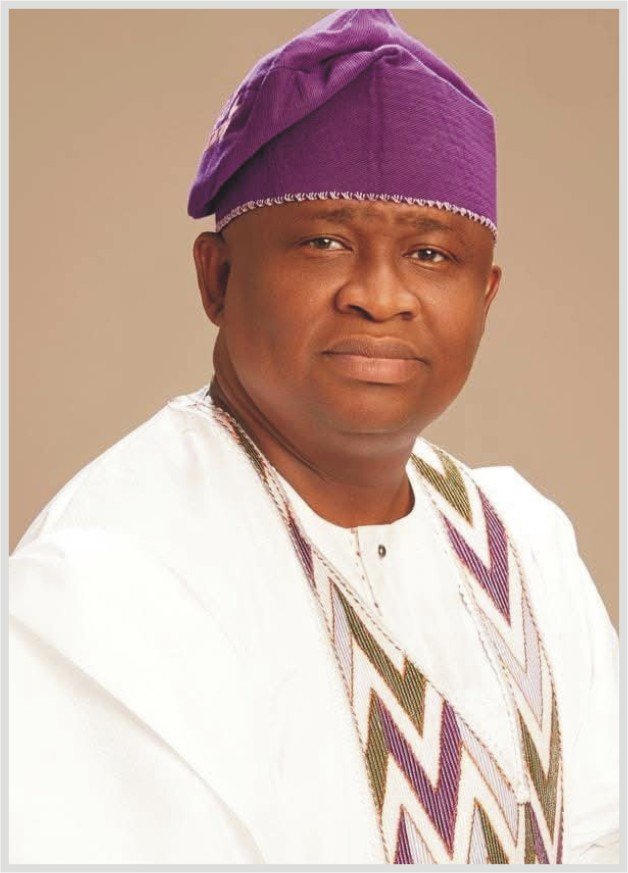
The biggest challenge facing the Ogun State chapter of the All Progressives Congress ahead of the 2027 general election is how to ensure internal unity and cohesion among the party leaders. Senator Solomon Olamilekan Adeola, popularly known as Yayi, was adopted as the APC’s Consensus governorship candidate earlier in 2026, and the party has since unveiled Alhaja Kudirat Adegunwa-Balogun as his running mate. The real challenge is how to get all the powerful political camps in Ogun to work together.
And that is where the names of Senator Yayi, Governor Dapo Abiodun, former Governor Ibikunle Amosun and former Governor Gbenga Daniel become extremely important. These are the political gladiators in the party. For years, Ogun politics has been characterised by powerful personalities, competing political structures and succession battles. The 2027 succession plan has once again brought those fault lines to the surface. But there is an important new development.
The APC appears to be attempting something unusual: putting the major political camps inside one campaign structure. On September 15, 2026, the APC announced its Ogun Campaign Council with Governor Dapo Abiodun as chairman, Yayi as co-chairman, former Governor Olusegun Osoba as Grand Patron, while Gbenga Daniel and Ibikunle Amosun were named Deputy Grand Patrons.
The big question is: can old enemies work together? Ogun APC has a complicated political history. Abiodun’s relationship with some of his predecessors and political leaders has not always been smooth. Daniel and Abiodun, in particular, have had disagreements over political control and succession. The disagreement became more visible when Daniel’s attempt to secure the APC ticket to return to the Senate met resistance, with Abiodun eventually emerging as the party’s consensus candidate for Ogun East.
The development represented another chapter in the political disagreement between the two men. Daniel has also denied allegations that he worked against APC’s 2023 governorship campaign. Amosun also belongs to a separate and powerful political tradition in Ogun. He governed the state from 2011 to 2019 and retains a political network of his own. Then there is Yayi. His emergence represents another major development in Ogun politics because he is from Ogun West, a senatorial district that has long campaigned for the governorship. The APC’s decision to settle on Yayi was presented as a consensus arrangement designed to prevent another divisive governorship primary.
The logic was straightforward: If the party allowed every major political bloc to fight openly for the ticket, the APC could emerge from the primary deeply divided. That was the lesson of previous election cycles. So the party opted for Consensus. But consensus can solve one problem while creating another. It can produce a candidate without necessarily producing reconciliation. That is why the real test begins after the consensus.
Governor Dapo Abiodun is central to the entire equation. He is the sitting governor, the leader of the state government structure and Chairman of the APC Campaign Council for 2027. Abiodun has publicly embraced Yayi’s candidacy. At the APC mega rally in Ijebu-Ode in September, Abiodun described the party as ready for the 2027 elections and called on members to mobilise support for Yayi. This gives Yayi an important advantage: the incumbent governor is publicly campaigning for him. But Abiodun also has another political problem.
He is himself the APC candidate for the Ogun East Senate seat, meaning his own political future is tied to the success of the party’s statewide machinery. That creates an incentive for Abiodun to keep the APC united. Then there is Otunba Gbenga Daniel. He is one of the most experienced political operators in Ogun. He was governor between 2003 and 2011 and subsequently became senator representing Ogun East. His political network cuts across several parts of the state.
The latest campaign council arrangement is therefore significant because Daniel has been brought into the leadership structure as a Deputy Grand Patron. That gives him a formal role in the campaign rather than leaving him outside the structure. But the bigger issue is Trust. Can OGD genuinely campaign for a political arrangement in which Abiodun remains one of the principal figures? Can Abiodun genuinely accommodate OGD’s political influence? And can both men put their personal disagreements behind the larger APC project? Those are questions only political action—not public statements—will answer.
Former Governor Ibikunle Amosun is another heavyweight. He has his own supporters and political history in the state. His inclusion as a Deputy Grand Patron of the APC campaign council is therefore more than ceremonial. It places another major political camp inside the official campaign structure. For the APC, this is potentially important because a campaign involving Yayi alone cannot automatically inherit every structure previously associated with Amosun. The party needs those networks to work for the same candidate.
The campaign council therefore appears designed partly to achieve exactly that. Instead of asking Amosun’s camp to disappear, the APC is giving it a place within the larger structure. Yayi also has to play the unity game. Yayi’s biggest responsibility may be to avoid behaving like the candidate of one faction. His emergence is strongly associated with Ogun West’s long-standing demand for political inclusion, but he needs support from Ogun East, Ogun Central and the various political tendencies across the state.
His running mate, Kudirat Adegunwa-Balogun, comes from Ogun East, following the zoning of the deputy governorship position to the district and its subsequent micro-zoning to Ijebu Central. That is clearly part of the balancing process. The message is: Yayi may be from Ogun West, but the ticket is intended to represent the whole state. That argument will have to be demonstrated through appointments, campaign structures, consultation and mobilisation. What many are saying is that the party must appeal to the wounded members. This is perhaps the most dangerous part of the crisis.
The APC’s consensus strategy did not make everybody happy. Several aspirants who had invested resources and mobilised supporters for the contests were disappointed by the consensus arrangements and subsequent primaries. That includes not only the major political figures. There are also local aspirants, ward leaders, lawmakers, businessmen, political groups and grassroots organisers who may feel that their interests were sacrificed.
A political party can survive disagreement among its leaders. It becomes much harder when that disagreement travels down to the wards. The composition of the new campaign council is perhaps the most revealing development. Instead of having Abiodun’s camp, Amosun’s camp, Daniel’s camp and Yayi’s camp operating independently, they have been placed under one campaign structure. But will it work? The success of this arrangement will depend on whether the positions are merely titles or whether they translate into genuine cooperation. If APC wants to enter the 2027 election without the internal divisions that damaged it in previous cycles. Some things may be necessary.
The party will need to reassure the different political blocs that Yayi’s emergence does not mean the political extinction of their camps. Osoba, Amosun and Daniel possess different forms of political experience and networks. Keeping them within the campaign architecture could prevent parallel structures from emerging. The APC should go beyond meetings involving governors and former governors. The party needs reconciliation from the ward level upward.
One of the most sensitive issues in Ogun politics is what happens after one governor leaves office. The party will need to reassure stakeholders that the Yayi project is not simply another factional takeover. The biggest requirement may be restraint. But the biggest test is: Can they trust one another? This may ultimately be more important than campaign rallies. Political cooperation requires Trust. The difficult question is whether the various camps can believe that everybody is genuinely committed to the same 2027 project. That is where the next few months will be crucial.
