

-
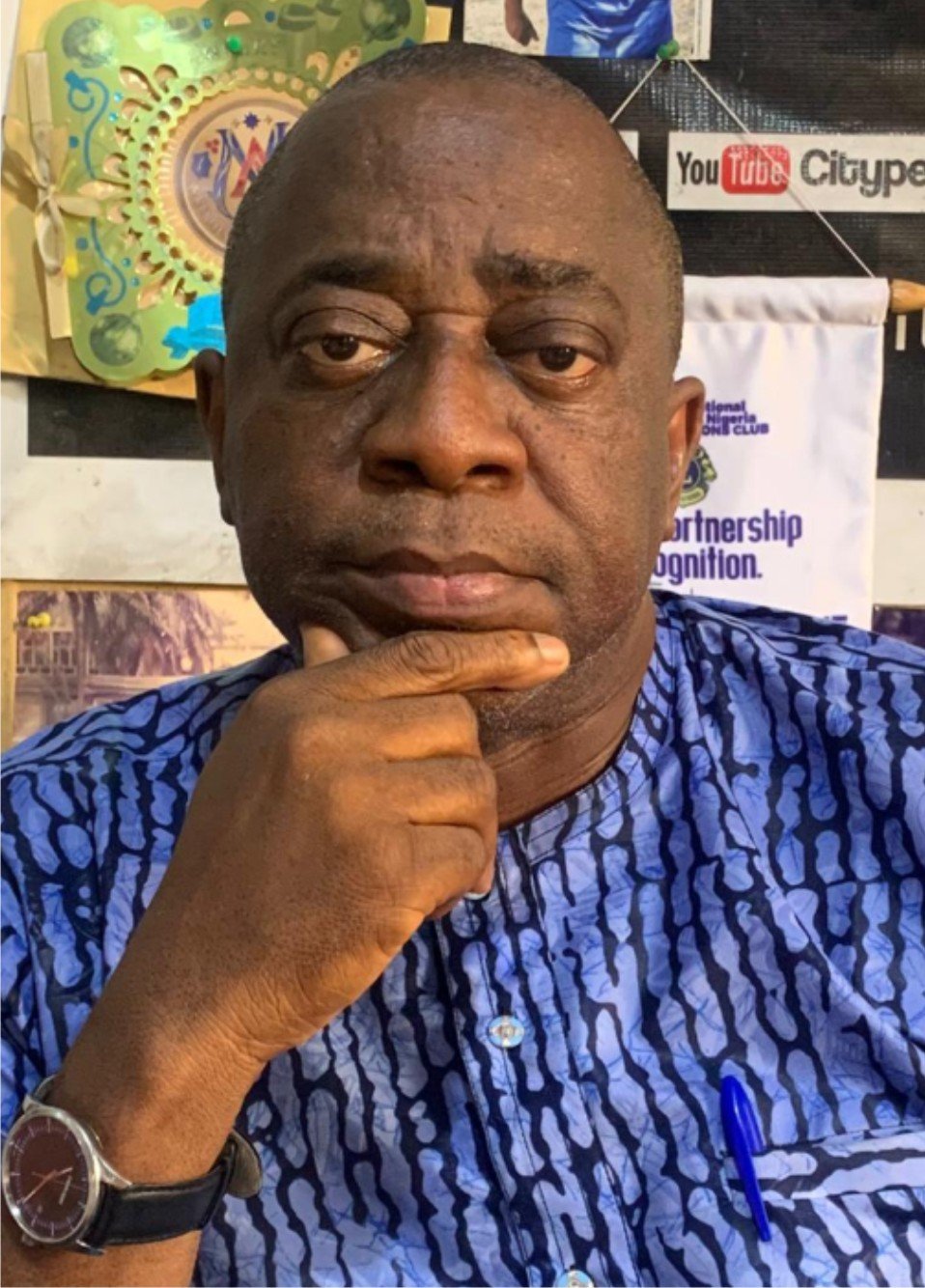
Founder, SEYE KEHINDE On The Journey So Far
As City People marks a major milestone of 30 years in the media space, the publisher and founding editor, Dr Seye Kehinde OON, has described the anniversary as both fulfilling and deeply humbling. In this interview, Kehinde opens up on how a modest black-and-white magazine idea conceived as a student grew into one of Nigeria’s most influential soft-sell and lifestyle publications. He speaks candidly about the faith driven decision to start, financial sacrifices, growth over the years, and the plans to celebrate City People’s 30th anniversary across the country. Below are extract.
Sir how do you feel about City People being 30?
I feel happy. It’s a milestone celebration.
It’s one that is very fulfilling. I mean, it’s not easy to clock 30, it’s like giving birth to a baby. 30 years after, you look back and you say, oh, this baby has come of age, the baby has grown, maybe has learned a lot of lessons.
If he’s a boy, he would have become a man, if it’s a lady, she would have become a woman, a full-grown adult. So for me, it’s very, very, very, fulfilling. It’s very gratifying that a 3-page black and white magazine that started in November 1996 is 30 today.
I mean, we’ve come a long way, even though we’re the ones saying. But we know that if you remove 30 years from anybody’s life, that’s a substantial number of years.
This morning, I was just thinking, oh, I turned 60 this year. If you remove 30 years from 60, that means I started City People when I was less than 30, because City People is 30, and I had done about 10 to 11 years before City People.
So it means that I must have started Journalism at 20-something. And then, I look back, I’ve worked in places, I’ve worked with other people, I’ve worked in other media houses before I decided to set up City People in November 1996. And today, we have a group of companies under the City People brand and all of that. So for me, I think I’m very happy with it.
Can you tell us how the journey has been so far?
Yeah, it’s been topsy-turvy. It’s had ups and downs.
It’s been challenging, like every other thing. I mean, I knew that it would be challenging. Even the takeoff was very challenging, too. We couldn’t raise enough resources. We couldn’t raise enough funds. The only thing I had going for me was the idea that, I mean, we should do a 18-page black and white paper.
Many people thought I was crazy. They thought I was mad. I mean, why would we be doing 8-page black and white in an age when color was the in thing? But I just listened to God, because for me, I would say that it was God that was at play here, because the whole idea started when I was an undergrad at Obafemi Awolowo University, Ife, in my Part three.
I used to read with some people. We would read, far into the night. We’d start reading from, let’s say, 10, 11pm, and leave there around 5, 6 a.m. So I was like a bookworm at that time.
Our lifestyle was Library, Lecture, and then reading in the evening. And I was one of the few people at that time who would always go to the library to read up all the references that any lecturer says we should read. So that was that, but somehow along the line, one day I was reading, and the Lord just gave me this idea that, oh, why don’t you do this and then , I used to be fascinated by the Sunday Punch edition then.
It had a lot of human interest content, and I felt, oh, this would be a good one, and all of that. And of course I was already tilting towards journalism as a student and all of that. So, somebody just said, it would be nice to have a magazine that would be people-oriented and all that.
Of course, I wrote it down, and I didn’t know, I didn’t have a name for it, but I just wrote it down. I remember it was an A4 paper, I wrote on it and folded it and kept it. So that was, I would say, when the first idea of City People came, but I was just a student at that time.
I also didn’t had this feeling of where would I get the money to actualize that dream and all that. But the dream was there. My friend who we used to read together was my best friend at that time, Sola. So he said, I mean, I shouldn’t worry.
He said, if it’s an idea that God has blessed or God has given me, he will give me the way to actualize it. So I kept it at that. And of course, from that point onwards, I started working in several media houses like the Punch, Tribune, The Herald in Kwara, The Guardian, Concord, everything.
I worked with so many media houses until November 1996, when the idea occurred to me again that, I mean, it was like the Lord speaking to me that, I give you an idea, you kept it, and you have not been able to actualize this thing, or you’re not even thinking about it and all of that.
And I said to myself, I think it’s time for me to do this. I was part of a group then, TheNews magazine group, and I just called my colleagues and I said, gentlemen, I would like to go and do something else.
I have this idea, I’ve always had this idea that I kept, and I feel this is the time to do it. God just said, this is the time. Of course, the problem there was, I couldn’t get funding. I didn’t have funds to start with and all of that.
But I realized that one thing I had was a reputation, and I had a name, and I had the idea. The idea was clear in my head that it was supposed to be a soft-sell magazine and all that, that would mirror the lifestyles of celebrities in society, what they wear, how they eat, what they do, music they listen to, how they live, everything about the celebrity.
So that was how the idea came. So I started talking to people, and then it became clear to me that I could not raise the funds that I needed.
At one point, another voice told me that, look, if you cannot raise the funds that you need, what are the assets that you have? I mean, that you can either sell or trade off and then raise money. And I realized that, I had some assets, small little assets I can raise, and if I sell some of those assets, I should be able to raise about two million, and all of that was there about.
So I sold some of the assets I had, I sold my mom’s Volkswagen, which I was driving at that time, I sold another car that I bought, a fairly used car that I bought on sale, on auction, and all that. So I started putting the money together, and before I knew what was happening, I mean, the money was coming together.
Then of course, my friend, who I said I used to read with in those days, he works in the financial sector, and he called me because I told him, I think I’m ready to run with the idea.
So he asked me, how far, how far have you gone? I said, well, there’s no money and all that. So he then said something to me, which is another lesson that a lot of entrepreneurs should learn.
He said, you know that you don’t need all the money in your budget. You just need something to take off, and then you can begin to add this into it.
I said, how? So he brought his laptop home from work, and we sat down and we crunched the figures and all that, and I realized that I would need about 10 million or so to start off.
So immediately he showed me that, I said, you see, that’s what I’m saying to you now, where am I going to get 10 million from.
He said, you don’t need that 10 million. You don’t need to have 10 million to start off. Now what you need is an office, this, that, that, he also mentioned about three, four things, and that every other thing will be projections for the next phase and all that, and that was how I started off.
Of course, I still had some money from my savings, and that’s why it’s also good for people to save. So I took some money from my savings. I got an apartment to use as an office, did the furniture, and then, of course I started publishing.
I couldn’t afford to buy computers and all that, so I got a, what do you call it? I got a business center where we used to go do the typesetting. They would do the type setting and everything, so that’s how we took off, and then, before I knew what was happening, word had gone around, that I was trying to set up a new magazine, and without even doing vacancies, journalists from other media houses started calling me up saying I don’t mind joining if I had space for me. That was how I picked a few people and we started, and I remember the first day we met, I told them.
I said, let me share a secret with you. I said, what I have is just enough to pay salaries for two months. If after two months, we cannot generate enough to start paying salaries, we’ll all have to go back home, and they looked at me, and they were like this.
They actually assumed that I must have hit big money before setting up, so they finally realized that that was it. Everybody just went in, and that was how we succeeded.
So it’s been a long journey. It’s been up and down, but these are things that you learn. These are lessons you learn that will help you actualize your dream.
How can you say City People have evolved over the years?
Well, it has evolved, like I said, it started off as an 8-page black and white celebrity magazine, or you can call it soft sell. From 8, we went to 16, still Black and white. Like I said earlier on, many people thought there was something wrong with my brain. You can’t compete with other coloured magazines with a black and white thing.
But God kept telling me that, are you listening to them or you are listening to me? I said, you should just go ahead and do this thing. So we started with black and white, 500 copies. I remember the maiden edition was 500 copies that we printed, and we sold out.
The following week, vendors started coming to me and asked us, can we increase that 500? I said, let us even stay at 500. We did 500 the first time, it sold out.
The second time we did 500, vendors came to our office and said, can we go back and reprint that they need another 500? That was how we knew that we were doing something different. And of course, that 500 increased to 700, 1000 copies, and we kept increasing like that, like that.
So we ran the black and white for about three months or four months. And then somebody called me up and said, why don’t you just add color? You don’t need to do a color edition, just add color to the cover to make it colorful and make it attractive.
That if you just put color on the cover, you can get some things done and all that. And that was how I went back to our printers, they said it was possible.
We started adding color. And then after a while, some people started telling us to start publishing photo pages in color, and let people pay for it. Before we knew what was happening, we introduced color into the edition, and then the magazine became a color edition.
And from 16 pages, we went to 32, we started increasing the page, and then boom. But of course, the challenges were still there, funding, we had to live from hand to mouth, we had to manage and all that.
But I think I thank God for that, because even if you had all the money you needed, we probably have wasted it.
And then interestingly, some of those that approached to invest in the paper, now started calling me up when they saw City People on the newsstand and they were coming out and all that. And they apologized that they couldn’t see what I saw at that time.
And then they would ask me, what can I do for you? And I would tell them, these are the challenges we have. We need a Generator. Somebody bought me a generator. We need Computers.
Somebody bought me computers, like two computers. And we started doing our typesetting in-house. And that was how we started doing things, little by little.
And then we moved from there, kept moving offices from there to where we are now.
How is City People celebrating its 30th anniversary?
We intend to do a lot of activities. When I say activities, I mean, either doing events, reaching out to people, saying Thank you.
Those who helped us at the beginning, we are going to visit them. Another thing that makes City People unique is that we actually launched City People across the 36 states of the Federation over time. So we want to go back to them to say Thank you very much.
I mean, I have friends in Calabar. I have friends in Kaduna. I have friends in Zamfara. I have friends in Portharcort. We used to have offices in all the major geographical zones. At a point, we had regional offices.
We have very strong supporters. And so we want to go back to them to say, City People is 30. We want to say Thank you to you for staying with us and all of that.
So it’s a whole lot of activity. The activity will start from January 1 2026 with our Special edition that we are going to come out with. And then from January 1 to December 31st of 2026, we are going to be doing activities.
All our usual activities will be tied to the anniversary. So we just want to make noise. And I believe that what God has said we should do is to make noise about it, to be grateful, to say thank you to God.
Because I don’t take it for granted. People ask me, oh, even now, how come you guys are still in business? I say, well, I do not know. I don’t have the formula. Its the Grace of God.
But all I know is that God speaks to me. Even what we are doing and how we’re going to celebrate the thing, I have to wait on the Lord too. Many people don’t know that I’m deeply spiritual. I usually take instructions from God.
If God doesn’t speak to me, I don’t act. I don’t move an inch. So I sleep. I wake up. God says, turn left. I turn left.
So we intend to do a lot. We intend to touch lives. We intend to visit people. We intend to do events and all that.
And then everything will end in December, maybe with a BIG Thanksgiving service and reception, then we will round it up.
–Promise Babatunde
