

-
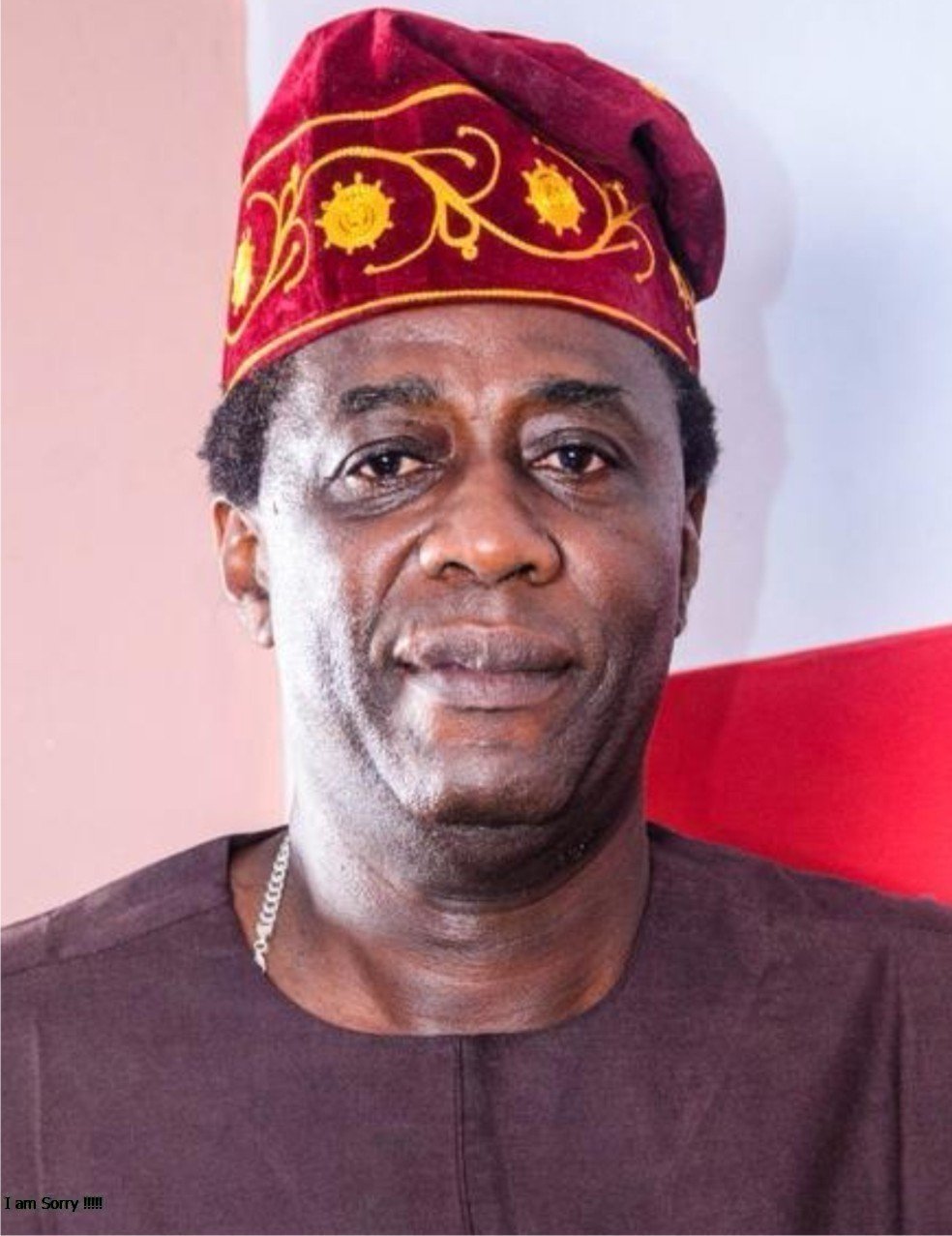
Omooba ABIODUN OGIDAN, PRO Fusengbuwa Family
Kindly introduce yourself. Who is Prince Abiodun Ogidan?
I am Abiodun Adesanya Ogidan. The Adesanya is from the compound name of the Fusengbuwa family. I am a descendant of a Jadiara, which is also together with the Fusengbuwa family.
We are from Ijebu ode. Our main house is in Ilela. But a lot of the families over the years have spread all over Ijebu land. We have our current family house at Odebo. That’s where the Adesanya family ruling house is.
And what do you do?
Well, I’m an engineer by profession. But I later went into business project development consultancy and I’m a businessman. I’m retired now, over 60. So I run a lot of things. I run farms. I have a farm. I have an herbal factory, one of the biggest in West Africa, which can be verified through NAFDAC. We have over 44 NAFDAC numbers. We are a proper herbal factory because we have a massive farm. We have a big farm in Apunje, in Ijebu. We have 10 hectares there. And we grow most, let’s say 80% of our plants that we use in our factory.
So I’m a businessman. I’m an entrepreneur, multi-entrepreneur. I’m into the hotel business as well, including the ownership of one of the biggest hotels in Ijebu. But we’ll just keep that for now. Thank you.
You have been close to Ijebu all these years. Where were you born in Ijebu? Were you raised in Ijebu?
I’m a proper Lagos boy. But what they say about Ijebu is that once you have an Ijebu mother, you are Ijebu. Your father, you might escape it if your father is not really used to Ijebu. But my mom, like most Ijebu women, comes home every week when I was young. And as soon as I started driving, like every young man, I didn’t know what I was doing to myself. As soon as I started driving, I became a driver. So I became part of the Ijebu crew when she comes for various things like, burials, church events, family events.
So the intrigue has been there for me from a young age through my mom. My dad is more of a Lagosian. He’s an Ijebu man. He knows his roots. He taught me. He told me all his family roots, which I know. But the Ijebu itself, living here, is because of my mom. And on getting here, I discovered that it’s home. I felt very at home because I lived in Ibadan in my early years of marriage. So I’ve been someone that’s also used to living outside Lagos. So I find it very accommodating.
Talking about this story of your life, at what point did you start feeling like being a prince, being an Omoba, or is it just something that you grew up with?
Okay, I think for the Omoba, it has always been there since I was a kid. Because, there’s something that we call oriki, like your lineage. And the grandparents always use it to greet you when they see you. All those things. These are things that are oral history. And it gets embedded in you. And you know, because they tell you, look, you’re a prince. You can’t behave this way. You have to behave this way. So those are the things that actually imparted the royal upbringing to me.
But at the same time, it is something that you must be willing to accept as yourself. Like my dad, he never accepted it. He doesn’t want anybody to call him a prince. He’s a Lagosian. He went to St. Gregory’s College and all those kinds of things. But myself, I am more of an Ijebu man because I come regularly with my mom.
So I began to distinguish myself as an Ijebu man. Then Ojude Oba came into effect.
I noticed you’re involved in the current search for Awujale within the royal family. Can you tell us your role?
Ok My role is a bit straightforward. I’m the PRO, spokesperson for the Fusengbuwa ruling royal House. We have a committee that is supposed to be the hierarchy of the family. And I’m the spokesman for the general family. So basically, we try to keep within our own purview of the achievements or what we want to achieve as a family. So that’s what my role is about.
Shortly after the Awujale died, of course, we observed that period. It became clear that the Fusengbuwa family was going to take a very central role. How did you feel at that time?
Like I said, Ijebu is a close-knit community. There’s hardly a family in Ijebu that’s not related one way or the other. The late Awujale, his royal highness Sikiru Adetona, his sons are my friends. They actually encouraged me to start coming to Ijebu for Ojude Oba. So when he died, it was a great loss for all of us. Because it was not like the king is dead, Awujale is dead. It was like someone that is close to us. We normally stayed in his house to do Ojude Oba, to eat and drink and celebrate. So it was like a loss of a father.
Then secondly, Ijebu has a distinct procedure for kingship. There are four ruling families. So the first one is the late Awujale’s family, Anikilaya. Before Anikilaya was Gbelegbo. Before Gbelegbo was Fidipote. And the final one was Fusengbuwa.
So if you look at that lineup, from Anikilaya going four steps back to Fusengbuwa, it’s been about 100 years. There have been several kings. Looking at only Adetona himself, he did 65 years on the throne. The one before him did almost 30 years plus. Putting it together, you had over 100 years. Nobody in the Fusengbuwa family had even thought of becoming a king. And believe me, nobody was even thinking about it. Because the late Awujale was just there perpetually. He was just our father. Nobody ever thought that there would be a vacuum in Ijebu.
But when he died and the period of mourning was over, the government had to revert to the principles and the laws guiding succession of a king. And it was discovered, according to them, that due to the four ruling houses’ rotation, the Fusengbuwa was the next family. And the procedure started.
People started having meetings, until the Local government formally wrote to the Fusengbuwa family. And eventually, the staff of office, the Awujale staff, was brought to the house. From that day, it ceased to be just a ruling house. It became a royal ruling house. There are other families that are ruling houses, but they are not royal because the staff of office is not there. The staff of office is with us. Though physically, the staff of office is in the palace. But because it has been brought to the family, it is the stamp of royalty.
And of course, everything looked smooth until recently when it was stopped.So at what point are we now?
Let’s put it this way. Nobody living today can say, I was actively participating in the crowning of the late Awujale. So you can imagine, nobody has an idea. That’s just the truth. Even those that are 90 today were teenagers then. They were not involved because there were older people doing it. You could be alive at the time, but you were not actively participating.
So the bottom line is we are all in deep waters. Nobody really knows the left from right. So we were just playing along as it goes, even though we are guided by rules, regulations, and laws. People come in and say, this is the law today. We are doing by the 1953 law. Another will say that has been repealed by the governor. There’s a new law of 2022.
Along the line, things got muddled up. There were several factions within the family claiming to be the Olori Ebi. That’s where the first issue started.
And some of us looked at it and said, by hook or crook, we have to present a candidate when there was a threat from the government that you, Fusengbuwa family, you are not behaving like you want to bring a king. If we give you more time and you do not come together, we are going to pass you by and give it to the next ruling house. And that’s what the law says. If one family is not ready, pass it to the next one.
So everybody was forced to come together. And that coming together led to the creation of a Committee of 12 men that became known as the Executive Committee, with a Chairman, Deputy Chairman, Vice Chairman, Secretary, PRO, and treasure that was to manage the family. And from there on, they governed it through the local government.
Don’t forget, under the law, any chieftaincy is under the local government. And that’s why in the state government, you have a commissioner for local government and chieftaincy affairs. There’s a reason for that.
So communications were made to the committee representing the family. And of course, we had to follow the guidelines to present candidates back to the local government and then to the state executive.
But people forget, like I said initially, there were three Olori Ebis and they had started their processes before the merger. So it was decided for peace to reign that we would not interfere in all the three factions. Bring all the lists together and submit them to the Afobajes, the kingmakers.
It sounded so simple and pure. People complained, oh, that would be about 100 names. That would be too much. I said, look, it’s been 100 years. What are you talking about? Do you know the number of families that have expanded within 100 years? If you are a math student or an engineer like me, you know that growth can be exponential.
So let the kingmakers do their work.
In hindsight now, Maybe it was a mistake. Maybe we should have resolved that within our family before presenting it to the Afobajes. Because I think they were overwhelmed at the end of the day to see what was going on.
After we handed over, like I explained to other gentlemen of the press, we had all the credentials in bags. It was shown on television. People thought it was money. No, it wasn’t money. It was documents. There were credentials. And at the end of the day, we submitted.
After we did what we call a nomination, because under the law, we must do nomination. So believe it or not, whether it was 100 candidates or more, every single one of them had someone to nominate them from the family and somebody to support. So what are you talking about? It’s a different thing if they came and they didn’t have anybody to nominate them. Then you could say these people just wrote their names.
I anchored the event myself. I was shocked that when they called the name out, somebody would come forward and say, I am the one proposing this person. Another would say, I am the one supporting it, meaning these people are bona fide members of the family.
And note, which is very key, denying a member of the family his fundamental right to contest for a throne or a position that he believes he belongs to is something people will go to court over. So to avoid that, that’s why we did that.
But by the time they got to the Afobajes, everything became muddled. So all we heard next was that the state government had put a halt to the whole activity. And many things happened after that.
But for now, I personally, as a PRO, have not received any official communication to say it has been lifted. I’ve heard so many things, but sometimes we cannot take them to heart. We just have to listen and separate rumors from facts.
So that’s where we are.
