

-
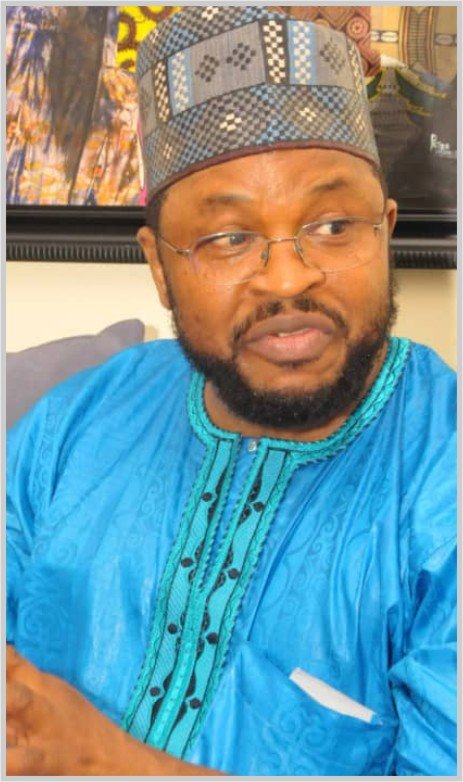
US Based, FAROOQ KPEROGI Tells City People
Many people find it hard to believe that the popular US-based Professor of Communication and Public Affairs analyst, Professor Farooq Kperogi hails from Kwara State, Nigeria. He is from Baruten local government area in the North Central district of Kwara State, Nigeria. The noble local government is sharing a long border with the Republic of Benin. Those who follow Kperogi’s writing and analysing of government related issues affecting Nigeria would think he is from the core Northern states like Kano, Jigawa and the likes. Whenever the erudite Kperogi speaks or writes, everybody is always eager to listen or read what he has written. He is so passionate about his motherland, Nigeria that he stays blunt and factual when analysing matters affecting the progress of the country. He says things as they ought to be without mincing words. In fact, he doesn’t care whose ox is gored as he usually hits bad leadership for putting the people in penury. This is why Nigerians back home regard him a lot.
Few weeks ago, a world-renowned historian and teacher, Professor Toyin Falola hosted Kperogi at his residence in Lagos for dinner. The guest was in the country to launch his new book and grace an event organised by the Kwara state government. City People Publisher, Seye Kehinde and his reporter, Jamiu Abubakar (08085185886) attended the dinner and we took time out with Kperogi where he spoke extensively on his love for Nigeria, how his growing up in Kwara state has greatly influenced his personality and why he has chosen to take a noble stand of condemning bad government in the government. Below are excerpts:
You are always on point whenever you make your assertions, how do you cope with the various backlashes that come with that?
The truth is, in the last couple of years I even stopped reading the responses. Because there are too many to read. Two, I just realized that, well, in life I have made my point known, but let other people make their point known. That’s what life is about. And I’m a discursive democrat. Discursive democracy is the right for everyone to speak, to say what they want. Some people will commend me, some people will condemn me, which is fine. In fact, variety is the spice of life. I’ve always told people many times, oh, I love the articles, but I don’t always agree with you. And I said I would be worried if you agreed with all I have said. It means that you are not thinking because we are shaped by several things, by our circumstances. We have socialized different cultures and they affect how we see the world. So how I see the world is not going to be how you see the world. And there are things that are factual. I can say when this is right, this is wrong. We can agree on that. But my interpretation of certain things will not be consistent with your own upbringing and that’s fine. And if I get you to tell me, maybe I’ll say, okay, I see your point of view and there are frankly occasions when some will call my attention to certain things, I’ve written that I feel very strongly about but they are very persuasive how they say that. Now I see it from another point of view and it changes my perspective. I’m never emotionally invested in any point of view and once I am confronted with a superior argument, I yield and that’s part of my training. Part of my training is that I question my own assumptions, what psychologists’ call being conscious of your unconscious. There are things that we have come to believe or that we are not out of any effort. I’m a Muslim. My father was an Arabic teacher. That has an influence in the way I look at the world. I come from the part of Kwara State that’s really underdeveloped and where people don’t go to school a lot. That shapes how I look at the world. I went to school at Bayero University, Kano and I studied Mass Communication. That sort of shaped how I see things. So, When I confront any issue, the first thing I ask myself is, do I think this way because of my background? That’s the first thing I ask myself. And sometimes the answer will say yes, that’s why. And so I will say, okay, what if I were from a different background. How will I look at this issue? And I realized that the perspective changes. So if you read my articles critically, you find that struggle. You find that I’m trying to transcend myself. A lot of times I get a lot of backlash from people who share my background; “How could you think this way? You are a betrayer”. But I’m not a betrayer. I’m thinking from another perspective. I realized that that other perspective makes more sense than the perspective that naturally comes to me.
You said your late father is an Islamic scholar, how does being a son of an Islamic scholar impact on your personality?
To start with; My name is Farooq. Do you know the meaning of my name? It means one who distinguishes truth from falsehood. And he, the prophet had as team successors and companions, one of the companions was Umar, Umar ibn Khattab. Umar ibn Khattab was a brutally frank person. And he was so brutally frank that he would tell the truth that was against himself. His son committed fornication and the punishment for the fornication was to be given 100 lashes of the cane. They wanted to protect him but he said no. He loved his son very dearly. And he said, no, he had to be punished, even against his own wishes, against his own emotions. So that’s why he was nicknamed Farouk, one who distinguishes truth from falsehood. And my father loved that quality of the companion that he gave to me. And he wanted me to be that way. So right from the time I was two, all through my life. He would say, remember your name. So the effect it had on me is when we were growing up, three of us had an older brother who died two years ago and a younger brother. And each time we did our shenanigans and we agreed that we would tell Dad. My dad would just say, I know, Al-Farooq!, I know you would not lie to me. And that would flatter me and I would tell the truth. And my elder brother would say, you are a sucker because all that daddy has to say is Farooq!, and you will expose us. So they didn’t trust me because of that. When the Emir of my hometown and emirate council called me and they said that I should stop criticising Buhari. They put me on the loud speaker and said, the community is saying that we are unhappy with what you are doing. We don’t like it; we are sad and we want you to stop it now. And my father had died and they said my uncle is here listening, please speak up. So, I told them, it’s too late. This is what he meant. Because my dad, if my dad were alive, he would not even tell me to do what you’re asking me to do. He brought me up to tell the truth. But if you can tell me that something I’ve said about Buhari was untrue, and you convinced me, I will apologize. I say, people know me. I’m never shy to admit that I’m wrong and to apologize. I’ve done that several times. I’ve written some things that turned out not to be correct. And I admit that I’ve found out that this is not correct because that’s just me. So if you tell me that I’ve said or written something about Buhari that was wrong, that was false, fine, that’s a good conversation starter. I will apologize. They said, no, it’s not about that. As a leader, you’re not supposed to criticize a leader. Then I said, where did you find that? Then I said when I was criticizing Jonathan, I don’t recall an emirate council meeting being held. They said it was because they didn’t know. So I said, okay, well, you didn’t know because you don’t share the same religion with him, but that’s not the way my dad brought me up. And so I said it’s too late to change me at this late hour. I asked my uncle, maybe he knows. So one way that my upbringing has shaped me is that if I can’t tell the truth, then I won’t say anything. And frankly, most times, I wish I would have told the truth. Even if it’s against me, my friends, or people I know. So, these things really matter to me. And that’s why I’m glad that I chose journalism as a profession. My first love was law. My dad said to me, lawyers are liars. And they are going to be held, though it was a joke. But he was forced to change and I said it’s okay, the next thing I can be, apart from being a lawyer, is to be a journalist. So, from the very early stage of my life, I knew that I was really going to be a lawyer or a journalist. And then, it’s all influenced by my father, his Islamic teaching and the importance of truth that he has imbibed in me. And when people say, hey, stop it! I say it’s too late.
Have you been harassed recently or at any time coming home or going?
No, actually, it was quite the opposite. A lot of immigration and custom officers actually recognized me from my Facebook photographs, and they called my name and said they knew me and welcomed me home. In fact, one customs officer said they didn’t need to check my luggage, the matching area, that I wouldn’t take what didn’t belong to me, and I joked that, hey, what if I did? He said, hey, you can’t afford to do that because a lot is at stake for you. Except that at one point, I think I passed through tribulation, one guy was asking me a lot of questions and reached out to his boss. I was eavesdropping, and at that point I was wondering what was going on. I said, I hope there’s no problem. He said, no problem. I’ve had a very nice time and people have been truly nice and way more warmth than I anticipated when I came to tell the truth, to me.
Have you ever had the thought of coming home to fix things either through politics or any other ways?
Yes, I have thought about that but not through politics. Why? Because I frankly don’t have the capacity to be a politician. To succeed in politics you have to lie, you have to… I mean I have not seen many politicians who are truthful people, who are straight talkers, who don’t deceive, who don’t need to use a godfather or bribe people to get into position of power. Maybe they exist, I just don’t know them. And I have fears that, going there, I’m not going to make a difference. Also, I’m a strong believer in the notion that what you need to change us is the system, that individuals can change anything. So the system is superior to individuals. And historically I’ve seen that in our kind of system, I’ve seen people who are very clear-headed, who are solidly ideologically situated, but when they get there, they’re indistinguishable from the people that they are criticized by. And that caused me to wonder, if I will be like that as well? But of course, I realize that the problem is not with individuals, it’s with the system. So you go there, you have these clear ideas, but then everyone who surrounds you is different. And for wanting to be different, they want to even kill you. And you need to be alive to fight another day. So a lot of people say, well, instead of dying, I’d rather go with the system. So I’m not sure that I want to be in politics. It’s not something that I’ve ever thought about. But there are places that I can be part of. I have considered coming home at some point, to teach in the university. And frankly, I would have come back earlier, but I have a six -year -olds daughter who needs me. And I know the importance of having a father because my father’s shaped me.
