

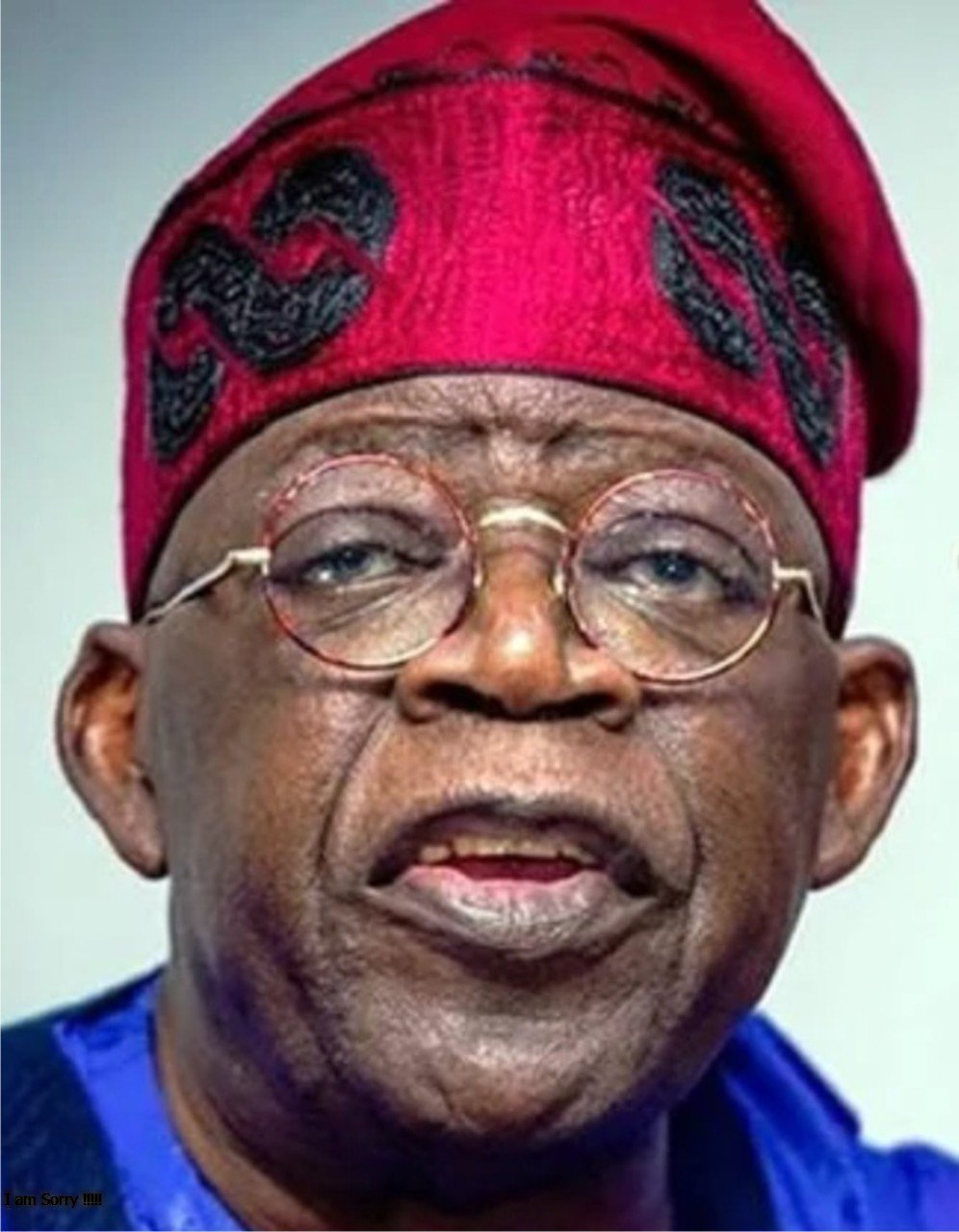
One region of the country that Pres. Bola Tinubu is paying a lot of attention to right now is the North. Reason? He knows he has to win in many Northern states. He tried in 2023.
He won big. He has to again win in 2027.
How does he plan to do that?
How strong is President Tinubu in the North? We can tell you. He is strong.
President Tinubu’s strength in the North is a mixed bag. On one hand, he has made efforts to address the region’s needs.
He has also emphasized the importance of Northern Nigeria’s development, stating that the country’s prosperity is inseparable from the region’s future.
Some notable projects in the North include:
– Infrastructure Development: The Abuja-Kano Expressway dualization, Sokoto-Badagry Superhighway, and Kano-Maradi Standard Gauge Railway
– Power Generation: The Ajaokuta-Kaduna-Kano (AKK) Pipeline and Zungeru-Kano Power Transmission Line
– Agriculture: Initiatives to boost food security and export leadership
– Security: Efforts to combat banditry and terrorism, with improved security on highways like Kaduna-Abuja
However, some of his critics, like Senator Rabiu Musa Kwankwaso often, accuse Tinubu of having marginalised the North in Infrastructure development. He still criticised Tinubu in Kano a few days ago. Others, like the Arewa Consultative Forum, express mixed feelings about his performance.
While Tinubu has taken steps to address the North’s needs, opinions on his strength in the region still vary.
His aides say President Bola Tinubu’s strength in the North is evident through various initiatives and projects aimed at improving the region’s infrastructure, economy, and social welfare. Some notable examples include:
– Transportation: Unveiling of 3,000 electric bikes, 500 tricycles, 100 cars, and 20 buses in Borno State to enhance mobility and transportation.
– Economic Empowerment: Establishment of a N200 billion intervention fund to support micro, small, and medium enterprises (MSMEs) and manufacturers.
– Social Investment: Expansion of the National Social Register, enrolling over 13 million households and 48 million individuals from Northern Nigeria, with N297 billion disbursed to 3.9 million households.
– Education: Initiatives like the Quality Education Learning Outcomes Council (QELOC), TVET Transformation Initiative, and National Anti-Bullying Policy to improve education quality.
– Agriculture: Distribution of modern agricultural tools to women smallholder farmers and empowerment of over 5 million female farmers.
These efforts demonstrate President Tinubu’s commitment to the North’s development.
Tinubu’s loyalists say Tinubu will win in the 19 Northern states. But is it possible for a presidential aspirant to win in the 19 Northern states?
Insiders say winning the 19 Northern states is definitely possible, but it’s not a guarantee of winning the Presidency. The North has historically played a significant role in politics, with its large population and voting bloc. However, the region is not a monolith, and voting patterns can vary greatly depending on factors like ethnicity, religion, and economic interests.
For instance, in the 2023 presidential election, Pres. Bola Tinubu won 12 states in the North, while Atiku Abubakar won 7 states and Peter Obi made some inroads in the region. This shows that it’s possible for a candidate to win some Northern states without sweeping the entire region.
Can Atiku possibly win in the 19 northern states?
Alhaji Atiku Abubakar’s chances of winning in the 19 Northern states are promising, considering he won several states in the region during the 2023 presidential election, including Adamawa, Bauchi, Gombe, Kaduna, Katsina, Kebbi, Sokoto, and Yobe.
In the North, Atiku’s strongholds include:
-Adamawa: He won with 417,611 votes, defeating Bola Tinubu’s 182,881 votes.
– Bauchi: Atiku secured 426,607 votes, surpassing Tinubu’s 316,694 votes.
– Sokoto: Atiku narrowly won with 288,679 votes, beating Tinubu’s 285,444 votes.
However, Tinubu also performed well in some Northern states, winning in:
– Kano: With 517,341 votes, despite Rabiu Kwankwaso’s strong showing.
– Zamfara: Tinubu secured 298,396 votes, beating Atiku’s 193,978 votes.
Analyst say to win the 19 Northern states, Atiku would need to maintain his strongholds and potentially gain ground in states like Kano and Zamfara. Factors influencing the outcome include:
– Coalition-building: Building alliances with influential politicians and groups.
– Regional Sentiment: Appealing to Northern interests and values.
– Economic Development: Promising effective governance and economic growth.
Can Tinubu win more states in the North come 2027?
Again his loyalists say Pres. Bola Tinubu’s chances of winning more states in the North are promising, considering he already won 12 states in the 2023 presidential election, including Borno, where he secured 252,282 votes. He performed well in the North-West, beating Atiku Abubakar in the region with 2,652,824 votes compared to Abubakar’s 2,197,824 votes.
The key states Tinubu won in the North are:
– Borno: 252,282 votes
– Jigawa: 421,390 votes
– Kano: 517,341 votes
– Kwara: 342,945 votes
– Niger: 375,183 votes
– Zamfara: 298,396 votes
Tinubu’s strategy of building alliances and appealing to Northern interests might help him gain more ground. However, the opposition’s divisions and strengths in certain regions could impact his chances.
The North is divided into how many zones
– North-East: Adamawa, Bauchi, Borno, Gombe, Taraba, Yobe
– North-West: Jigawa, Kaduna, Kano, Katsina, Kebbi, Sokoto, Zamfara
– North-Central: Benue, Kogi, Kwara, Nasarawa, Niger, Plateau
These zones are not formal administrative divisions but are commonly used for geopolitical and cultural purposes.
Here’s a brief overview of the 3 zones in Northern Nigeria:
– North-East:
– States: Adamawa, Bauchi, Borno, Gombe, Taraba, Yobe
-Characteristics: Diverse ethnic groups, rich cultural heritage, significant agricultural production
-Challenges: Insecurity (Boko Haram), poverty, limited infrastructure
– North-West:
– States: Jigawa, Kaduna, Kano, Katsina, Kebbi, Sokoto, Zamfara
– Characteristics: Hausa-Fulani majority, strong Islamic influence, commercial hubs
– Challenges: Insecurity (banditry), economic inequality, education deficits
– North-Central:
– States: Benue, Kogi, Kwara, Nasarawa, Niger, Plateau
– Characteristics: Diverse ethnic groups, agricultural production, mineral resources
– Challenges: Farmer-herder conflicts, insecurity, infrastructure gaps
These zones face common challenges like poverty, insecurity, and infrastructure deficits, but each has unique characteristics and priorities.
Which geographical zones command huge votes in the North you may ask?
The North-West and North-Central zones are considered high-voting areas in Northern Nigeria. The North-West, comprising states like Kano, Kaduna, and Katsina, is the most populous region, accounting for approximately 23% of Nigeria’s population. The North-Central zone, also known as the Middle Belt, includes states like Benue, Plateau, and the Federal Capital Territory (FCT), Abuja.
Which are the key states with significant voting Power:
– Kano State: One of the most populous states in Nigeria, with significant economic and cultural influence.
– Kaduna State: A major commercial hub and home to diverse ethnic groups.
– Plateau State: Known for its strategic location and influential voting bloc.
– Benue State: A key state in the North-Central zone with substantial agricultural production.
These zones and states play a crucial role in shaping Nigeria’s electoral landscape.
Some people say to be President in Nigeria you must win in 3 K states in the North, like Kano, Kaduna, and Katsina – 3 key states in Northern Nigeria. Why? These states are significant for their population, economic influence, and cultural heritage.
– Kano: Nigeria’s most populous state, known for commerce and Islamic culture.
-Kaduna: A major commercial hub with diverse ethnic groups.
– Katsina: A key agricultural producer and culturally rich state.
Winning Kano, Kaduna, and Katsina is seen as crucial for any presidential candidate in Nigeria, but it’s not a guarantee of victory. These states have significant electoral votes and are considered key battlegrounds.
– Kano: With over 9 million registered voters, Kano is a must-win for many candidates.
– Kaduna: As a swing state, Kaduna’s electoral votes can go either way, making it a critical target.
– Katsina: As a populous state with strong cultural influence, Katsina is often a key focus for candidates.
However, other factors like national appeal, coalition-building, and performance in other regions also play significant roles in determining the presidency.
What are the electoral strategies for these states?
The electoral strategies for Kano, Kaduna, and Katsina often involve:
– Ethnic and Religious Appeal: Connecting with local cultural and Islamic values.
-Coalition-Building: Partnering with influential politicians and groups.
-Economic Promises: Focusing on agriculture, infrastructure, and job creation.
-Security: Addressing banditry, terrorism, and farmer-herder conflicts.
Specific strategies might include:
– Kano: Leveraging commerce and cultural heritage, appealing to Hausa-Fulani interests.
– Kaduna: Targeting swing voters, emphasizing unity and development.
– Katsina: Highlighting agricultural development and youth empowerment.
Some often ask if it true that the electoral law expects you to win 25 per cent in many states?
The truth is that the constitutional requirement for presidential candidates to win at least 25% of the votes in two-thirds of the states and the Federal Capital Territory (FCT) to be declared president.
This means a candidate needs to win at least 25% in:
– 24 states (2/3 of 36 states)
– The FCT
Winning 25% in key states like Kano, Kaduna, and Katsina can contribute significantly to meeting this requirement.
The 25% requirement in two-thirds of the states and the FCT is a significant hurdle for presidential candidates.
