

The global internet industry has undergone several major transformations over the past three decades, evolving from dial-up connections to fiber optics and wireless broadband. Yet few developments have generated as much excitement in recent years as satellite-based internet. At the center of this revolution is Starlink, a satellite broadband network developed by SpaceX and led by American tech entrepreneur Elon Musk.
What started as an ambitious experiment to connect remote areas of the world has quickly grown into a powerful global internet network that is reshaping connectivity in many countries, including Nigeria.
The idea behind Starlink emerged in the United States in 2015 when SpaceX began exploring ways to deliver internet directly from space. The company envisioned launching thousands of small satellites into low Earth orbit, forming a constellation that could transmit high-speed internet signals to users across the globe.
Traditional internet systems depend heavily on cables, fiber networks, and cellular towers built on land. While these systems work well in cities, they are often difficult and expensive to deploy in rural areas. Starlink was designed to bypass these challenges by sending internet signals directly from orbiting satellites to a small dish installed at a user’s home or office.
Unlike conventional communication satellites located about 36,000 kilometers above the Earth, Starlink satellites operate much closer to the planet, roughly 550 kilometers in low Earth orbit. This shorter distance reduces latency and allows users to experience faster internet speeds and more stable connections.
SpaceX launched its first batch of Starlink satellites in 2019, marking the beginning of what would become one of the largest satellite constellations in history. Over the years, the company has launched thousands of satellites using its Falcon 9 rockets. The project has continued to expand rapidly, with new satellites added regularly to strengthen global coverage.
According to Elon Musk, the main goal of Starlink is to close the global digital divide by providing fast and affordable internet to places where traditional broadband infrastructure does not exist. He once described the project as a way to bring “high-speed, low-latency internet anywhere on Earth.”
Today the service has millions of users across dozens of countries and continues to expand rapidly. It is particularly popular in remote areas where fiber networks and cellular towers are scarce.
In Africa, Starlink has generated enormous interest, especially in countries where internet infrastructure is still developing. Nigeria became a major milestone for the company when Starlink officially launched its services in the country in January 2023 after receiving approval from the Nigerian Communications Commission. The rollout made Nigeria the first African country where the satellite internet service became fully operational.
The launch generated excitement across the country’s technology community and among millions of Nigerians who have struggled with slow and unreliable internet connections.
Nigeria’s digital economy has been expanding rapidly, driven by fintech startups, online traders, content creators, remote workers, and software developers. However, internet quality has often been inconsistent, forcing many users to rely on multiple networks at the same time.
For many Nigerians, the arrival of Starlink appeared to offer a new alternative.
Within months of its launch, Starlink equipment began appearing in homes, offices, schools, and businesses across major cities such as Lagos, Abuja and Port Harcourt. Because the system does not rely on cables or towers, it also spread quickly into smaller towns and rural communities.
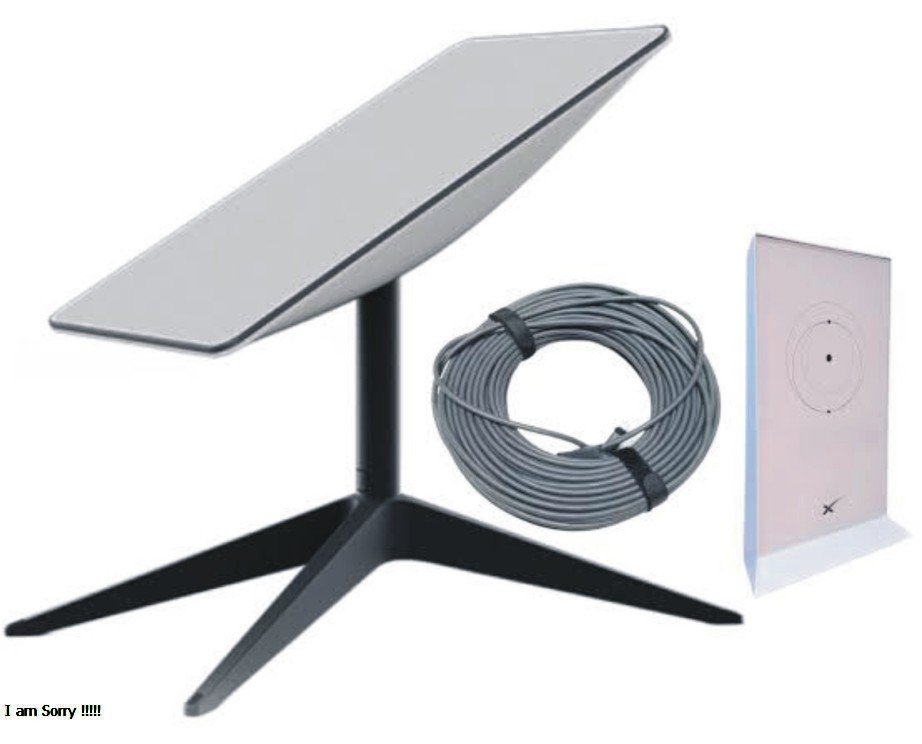
The technology works through a small satellite dish installed outside the building. Once connected to power, the dish automatically aligns with Starlink satellites passing overhead and sends internet signals to a router inside the building.
A Lagos-based digital marketer, Kunle Ajayi, said switching to Starlink dramatically improved his work.
“I work with clients in the United Kingdom and Canada,” he said. “Before Starlink, video calls used to break every few minutes. Now my meetings run smoothly without interruptions.”
Another user in Ibadan, software developer Tunde Olatunji, described the experience as a major improvement.
“I used to combine two different networks just to stay online,” he said. “With Starlink the connection is faster and far more stable.”
Technology retailers across Nigeria confirm that demand for the satellite internet equipment has been extremely strong.
An electronics dealer in Lagos explained that customers now ask specifically for the service.
“Many people are tired of unreliable internet,” he said. “When they hear about Starlink they want to try it because it works differently from the normal networks.”
Distributors say the biggest buyers include businesses, financial traders, online professionals, and media companies that depend heavily on stable internet connectivity.
Some companies also install Starlink as a backup connection to avoid disruptions when local internet services fail.
Despite its rapid rise, Starlink operates in a competitive Nigerian internet market where several established providers already exist.
Among the major broadband providers is Spectranet, one of the earliest 4G LTE internet service providers in Nigeria. Spectranet began operations in the country in 2009 after receiving a license from the Nigerian Communications Commission, NCC. The company provides wireless broadband services mainly in major cities such as Lagos, Abuja, Ibadan, and Port Harcourt.
For many years Spectranet built a strong reputation among businesses and heavy internet users who required faster broadband connections than what was available through mobile networks.
Another major broadband provider is FiberOne Broadband, which focuses on fiber-optic internet connections in urban areas.
In addition to these companies, mobile telecommunications operators dominate Nigeria’s internet market. The largest among them include MTN Nigeria, Airtel Nigeria, Globacom and 9mobile.
These telecom companies deliver internet mainly through cellular towers and fiber-optic infrastructure. Millions of Nigerians rely on their mobile data networks every day.
Compared with these providers, Starlink operates very differently. Instead of transmitting signals through land-based infrastructure, it beams internet directly from satellites orbiting the Earth.
This gives Starlink a unique advantage in areas where building telecom infrastructure is difficult or expensive. Rural communities, offshore facilities, farms, and remote settlements can access the service even without nearby cell towers.
Industry analysts say this technological difference is one of the reasons Starlink has been gaining attention so quickly in Nigeria.
Within a short period after its launch, the satellite provider recorded tens of thousands of subscribers across the country. The rapid adoption surprised many observers in the telecommunications sector.
However, older providers like Spectranet still maintain strong positions in the broadband market because they have been operating for many years and have built extensive customer bases in major cities.
The competition between these providers reflects the changing nature of the internet industry in Nigeria.
Spectranet and FiberOne rely on terrestrial infrastructure such as base stations and fiber cables, which can deliver very high speeds but require significant investment and physical construction.
Starlink’s satellite-based system removes many of those barriers and allows internet signals to reach places that traditional infrastructure cannot easily reach.
Some telecommunications analysts believe the presence of Starlink is already pushing older internet providers to improve service quality.
A telecom consultant in Abuja explained the shift: “Competition is healthy for the industry,” he said. “When a new technology like satellite broadband enters the market it forces existing companies to innovate and improve their services.”
Beyond businesses and professionals, the technology is also beginning to influence education and entrepreneurship across Nigeria.
Students in remote communities can now access online learning platforms more easily, while entrepreneurs are able to run digital businesses without worrying about unstable internet connections.
A university student in Enugu described how Starlink improved her academic work. “Before now downloading research materials could take hours,” she said. “Now it happens in minutes.”
Small businesses are also benefiting from the improved connectivity. Online retailers, freelance designers, and digital consultants say faster internet allows them to communicate more efficiently with international clients.
In Lagos, where internet demand is extremely high, some companies now install Starlink as a backup connection to avoid downtime whenever local networks fail.
Technology consultants say this backup capability is particularly important for financial institutions, news organizations, and media companies that cannot afford internet disruptions.
For Elon Musk and SpaceX, the success of Starlink represents more than just a telecommunications breakthrough. The service is also expected to generate billions of dollars in revenue that could help fund future space exploration projects.
SpaceX engineers continue to launch new satellites regularly to strengthen the network and expand coverage.
Globally, the rapid growth of Starlink is changing how people think about internet connectivity. Instead of relying entirely on cables and towers, the internet is increasingly being delivered from space.
In Nigeria the impact is already becoming visible. From tech startups in Lagos to students in rural communities, thousands of people are discovering new opportunities through faster and more reliable internet access.
As satellite launches continue and adoption grows, industry observers believe the influence of Starlink will only increase in the coming years.
What began as a bold technological experiment inside a private space company has rapidly evolved into one of the most disruptive forces in the global internet business.
And if the current trend continues, the constellation of satellites circling above the Earth may soon become one of the most important infrastructures powering the digital economy of the modern world.
By Benprince Ezeh
08068599879
