

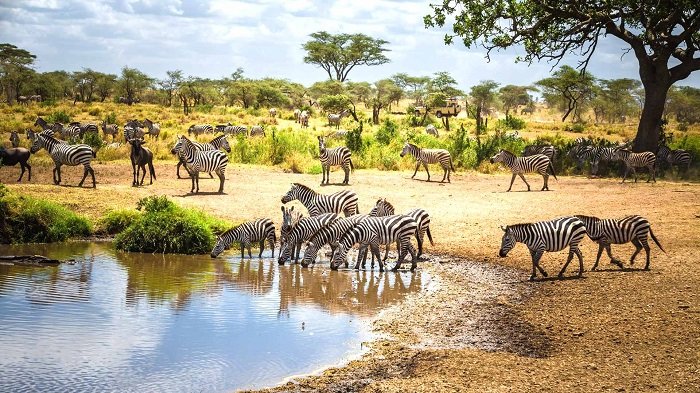
Tanzania stretches from the Indian Ocean coastline to the volcanic highlands of the Ngorongoro Crater, with more protected wilderness area than almost any other country in Africa. That size and variety is exactly what makes planning a trip there confusing. Before booking anything, it helps to break the decision into a handful of concrete questions rather than scrolling through hundreds of lodge photos, hoping something clicks.
Decide What You Actually Want to See
The Serengeti’s massive wildebeest migration is what draws most people to northern Tanzania, but it’s not the only draw, and chasing it blindly can backfire if your dates don’t align with the herds’ location. If witnessing the migration river crossings is the priority, you need the Grumeti River area between May and July, or the Mara River in the north between August and October. If big cats and general game density matter more than the migration specifically, the southern circuit — Ruaha, Nyerere (formerly Selous), and Katavi — delivers extraordinary sightings with a fraction of the visitor traffic.
Think also about what you’re not interested in. Some travellers want walking safaris and remote bush camps; others want easy game drives from a comfortable lodge with a pool. Both are legitimate ways to experience the country, but they require different itineraries and different budgets.
Match the Season to Your Priorities
Tanzania has a long dry season from June to October and a shorter one in January and February, both considered prime safari months because animals gather around permanent water sources and vegetation thins out, making sightings easier. The long rains fall from March through May, when many camps in the south close entirely and prices drop sharply everywhere else.
Green season travel, roughly November through May, isn’t a compromise so much as a different experience. Birdlife explodes, newborn animals are everywhere, and the landscape turns lush and photogenic in a way the dry months never achieve. The tradeoff is thicker foliage that can make spotting predators harder and occasional afternoon downpours that interrupt game drives.
Choose Between the Northern and Southern Circuits
The northern circuit — Serengeti, Ngorongoro Crater, Tarangire, and Lake Manyara — is Tanzania’s most famous and most visited region, with excellent infrastructure, short flights between parks, and reliable wildlife viewing year-round. It’s the right choice for first-time visitors or anyone with limited time, since distances between parks are short and logistics are straightforward.
The southern circuit trades convenience for solitude. Nyerere National Park alone covers over 30,000 square kilometres, yet camps there rarely see more than a handful of vehicles at any sighting. Getting there usually requires a light aircraft charter rather than a short drive, which adds cost but removes the crowds entirely. Travellers who’ve already done a classic northern trip, or who simply want a quieter, more exclusive feel, tend to gravitate south.
Set a Realistic Budget
Costs in Tanzania vary enormously depending on camp style, season, and circuit. Budget camping safaris in the north can run around 200 to 300 dollars per person per day, while luxury lodges and remote southern camps can exceed 1,500 dollars per night per person, all-inclusive. Park fees, conservation fees, and crater fees add up quickly and are usually charged per person per day regardless of how long you stay in a given park.
It’s worth building in a buffer for internal flights, which are often unavoidable if you want to combine circuits or reach remote camps. A one-way charter flight between the Serengeti and southern parks can cost several hundred dollars per person, so factor that into comparisons between itineraries that look similar on paper but differ in accessibility.
Pick the Right Style of Camp or Lodge
Accommodation options range from permanent lodges with electricity and Wi-Fi to canvas tented camps with no fixed structures at all, some of which move seasonally to follow the migration. Mobile camps tend to put you closer to the action and offer a more traditional bush experience, while permanent lodges offer more predictable comfort and amenities.
Consider group size too. Camps with six to twelve tents feel intimate and often include shared game drives with a small number of other guests, while larger lodges can host 40 or more people and feel busier at meal times and around the pool.
Work With a Specialist Operator
Because logistics between parks, camps, and internal flights can get complicated fast, working with an operator who focuses specifically on safaris in Tanzania tends to produce smoother, better-planned trips than piecing everything together independently. A knowledgeable operator can also adjust an itinerary in real time if migration patterns shift or a camp has last-minute availability elsewhere.
Ask any operator how many nights they recommend per park and why, rather than accepting a generic template. A good answer will reference specific wildlife patterns, road conditions, or seasonal factors rather than a one-size-fits-all schedule.
The Bottom Line
The right Tanzania safari isn’t the most expensive one or the most popular one — it’s the one that matches your specific priorities around wildlife, crowds, comfort, and budget. Start by naming what you most want to see and when you can travel, then let the circuit, camp style, and operator follow from there rather than the other way around.
