

-
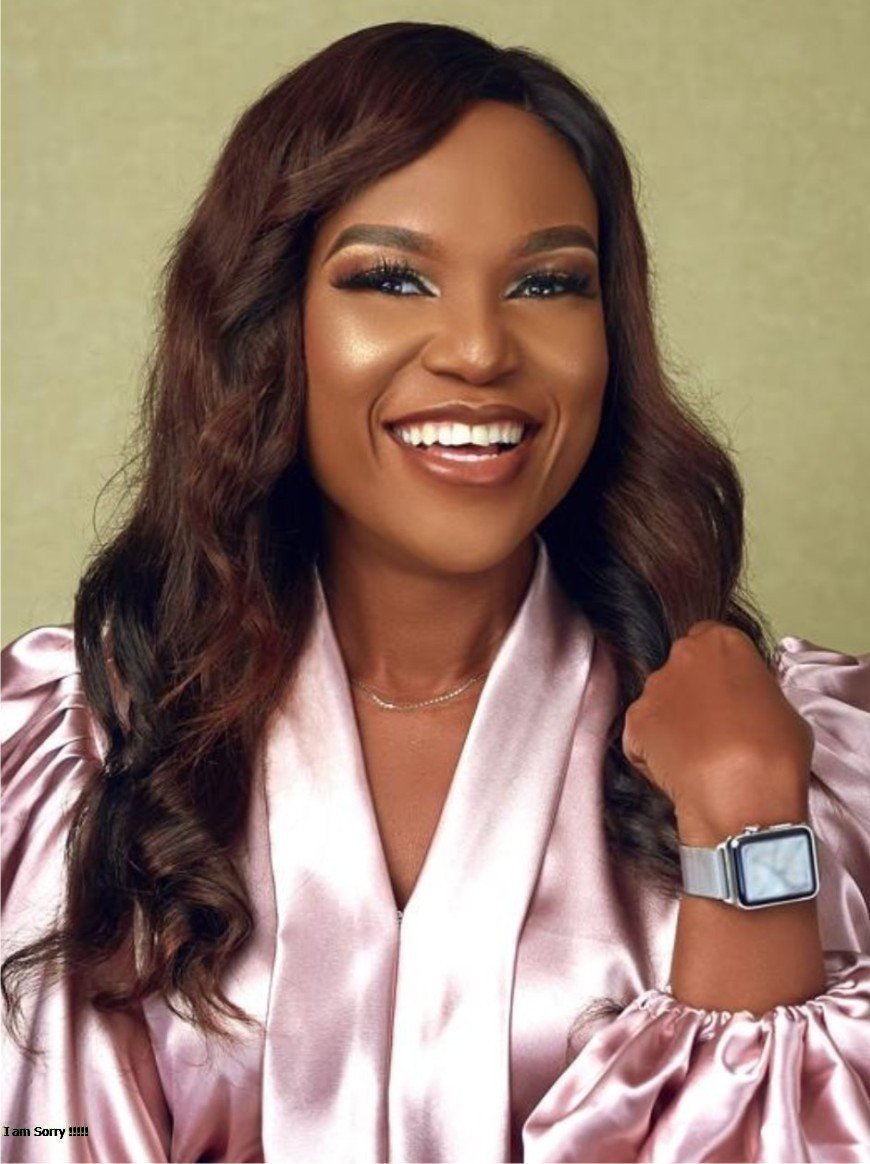
Public Health Physician, Dr. SIMISOLA ALABI
What role does Lifestyle play in the Management of Menopause?
It is very, very important. And I may be biased.
I feel like if you’re having lots of aerobic and anaerobic exercise it will help. So for me, personally, I love walking and running. And honestly, that makes such a difference on almost all the symptoms. Not all. There are some that you need intervention.
So things that have to do with the vagina, you may need to use vaginal estrogen. But exercise is, for me, number one.
And also resistance exercises, because as we know, when estrogen declines and testosterone declines, you get chances of your bones thinning. So you find that women get fractures during this time. You see a woman that has a splint in her arm. She’s broken her wrist.
And you don’t want to get a hip fracture, because women die from hip fractures. If your estrogen is low, the tendency to have a fracture is high. But when you do weight-bearing exercises, lifting your weights, it helps reduce the chances of that, and it actually helps to build bone density.
So exercise is very important. Food, what you eat, is also very important. Keeping your weight down is so important. Because again, if you are big, then you tend to have more chance of things like cancer, worse menopausal symptoms.
Alcohol is also a no-no during this period. So there are so many things you can do to improve how you go through this beautiful phase of life, because it’s a really good phase of life, right?
If you have children, they’re older. Even if you don’t have children, when your friends are with you, you have more time to spend with them, you can give back in terms of legacy. There’s so much you can do.
So I’ll say it’s important that the lifestyle is probably number one.
And then, as women grow older, maybe like 80, is it still the same experience they will have or will they face another phase?
It’s better, because at that time, you’re not really having hot flushes, because they finish, the symptoms end.
So they go from seven, I mean the hot flush, the ones that are like basal motor, obviously, the other bits will continue to sort of advance. But the main menopausal changes go on for about seven to 10 years.
And then by the time you get into your 70s, you’re dealing with other challenges. You’re dealing with arthritis, you’re dealing with cardiovascular problems, because these hormones also help improve heart health.
So you’re dealing with all of those other things, hypertension, you can see women’s cardiovascular disease increase post-menopause. So we’re able to say, if you’re going to have hormone replacement, we always say it’s better to have it earlier than later.
So when you go to your 70s and 80s, you’re dealing with a different set of challenges. But if you’ve done what we’ve talked about really well, you will reap the dividends then.
So if you’re exercising regularly, you’re watching what you eat, you’re keeping your weight down, you’re speaking to people, you’re making sure that if you’re depressed, you find help, you have a community around you, which we do very well in Africa. We have a strong community.
Then when you’re in your 80s, it’s bearable, you’re not bent over. In the West, you see many women who are so arthritic, their estrogen is so low, that by the time you’re like, their hands, everything, they’re really not able to move, they’re not mobile.
But here, you see people in their 60s, 70s, 80s, they’re walking around, they’re really strong. So we should give ourselves kudos for that. We do that well.
During the last conference, you spoke about a particular drug that can help.
Yes, Hormone replacement.
Can you talk about that?
I can talk about that. I think the reason why I don’t go into that first is that a lot of women are being scared to even approach menopausal replacement, hormone replacement therapy.
So I don’t ever push my patients to have hormone replacement unless we have exhausted other things, or I see them the first time, and I know that you need hormone replacement.
Hormone replacement just says that, okay, because during this time, you’re losing, your estrogen is depleted, progesterone, testosterone, we want to replace it.
But the fear that many women have was based on the studies during the Women’s Health Initiative in the 70s where the trial was done on women who were older using horse hormones, and women who already had problems.
So there was an increase in breast cancer. So women were staying away from it because, oh my God, there’s this risk of breast cancer.
But now, as I said to you before, for instance, if you have no womb and you’re having estrogen, there’s no increase in breast cancer.
If you’re having transdermal replacement, so hormone replacement is estrogen, progesterone, and plus or minus testosterone, depending on if you need it.
Now, personally, I only support transdermal application of estrogen, so either as a gel or as a spray. Worst case scenario a patch, I personally have moved away from oral estrogen.
Some clinicians still prescribe it, but I don’t because I find we see the evidence that oral increases your chances of even clots in the legs.
So we replace estrogen with a gel or with a spray, and then we also give progesterone if you still have your womb, because if you give estrogen unopposed, the lining of the womb will get thicker and thicker and thicker, and that can lead to endometrial cancer.
So we have to keep the lining of the womb thin, so we give progesterone. Progesterone is also good for sleep as well as for women who have sleep disruption. We give progesterone. Obviously, they’re either as a combined, sequential, or continuous. So this is something that the clinics will understand. I can’t teach that online.
We give that, and then testosterone if necessary for lethargy, low libido, if the testosterone is low.
If it’s below one, I’ll be like, okay, let me replace it. I’ll get it to one as a gel, and actually in the UK, it’s now been licensed that you can now prescribe women-specific testosterone to improve testosterone levels.
So you just start that. I always say it’s better to start it sooner rather than later.
If you’re going to go down that lane, you start it, and then we review at three months. See how you are. There are other things that we review as well.
So you can’t just go home and start it. We have to start it in a very controlled way. Review at three months, and then if you’re fine, we’ll review annually after that.
And that’s it. And you can continue until whenever. I have patients who are in their 70s, they’re fine, in their 80s, they’re fine.
Before, back in the day, we would say, oh, you have to stop it. Yeah, there’s still a very small risk of breast cancer. People have to educate themselves about that.
Very, very, very small. Nothing significant. Definitely not as much as being big, obese. Obesity will actually increase your chance of breast cancer more than HRT.
As alcohol would, obesity, being sedentary, not exercising, smoking — these are modifiable risks that increase cancer chances more than HRT.
But it’s been a game changer. From women coming into my room completely deflated, having no hope of anything, and coming back to see me three months later different, happy, facing life again.
The whole family’s changed. Everybody’s happier. It has been a game changer. So we can now achieve that with everything else we’ve discussed, and there are other alternatives, not just hormone replacement we have Black cohosh. We have other things that are non-hormonal. If you can’t achieve all of that, then hormone replacement is definitely something that a woman should consider.
So what advice would you give to Men?
You know, the men are so important. And I’ve seen good partners, and I’ve seen bad partners. I’m not trying to judge anyone. I’ve seen men who come in and are so supportive. I love my wife. I really do.
I’ve never seen her like this. What can I do? What do I do?
And also, I’ve seen men who are inconvenienced by it. It’s inconvenient. I’m tired of this. I can’t deal with this. I’ve had men call me and say, I can’t live with her.
That is not being supportive. So for the men, I think you emulate those men who come into my room and are like, well, I do. You know, emulate those men, which is more about being curious, you know, what’s going on with her.
Oh, I think it’s menopause. You go and don’t ask her what it is. Because women in that phase, they’re fed up.
They’re tired. They’ve been looking after their family for 20 years. They had children.
They brought them up. They’ve been looking after the man. They’re fed up.
That’s why we also see that divorce rate spike around that time because they’re fed up. They’re like, I can’t deal with you anymore. Don’t go and ask her what’s menopause.
You go and read about it. Just talk to her and say, oh, I’ve being reading about this. This is what I found.
And she’s like, ah, so you too are reading about this. No, she’s going to be impressed, you know.
Read about it. Educate yourself. And then just tell her, look, I’m here.
You know, what do we need to do? How do we go through this phase together?
Bearing in mind that men are also going through their own changes.
And men don’t really talk about their changes with their wives. I don’t know why.
So, you know, at that time, the man’s testosterone is also plummeting because from the age of 35, the man’s testosterone is going down.
A man is also dealing with erectile dysfunction. They’re also dealing with large prostates. Their urination is not the same as before. They’re also dealing with weight gain.
So both of you are dealing with hormonal changes. So both people need to educate themselves.
I think it’s basically women understanding what men are going through by men speaking about it and men learning about menopause and saying what do we do about it and doing it as a unit.
So I think the men are very pivotal in keeping the home together at that time because the women’s tolerance level is almost zero at that point.
The man needs to keep the home together and needs to support the woman, needs to be caring, needs to let her know that I care.
And even if you’re going through this, I’m here. I’m not going to run away.
I’m laughing because I remember what some men tell me when they would not come home after work.
They would go somewhere and stay there till 10 o’clock until she’s feeling better before I go home.
So go home and talk to her. So the role of a man is so, so, so important.
I want to ask, do you actually think from your experience, that men realize what they’re going through? Is it something that they’re conscious of?
I dont think the men know what they are going through. I think there’s a bit of shame. I don’t know. Is it shame? I have to ask you because men don’t want to talk about it.
They almost feel ashamed. I don’t know whether any other man can tell me what’s going on with men. I don’t know.
But they almost hide it. And when they come, they just say it. Even when they come to the doctor, they say it in a way, you tell me what’s going on with men.
Is it that you can’t talk about it? What is it?
That’s why I asked that, do you think it has to do with the fact that they’re not really cautious of it, they just think it’s like an everyday health challenge that they can deal with, but not a phase they’re going through?
I’ve been a doctor for 25 years. If I tell you that I know why men don’t understand, I don’t know whether they don’t understand, because I also know that they go and seek for solutions with some people in secret.
So for instance, if a man is experiencing impotence or erectile dysfunction, they are the ones that will go and take something that will cause their blood pressure to go up and have a heart attack.
But they won’t go to the doctor, but they will have a friend who will say, take this thing, take it in the corner and it will harm them.
So I can’t tell you what the thinking process of men is. Only a man can tell me why, whether is it shame? Is it because they don’t want to seem weak?
I can’t tell you what it is, but I think it’s something that men need to discuss amongst men and find, because for us as doctors, it makes my job more difficult because I have to dig and say, okay, so I have to ask you lots of questions.
It makes life much harder rather than just saying I have erectile dysfunction or I’m peeing on the toilet seat because I don’t, I have no control over it because your prostate is large.
That’s why you’re peeing on the toilet seat. It’s not your fault. You think you’ve finished passing urine, but you haven’t. So by the time you do this, and then your wife gets very angry, but actually it’s a phase, it’s your prostate that is large. Your testosterone is low. It can be replaced.
You can do things that a woman is doing.
So basically the message is that a woman’s status can be handled.
