

-
What No One Will Tell You About Them
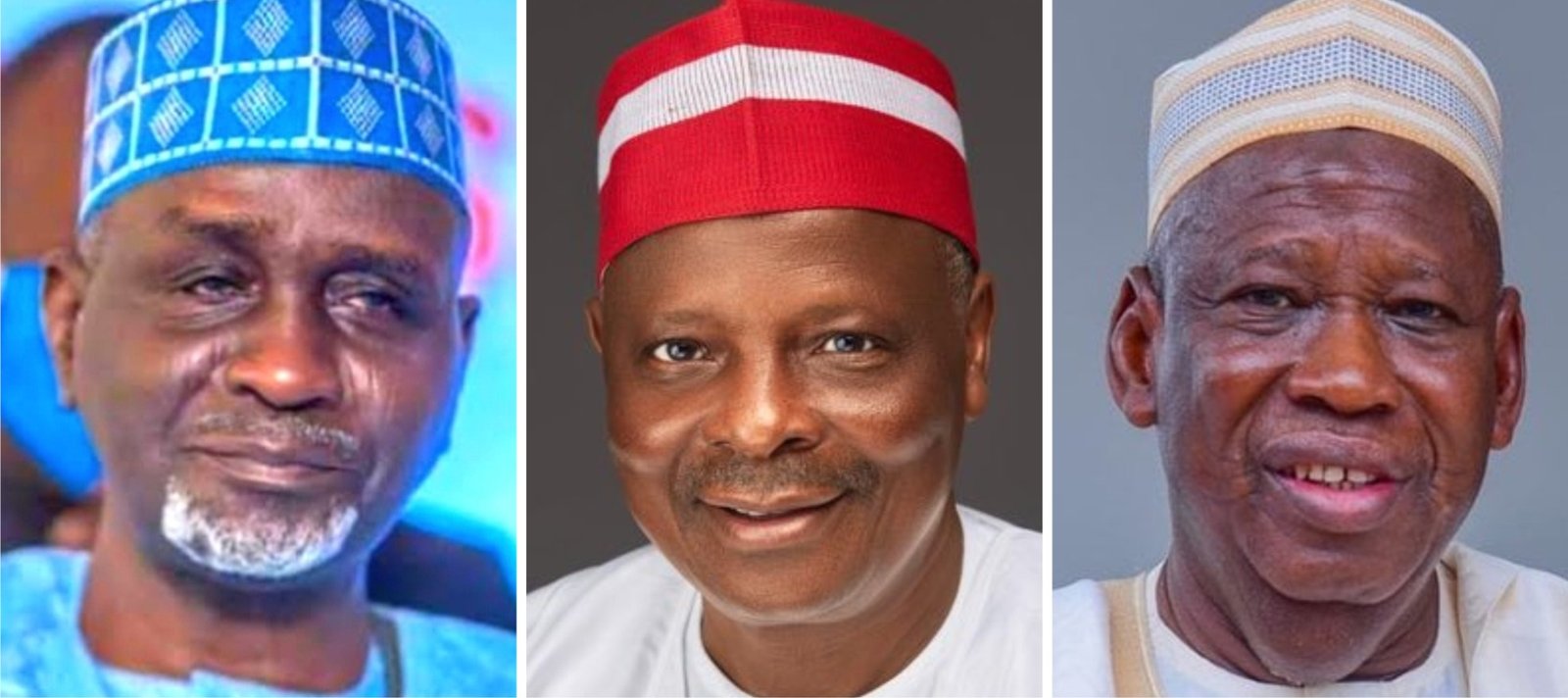
Do you know the 3 Big politicians who control Kano politics? We can tell you. They are Shekarau, Kwankwaso and Ganduje. They control Kano politics?
Shekarau, Kwankwaso, and Ganduje are influential figures in Kano politics, having served as governors of the state. Their past alliances and rivalries have shaped the state’s political landscape till this day.
Both Shekarau and Kwankwaso have had a complicated history, with Kwankwaso’s defection from PDP to APC in 2014 leading to Shekarau’s move to APC. Ganduje, a former deputy to Kwankwaso, has also had disagreements with his former boss, particularly over issues like cabinet composition and influence.
These 3 leaders have been involved in various political maneuvers, including party defections and reconciliatory efforts. For instance, there has been talk of reconciliation between Kwankwaso, Ganduje, and Shekarau, with some arguing that unity among them could drive Kano’s development.
Their influence is undeniable, but it’s worth noting that Kano politics is complex, with multiple factions and shifting alliances.
Abdullahi Umar Ganduje is a politician who served as the governor of Kano State from 2015 to 2023. Born on December 25, 1949, in Ganduje village, Dawakin Tofa Local Government Area of Kano State, Ganduje is a member of the All Progressives Congress (APC) and has held various positions, including deputy governor of Kano State twice, under Rabiu Kwankwaso.
Ganduje’s tenure as governor was marked by conflicts with his predecessor, Rabiu Kwankwaso, and Emir Muhammadu Sanusi II, whom he deposed in 2020. He was re-elected in 2019 amidst controversies over electoral malpractices and faced bribery allegations in 2018.
Ganduje has also served as the national chairman of the APC from August 2023 to June 2025 and is currently the board chairman of the Federal Airports Authority of Nigeria (FAAN).
What was Ganduje’s impact on Kano State politics?
Abdullahi Umar Ganduje’s impact on Kano State politics has been significant. He served as governor from 2015 to 2023, implementing various policies and projects that shaped the state’s development. Some of his notable achievements include:
– Infrastructure Development: Ganduje invested in road construction, healthcare facilities, and education infrastructure.
– Security: He strengthened security measures, which led to a relative calm in the state.
– Economic Growth: Ganduje promoted entrepreneurship, agriculture, and private sector investment, boosting the state’s economy.
– Controversies: His tenure was marked by conflicts with opposition parties, labor unions, and traditional institutions, including the deposition of Emir Muhammadu Sanusi II in 2020..
Ganduje’s governorship also saw the rise of the APC in Kano, as he consolidated power and influence within the party. His leadership style and policies have had lasting effects on the state’s politics, with some praising his efforts to develop Kano and others criticizing his approach to governance.
Is Ganduje still very powerful?
Ganduje is still a significant figure in politics, particularly within the All Progressives Congress (APC). He served as the APC National Chairman from August 2023 to June 2025 and is currently the Chairman of the Board of the Federal Airports Authority of Nigeria (FAAN).
Ganduje’s influence extends beyond his official roles, with many considering him a key player in Kano State politics and a strategist for the APC. His leadership and vision have contributed to the party’s growth and victories in various elections. Some analysts view him as a kingmaker, leveraging his networks within the APC and across opposition lines.
However, it’s worth noting that Ganduje’s resignation as APC National Chairman and his new role at FAAN may have shifted his focus and influence.
How about Kwankwaso
Rabiu Kwankwaso is still a significant player in politics, particularly in Kano State. He’s the leader of the Kwankwasiyya movement and has a strong following. After losing the 2023 presidential election, Kwankwaso joined the African Democratic Congress (ADC) and is reportedly exploring alliances with other parties, including a possible partnership with Peter Obi’s Labour Party.
Kwankwaso’s influence in Kano politics is undeniable, but his recent moves have been met with challenges, such as Governor Abba Yusuf’s defection to the APC, which has weakened his hold on the state. He’s currently recalibrating his strategy and rebuilding his support base.
What is Kwankwaso’s political plans?
Rabiu Kwankwaso has joined the African Democratic Congress (ADC), a move seen as a significant boost to the opposition’s efforts to challenge the ruling All Progressives Congress (APC) in the 2027 elections. He made this move after resigning from the New Nigeria Peoples Party (NNPP), citing the need for strategic realignment. Kwankwaso’s decision has been welcomed by ADC leaders, including National Chairman David Mark, who described it as a deliberate response to calls for a stronger, united opposition.
Kwankwaso’s move to ADC is also seen as part of a broader effort to unite opposition forces and protect Nigeria’s democracy. Peter Obi, former Labour Party presidential candidate, has urged unity among opposition leaders, emphasizing the need for cooperation to address Nigeria’s challenges and offer voters a credible alternative.
What is Kwankwaso’s plans with ADC?
Rabiu Kwankwaso’s plans with the African Democratic Congress (ADC) involve strengthening the party and exploring alliances to challenge the ruling All Progressives Congress (APC) in the 2027 elections. He’s reportedly considering a joint presidential ticket with Peter Obi, with Obi as the flag-bearer and Kwankwaso as his running mate. This alliance aims to combine Obi’s strong support base in the South with Kwankwaso’s influence in the North, creating a formidable opposition front.
Kwankwaso has urged ADC supporters to register as party members and promote the party’s ideals, emphasizing the need for credible leadership and good governance. He’s also called for unity among opposition forces, stressing that collective action is necessary to address Nigeria’s challenges.
Who is the strongest of the 3 kingmakers?
The strongest of the 3 kingmakers is a matter of debate, but Rabiu Kwankwaso is often considered the most influential. He’s a seasoned politician with a strong grassroots following, particularly in Kano State, and has built a formidable political machine through his Kwankwasiyya movement. Kwankwaso’s ability to mobilize support and his strategic alliances have consistently positioned him as a key player in national politics.
The other two kingmakers, Shekarau and Abdullahi Ganduje, also wield significant influence. Ganduje, on the other hand, has built a strong reputation as a leader and has been instrumental in shaping the All Progressives Congress (APC).
Is Governor Abba Yusuf also strong politically?
Governor Abba Yusuf is considered a strong leader, known for his consensus-driven approach and commitment to public service. He’s demonstrated this through his efforts to address water scarcity, improve education, and empower women in Kano State. His administration has also prioritized infrastructure development and healthcare.
Yusuf’s strength lies in his ability to mobilize support and navigate complex political landscapes. He recently defected to the All Progressives Congress (APC), which has boosted his influence and access to federal resources. This move has also sparked debate about his autonomy and potential challenges ahead.
Some see him as a strategic leader, leveraging his incumbency and grassroots support to shape Kano’s politics. Others question his loyalty and potential vulnerability to opposition forces.
Abba Yusuf and Rabiu Kwankwaso’s relationship is a mix of mentorship and politics. Kwankwaso, a seasoned politician, groomed Yusuf, who served as his personal assistant, commissioner, and eventually became governor of Kano State in 2023 with Kwankwaso’s backing. However, their bond has frowned recently, with Yusuf defecting to the All Progressives Congress (APC) and Kwankwaso joining the African Democratic Congress (ADC).
Their falling out seems to stem from Yusuf’s desire for autonomy and Kwankwaso’s expectation of loyalty. Despite this, both leaders have publicly maintained a facade of cordiality, with Yusuf stating their relationship remains “solid” and Kwankwaso describing it as “mutual respect and understanding”.
Tell me about their political trajectories
Rabiu Kwankwaso and Abba Yusuf’s political trajectories are intertwined, with Kwankwaso playing a significant role in shaping Yusuf’s career. Kwankwaso, a seasoned politician, served as Kano State governor twice (1999-2003 and 2011-2015) and held various positions, including Minister of Defence (2003-2007) and Senator (2015-2019). He’s currently the national leader of the New Nigeria Peoples Party (NNPP) and has been instrumental in Nigerian politics, known for his charismatic populism and grassroots appeal.
Abba Yusuf, on the other hand, started as Kwankwaso’s Personal Assistant in 1999 and rose through the ranks, becoming Commissioner for Works, Housing, and Transport (2011-2015). Yusuf won the 2023 gubernatorial election under NNPP, with Kwankwaso’s backing, and recently defected to the All Progressives Congress (APC) citing unity and delivery.
Their relationship, however, has strained, with reports suggesting a rift due to Yusuf’s growing autonomy and Kwankwaso’s expectations of loyalty. Kwankwaso has since joined the African Democratic Congress (ADC), potentially setting the stage for a 2027 showdown.
