
-
For The ADC Presidential Ticket
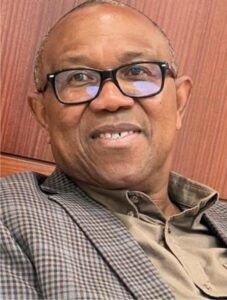
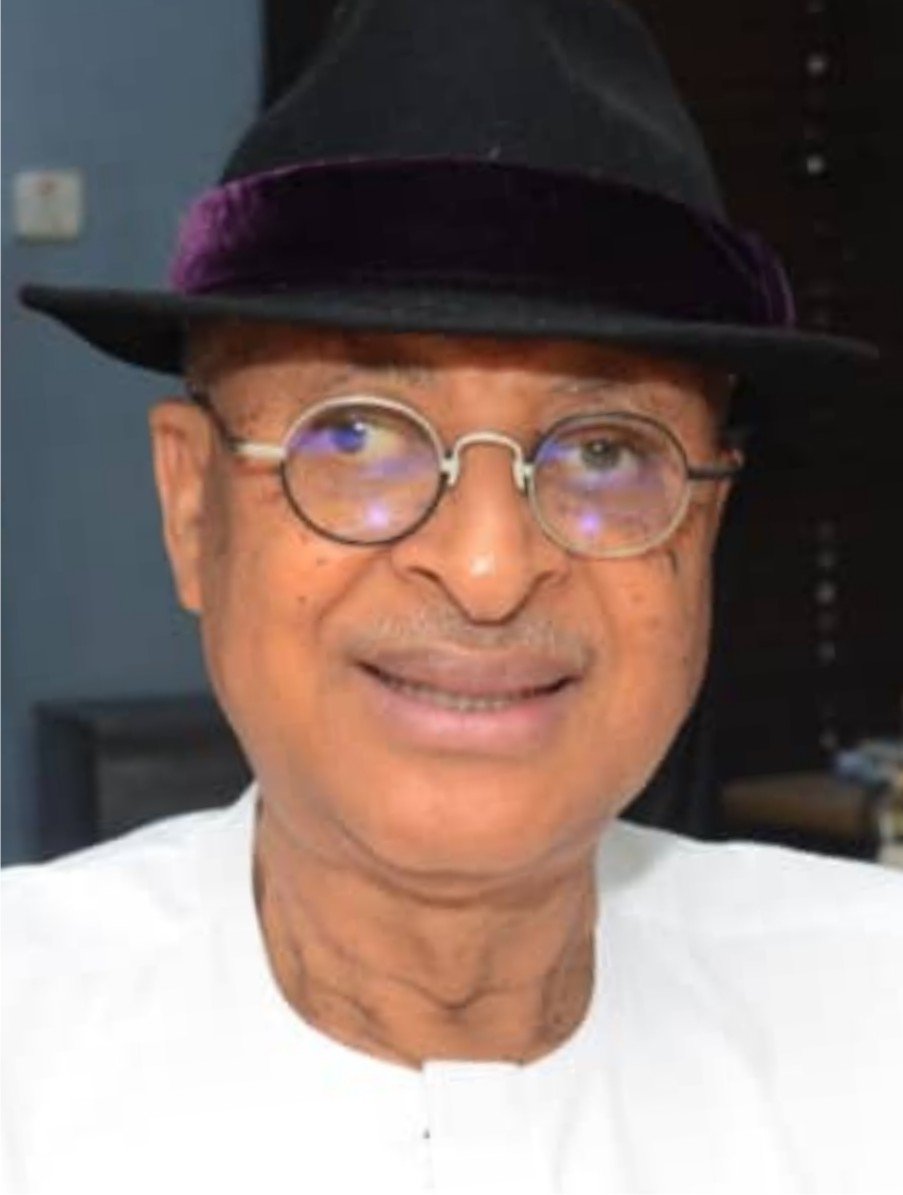
One of Peter Obi’s biggest supporters over the last few years has been Pat Utomi. He has been very consistent in his support for a Peter Obi presidency. They are not only members of the ADC but they share a relationship that dates back to many years ago when Obi was still governor of Anambra state.
But the reason this seasoned academic and management expert is throwing his full weight behind Obi is not because of the relationship they share. Far from it. He explains that long before now, he found Obi to be a disciplined man who can be trusted with the country’s resources. In this interview with City People Publisher, SEYE KEHINDE and Senior Editor, WALE LAWAL (08037209290) the professor who will be turning 70 in a few weeks, sheds more light on why he prefers to support Peter Obi and not Atiku or Tinubu.
I’m just wondering, sir, as you turn 70 in a few weeks and you look around, you see a lot of young, brilliant minds who share your dreams of what a better Nigeria should be. As you take the backseat now and these young minds take the stage, how hopeful are you that Nigeria will turn the corner very soon and rise again?
Anyway, your last words remind me of what was my dial tone for many years on my phone. Nigeria, will rise up again, Nigeria, will rise up again.
That was, for many years, my dial tone. If you are not optimistic, if you don’t have hope, you’re dead. So hope is a virtue of being a Christian and I like to think I’m a Christian. So I have hope.
That’s one. Two, I have met so many, so many smart Nigerians that I cannot believe that just a few idiotic politicians will keep them down forever. That’s the truth. Look, like I said, I’ve been living in the U.S. majorly for the last two years. I go to places and I’m amazed at the quality of Nigerians I see everywhere. You look at the statistics, most educated migrant population group in America, by far, Nigerians.
Seventy percent of all the doctors of color, as they say, in America are Nigerians.
I remember going to see Andrew Young some time ago and he said, oh, that he was waiting for his doctor. I’m sure you know he must be a Nigerian, he said it matter of factly. He said, if there’s a doctor coming to you in Atlanta, good chance is he’s Nigerian. So God can’t create all these talents and mark it for failure. We’ve been held back by the political class, God will help us overcome them.
Are there times you wish you could roll back the years a bit and have with you again some of those great minds you had on Patito’s gang, you all set the benchmark at that time…?
You know, in all kinds of parts of the world, I’ve had all kinds of experiences. I think the one I like to talk about the most was in Melbourne, in Australia. Can you imagine Melbourne, Australia? I’m talking downtown, it’s a downtown area with trees, median with trees and like three or four lanes each time.
And from across the road, somebody just started shouting, Patito’s gang. I said, no, no, no, it can’t be in Melbourne, no, no, it’s not possible. And the guy did not even mind the traffic. He ran across the road. He was excited. He says that, growing up, his father would restrict them from watching teevee. But their father would wake them up. Hey, all of you, wake up, come and watch Patito’s gang.
It did something to my spirit. I almost started crying. The guy was so dramatic. People were looking at us.
Another such experience was actually at the Dallas airport. A woman was walking up to me while I was walking, and she was like, is it him? I didn’t want to get myself into any sovereign national conference so I was going straight. I didn’t want to be recognized. I was trying to look away. And then after like 50 feet, she was like, it must be him!
She turned around. Excuse me, sir. Excuse me, sir.
Please, are you? Yes, I am. Oh my God. She was walking with a son who would be like 15 years old.
She says since I was a baby, I have always admired you. I said, see, I’ve become Methuselah. This mama has admired me since she was a baby.
And then she starts talking about Patito’s gang. So, I mean, those kinds of moments make you feel that it probably was worth it. But like Uchoji said, most people don’t know the cost. I produced Patito’s gang and aired it for 20 years without support from anywhere, literally from my pocket. It’s incredible.
Nigerian elite is very dishonest. It does not want to be associated with anything that might seem controversial or people in power may not like. So they avoid you like a plague. In fact, I don’t know whether it’s good to remind people of this story, but I had written about it, it’s not a hidden thing.
A friend of mine who was owner of a big bank when we started Patito’s gang called me after he watched the first episode and said, oh my God, Pat, this is fantastic. He went on, on, on, on, on. I said, I’m glad you like it because we need commercial support on that show to keep it on air. He said, oh my God, Pat, oh my God, Pat. And I don’t want them to think I’m the one putting you up to those things you guys say. But I tell you what, the day you will discuss sports, let me know, we’ll pay three times as much so you can take the money from the sports and support the rest of the program.
And I’ll tell you a joke. I wrote a column. There was a time I was writing three columns a week in addition to doing Patito’s gang. Three separate columns, not like syndicated, no. One was in Vanguard, it was titled Thinking Aloud, every Tuesday. The other was Business and Economic column in Business Concord, appearing on Fridays. And then the other was The Guardian on Thursdays. And so the day after we had this conversation with this friend of mine, I wrote a column. I said, this friend of mine who’s a banker, this is what we had. And I said, you know, you see how our culture is, you see how our country is. And my phone rings. Pat, you were writing about me today. I said, how do you know I did that because I didn’t mention your name. I just said a friend of mine and I know you couldn’t have read the paper, so the person couldn’t have known that it was you. It’s only you and I could have known it was you I was writing about. He said, Pat, Pat, Pat, I read your column every day! Oh, boy…. So anyway, that’s the story. I wish I would have enough time and discipline to even do a book just on Patito’s gang. You know, it would be a terrific book.
Some young chap came to me more than 15 years ago. I don’t know what he did with it, but he wanted to write a PhD thesis on Patito’s gang. But he was from abroad, so he interviewed me.
I’d like to put you a bit on the spot here, sir. First, what is it about Peter Obi that stands out for you? What is it about him that perhaps a lot of Nigerians do not know beyond the fact that he was governor of Anambra state and he seems to represent the aspirations of a different set of Nigerians. What is it about him that you personally admire?
Yes, personal discipline is the most important thing about him. I’ve talked about how when I see Nigerian politicians and their long motorcades, I shake my head and say, hey, look how we are suffering. We are hemorrhaging. People are dying of hunger and these politicians think that the best thing to do with public resource, is to waste it in this manner?
Many of them have the view that power should be shown. And the more you use and waste public resource, the more you actually show power. This is an asinine way of looking at the world. Lyndon Baines Johnson, as President of the United States, was talking with his cabinet and the Minister of Transport says, you know, that yesterday his chauffeur, excuse me, you’re minister or secretary for transportation and you’re driven by a chauffeur? How would you know the kind of transport problems people have? That was the last time the man ever used his car. So he came to work by train.
The last interview that I did on Arise, Rufai read out a section from my book by Lee Kuan Yew about Nigerian civil servants. He came to Nigeria in 1975, said Nigerian civil servants were bright, but they all drove around in Mercedes, spent more time worrying over power. And in his own place, his ministers went to work by bus. And things worked in Nigeria. And I kind of laughed, I said, look, I used to give Singapore examples all the time, but when I do, people say he has gone to this esoteric place again.
So I don’t go to Singapore to give examples anymore, I go to Cairo, I go to Botswana. In Cairo, Assisi is converting a desert into unbelievable stuff. They are building 16 lane highways out there, in the desert. And if you go to Egypt, they produce twice as much power as they need. And that’s their target. They must always be twice ahead of what their current needs are. Every time they have to keep adding such that they have excess capacity. In Nigeria we can’t find power to do anything. And the civil servants there, they are lucky when they see Toyota Corolla, as prestige car, you know. So I said, can you see that something is wrong here?
So part of my admiration for Peter Obi started when he was governor. It was actually an Intercontinental bank-sponsored program, sponsored me to go to Anambra to give lectures to the cabinet and all of that, as part of their CSR. And I got there, I saw Peter Obi and the way he was conducting himself, and talked about some of these things. Incidentally, I went to two high schools, Christ the King’s College in Onitsha, which Peter Obi went to later, and Loyola College in Ibadan, which is where I did the bulk of my secondary schooling.
So, you know, all these Catholic Schools, they are very, very strict about seniority and all of that. Though Peter didn’t meet me in school, so he calls me senior. So one day, my phone rang. He said, senior, you’re not going to believe what somebody just said to me. I was just carrying my bag, walking in the Abuja airport, he was governor at the time. Somebody came to him and said to him, hey, you are ridiculing this governor business. How can you be walking like an orphan? You, a whole governor, walking like an orphan! So, these are the kinds of things that inspired my belief that someone like him would be serious in the use of public resources for the good of the people.
Character is everything. You can pretend as much as you want, and say, ah, you know, it’s politics. My great thought leader, mentor, Stephen R. Covey, author of 7 Habits of Highly Effective People, he says character is like smoke, it always comes out. So if you have people who don’t have character, and they’re in public office, what you will get will eventually be who they are. And what Peter Obi is, from observation through many years, is a prudent person, who in deploying that prudence, significantly advances the common good.
I’m not saying he’s an angel or he’s that or anything. But what I’ve observed puts him ahead of the pack of what is available.