

-
Despite The Volatile Macro-Environment In The Country
-
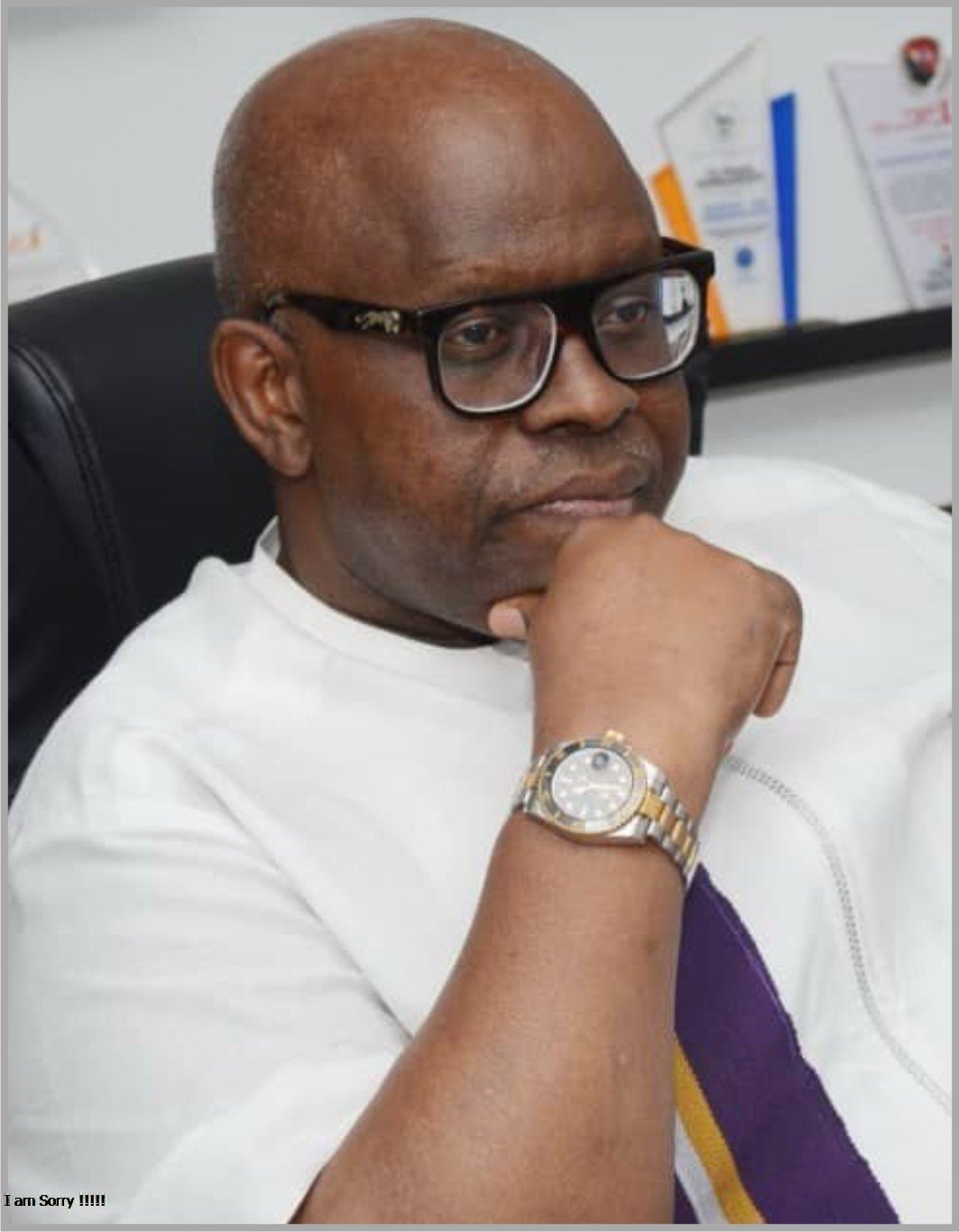
Real Estate Expert, Dr. HAKEEM OGUNNIRAN Explains
Dr. Hakeem Ogunniran is a big player in the Real Estate sector. He has played in that sector for many years. He was the MD/CEO of UPDC Plc. for several years, before he retired to run his private real estate company. He is the Founder/CEO of EXIMIA Realty Co. Ltd and Mercury Nominees Investments Ltd.
He also serves as the non-executive Chairman of Lagos Building Investment Co. Plc. And a board member of Reall UK and others. He is a renowned expert in African real estate, known for linking financial models and capital markets to real estate delivery in Africa.
Formerly MD of UPDC Plc and MDS Logistics under UAC of Nigeria, he has a strong legal and management background, with degrees in Law (LLB, LLM), an MBA and Global Executive Training. He is a Fulbright scholar, author and recipient of numerous awards. He is a most-sought after Conference speaker on Leadership, Change Management, Real Estate, etc.
A few days ago, City People got him to talk about the state of Real Estate sector today in Nigeria. As we round off 2025, how has the last 12 months been, we asked him. It was in the comfort of his cosy office on the Island in Lagos. For 2 hours, we got this brilliant real estate expert to talk about the sector he likes so much. It was a City People Magazine Special 29th Anniversary interview. And trust him, he revealed a lot. He is on top of his game.
How does he see the Real Estate sector in 2025? What are his impressions of the industry? “Yes, it’s been a tough year, no doubt. But we need to say also that the fundamentals are improving. And once you have improvements in the macro fundamentals, it will have a positive impact on real estate immediately”.
“Because there’s a strong nexus between real estate and macro principles and macro performance. If the macro economy is good, real estate does very well. But if the macro economy is bad, real estate suffers. All the typical basic factors like interest rates, employment, inflation, they are being pinned directly on real estate. But the important thing to note is that the industry is resilient and growing, in spite of all the challenges. Now, Real estate is Number three in the economy as the third largest contributor to GDP. After Trade and Agriculture, we’re now number three. Real estate has overtaken Oil and gas, it has overtaken Telecoms and Oil and Gas, which I think is really, very, very fundamental.
And that is good prospects for the future, given where we are. Yes.
What would he call the key factors that enabled the sector to overtake other sectors? “Okay. Tthere’s a report by Naira Metrics for Q1 2025 showing the 10 largest contributors to the economy. Clearly, people must understand that real estate as a sector is very broad policy.
Everything happens on Land. Everything is related to land. All businesses take place on land. We build houses on Land. We build hotels on Land. We build factories on Land.
That’s why the law doesn’t know House lord. The law knows only the Landlord, because everything happens on Land. And I would say that even for the ICT sector, the ICT industry, what they call Cloud in ICT, also lives on the ground inside data centres.”
Data centre is also part of real estate. So real estate is all embracing. So there’s a bit of real estate in every sector.
And that’s why for countries who have understood the potentially multiplier effect of real estate, they pay attention to real estate. They pay attention to housing, because housing has the immediate multiplier effect on the economy.”
“So I think because real estate is pervasive, it cuts across virtually all sectors, there’s a bit of real estate everywhere.”
“Let’s try and look at some data. Going by Nigeria GDP, of course, Trade is number one at 18.2% percent. Agriculture is number two at 17.8%. Real estate is number three at 12.8, whilst
Construction is 3.6. So if you add Construction and real estate together, you’re looking at about 16% of the GDP, you know. And that’s very, very significant. I always say that I’m happy to play in real estate because we occupy a significant percentage of the GDP.”
“And that shows you the level of the opportunities which are there for people to play with.”
Usually when there’s a change in government, from one administration to another, there’s always a bit of fear of what the new policies will be. When the President was elected in 2023, was he worried where the pendulum will swing? And how far has he come in terms of his reading of the trends? “During the campaign, if you looked at the stated policy direction of the new government, you will know, it was clear that the government had a clear understanding of the issues and the government was determined to do some things differently.”
“And I think to a reasonable extent, this government has succeeded in changing the narrative. I’ll give you a few examples. If you look at the Renewed Hope Housing programme, I think in four years, this government should be able to deliver about 20,000 to 30,000 housing units”.
“If they do that, that will really be massive. Because the previous government, under Buhari, in 8 years, did less than 8,000 houses. So this government has focused on the right variables, such as land titling, on financing, procurement, building materials, setting up building materials for creating a framework that will lead to a reduction in the price of building materials”.
“So they focus on the right variables. And I think that, for the first time, we also have a government where we have a Minister, who is an Architect, who has been the MD of Federal Mortgage bank of Nigeria. So he understands the 2 elements of the housing ecosystem, the financing side and the development side”.
What does he think the government can do to help that sector? There a lot of complaints about misapplication of policy. Does he think things can be done to make it a lot better?
“I think that the primary role of government, as far as real estate is concerned, is to provide the right enabling environment for players to do their business without pain. Currently, there are a lot of issues on titling, Certificate of occupancy, on Consent”.
“The rates and fees are too high, the process is very slow, it may take you one, two, three years to get consent and things like that. In terms of land titling, government needs to help the players to streamline and shorten the process. In terms of permitting and approval, we have to deal with multiple regulatory agencies in Lagos State. For example. when you get your approval from LASPPHA you still have to go to LABSCA for permission to start work. Both LASPPHA and LABSCA are in the same ministry, but the same document that you have submitted in LASPPHA, you still have to submit in LABSCA. That is very, very painful. It may look a little insignificant, but as a Developer, as a businessperson, it is needlessly painful”.
“Another major problem is the infrastructure. As a Developer, you are like a local government on your own. You must provide your room, your water, you provide your sewage treatment, you provide everything”. Yet, you are still taxed like all these facilities have been provided by government. That is antithetical to the basis of land taxation. Because the basis of land taxation is what we call “unearned increment theory. In other words, you are supposed to pay tax on your land because of facilities and infrastructure which has been provided to enhance without your effort. But when you provide all these facilities, it becomes difficult for you to understand the business for still paying that level of tax”.
“So, we need government to also look at things like that. Another major area is the issue of funding. Long-term capital is very scarce. That’s at the Construction end. Where you get them, the rates are too high, and with such high rates, it becomes difficult to deploy the funds and deliver the projects due to the excessive costs.
