

-
To Become Nigeria’s Next President
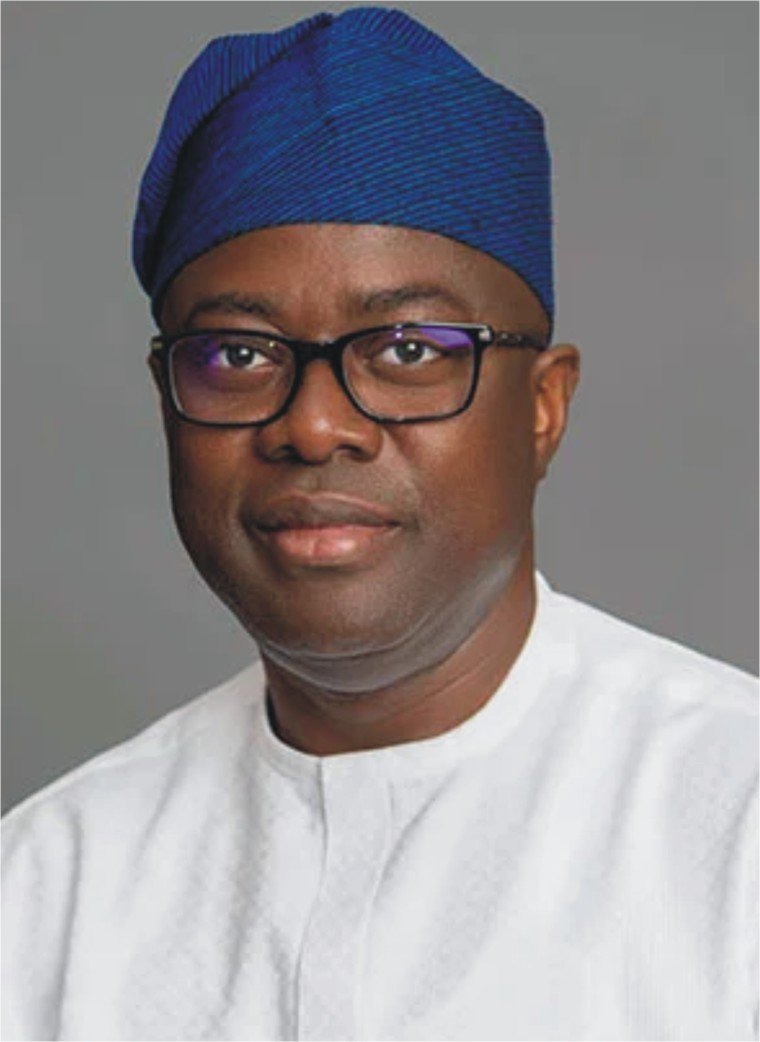
The race for Aso Rock is getting hotter by the day. And Governor Seyi Makinde is no longer watching from the sidelines. The Oyo State Governor has thrown himself fully into the 2027 presidential contest, secured the Allied Peoples Movement ticket and opened his presidential campaign office in Abuja. His message is clear: he wants to take the experience he has acquired in Oyo State to the national stage and offer Nigerians what his campaign describes as a “Reset Nigeria” agenda. But the road from Agodi Government House, Ibadan, to Aso Rock is a very long one.
Makinde is entering perhaps the most complicated presidential contest in recent Nigerian political history. Makinde is fighting for political space within an opposition camp that already contains several heavyweight presidential ambitions. So, what exactly stands between Seyi Makinde and the Presidency? Makinde’s first major hurdle is the political platform carrying his ambition.
The APM is not the APC, PDP or any of the other parties with a long-established nationwide political structure. A presidential election requires far more than a popular candidate. It requires structures in states, senatorial districts, local governments, wards and polling units. Makinde’s campaign says it is building a national structure and has begun electioneering across the country. But the scale of that task is enormous.
The governor must demonstrate that APM can become more than the vehicle that carries his presidential nomination. It must become an effective national election machine. Makinde’s greatest political achievement so far is his ability to establish himself as a formidable political force in Oyo State. But a presidential election is fundamentally different from a gubernatorial election.
Oyo has 33 local government areas. Nigeria has 36 states and the Federal Capital Territory. The political dynamics of Ibadan cannot simply be reproduced in Kano, Kaduna, Borno, Rivers, Anambra, Lagos or the Niger Delta. So, how does the Makinde phenomenon travel beyond Oyo?
Also, he has to build national following. Makinde has name recognition. But presidential politics demands something bigger than name recognition. He needs people in other states who are prepared to organise for him, defend his candidacy, mobilise voters and work for him at the grassroots. That requires an extensive political network. His campaign has promised a nationwide engagement with Nigerians, with Makinde insisting that his message will not be restricted to one region. The real test will be whether that national tour produces enduring political structures.
Also, Peter Obi is occupying same political space as Makinde. This is one of Makinde’s most interesting challenges. Peter Obi and Makinde are not identical politicians, but there is considerable overlap in the kind of voters who could be attracted to an opposition candidate promising competent administration, economic reform and a departure from established political arrangements. Yet Obi is already a major national political figure. And the relationship between the 2 men is becoming increasingly important.
In September, Obi publicly described Makinde as qualified to become president while speaking at the unveiling of Makinde’s campaign office in Abuja. That statement is significant. But political goodwill does not automatically resolve the question of who should lead a joint presidential ticket. That remains one of the major issues hanging over the opposition. Then, there is Atiku Abubakar.
The former Vice President is one of the most experienced presidential contenders in the country and is contesting under the ADC. He has his own political constituency, particularly in Northern Nigeria. Makinde therefore faces a 3-way opposition equation involving himself, Atiku and Obi.
So, who steps aside? Who leads? Who becomes running mate? Which region gets what? These are not merely personal questions. They are questions about political structure, zoning, bargaining power and electoral strategy. Various groups have been working towards a united opposition platform, but the leading presidential contenders have not agreed to withdraw their candidacies.
Recent reporting has identified ambition, zoning, political structure and trust as major obstacles to a possible Obi-Makinde or wider opposition arrangement. For Makinde, this creates a difficult strategic environment. If the opposition remains divided, several candidates could compete for the same anti-establishment and opposition-minded voters.
If a consensus arrangement eventually emerges, Makinde would have to negotiate from the strength of his own national support and political organisation. Makinde is from the South-West. But that does not mean the South-West belongs to him politically. The region contains 6 states with different political interests and powerful local structures. And there is already a major presidential figure from the region occupying the nation’s highest office: Pres. Bola Tinubu. Makinde must therefore compete for political space in a region where the APC has a powerful organisation and where other opposition politicians also have constituencies.
His Oyo State base is valuable. But expanding that base across the entire South-West is another matter. Then comes Lagos. Lagos is particularly important. It is the nation’s most populous state and one of its most politically influential. It is also President Tinubu’s strongest historical political base.
For Makinde to build a serious national coalition, Lagos cannot be ignored. But Lagos already has multiple political interests competing for influence ahead of 2027. Makinde must therefore find a way of selling his candidacy to Lagos voters without simply relying on his South-Western identity. Perhaps the most difficult part of Makinde’s national equation is Northern Nigeria.
The North is not one political bloc. The North-West, North-East and North-Central have different political histories, interests and networks. Makinde’s running mate, Musa Lawal Daura, is from the North, and his campaign has emphasised the need for a genuinely national ticket. INEC lists Daura as Makinde’s running mate.
But a running mate alone cannot manufacture a Northern political structure. Makinde needs influential politicians, grassroots organisers and voters across the region. That will require sustained political work. Makinde is challenging a sitting president. That creates an entirely different political environment.
Tinubu is contesting on the APC platform, which has a nationwide political organisation. Makinde must therefore convince voters who have the option of retaining the incumbent that his alternative offers a sufficiently different national direction. His campaign has already begun to develop its policy message, including calls for greater transparency in the petroleum value chain and a different approach to how Nigeria’s crude oil benefits Nigerians.
The challenge is taking these ideas from campaign speeches into a compelling nationwide programme. Some analysts have wondered if his success in Oyo State can be replicate nationally? That is perhaps the biggest intellectual test of the Makinde campaign. Oyo voters can assess his performance directly. A voter in another state cannot experience his administration in the same way. Makinde’s strongest political narrative is his record as governor. But a presidential campaign cannot survive entirely on a gubernatorial record. Nigeria’s presidency is about national leadership. The electorate will demand answers on insecurity, poverty, inflation, unemployment, power, oil, education, healthcare and foreign relations.
Makinde has begun articulating a national policy message through his “Reset Nigeria” campaign. The challenge is making that message sufficiently detailed and distinctive to compete with the programmes of other presidential candidates. Presidential campaigns are expensive. There are 36 states and the FCT to cover. There are thousands of local government areas, wards and polling units. There are rallies, media campaigns, agents, transportation, mobilisation and communications.
Makinde will need a formidable fundraising and financial-management structure. The APM’s ability to sustain a national campaign over several months will therefore be one of the practical tests of his ambition. The biggest hurdle is how to convert personal popularity into national votes. This is the ultimate test.
