

Guinness Nigeria has turned 75 years old. And that is a milestone that calls for both celebration and sober reflection on what the company has meant for Nigeria, how it has grown and adapted, and what lies ahead.
The story began in 1950, when a trading company was set up in Nigeria to import Guinness stout from abroad. Over the years, demand grew, and in 1962 the first local brewery outside Ireland and Great Britain was built in Lagos. That landmark move meant Nigerians would no longer be limited to imported bottles. By 1965 the company was listed on the Nigerian Stock Exchange, signalling that Guinness Nigeria was becoming a fixture in the local economy.
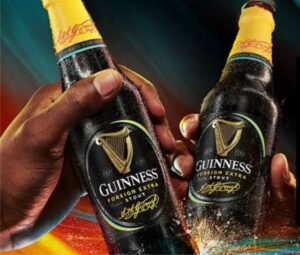
What started as imported stout gradually became a full-scale local brewing, packaging, marketing and distribution operation. Over time the company expanded its product range beyond stout to include malt drinks, lager and ready-to-drink beverages. By 2025 the range included local Guinness Foreign Extra Stout, Malta Guinness and variants, as well as other malt and lager products, offering consumers options across taste and preference, from the rich stout to lighter malt-based drinks and mainstream beverages.
The journey was not only about products and growth. Guinness Nigeria, over decades, became woven into the social life of Nigerians. Its bottles and cans featured at celebrations, family gatherings, milestones, graduations, weddings, parties, everyday moments. The brands became more than drinks, they became part of memories, of local tradition and identity.
In 2024, the company underwent a significant transformation. On June 11, 2024, it was announced that Tolaram Group would acquire a 58.02 per cent stake in Guinness Nigeria Plc from Diageo Plc. Under the agreement, Tolaram would take over majority ownership, while Diageo retained ownership of the global Guinness brand and licensed it to the Nigerian company under long-term royalty and license agreements. The takeover was completed on September 30, 2024, marking the start of a new era for Guinness Nigeria under a locally rooted owner.
At the same time, 2025 became the year of the 75th anniversary, a moment for reflection, tribute, renewal. The company’s Managing Director, Girish Sharma, said the milestone was “not just a celebration of how far we’ve come, it’s a tribute to the people who have built this legacy with us.” He added, “From distributors and farmers to consumers and employees, this company has been shaped by thousands of hands and hearts.” He described Guinness Nigeria as “more than a company, it has become a national treasure, woven into the fabric of Nigerian culture through the generations.”
Sharma noted that under the new ownership the company intended to pursue greater local agility, deeper supply-chain investment and accelerated innovation. He reaffirmed Guinness Nigeria’s commitment to its social impact programmes, its Eye Centres in Lagos and Onitsha which carry out free eye surgeries, its Water of Life initiative that has provided clean drinking water to hundreds of thousands of Nigerians, its Plan-W initiative empowering women with financial literacy and entrepreneurship skills, and a scholarship scheme supporting students nationwide. For over two decades the company has also partnered with the national road-safety agency to promote responsible drinking and public-safety awareness, part of a corporate philosophy that links business to community impact. Sharma highlighted that since the 1980s the company had pioneered the use of locally sourced sorghum in brewing, a move that supported local agriculture and reduced reliance on imports long before local sourcing became common in the industry.
The anniversary celebrations included a commemorative documentary chronicling the company’s history, limited-edition bottles, a nationwide consumer promotion, and staff-oriented festivities including inter-departmental football matches and parties across its breweries and field offices. This was not just corporate pageantry, it was a reaching out to the many layers of stakeholders, employees, farmers, distributors, retailers, and consumers, whose contributions over decades have built the brand’s place in Nigeria.
Corporate performance began to show signs of rebound. In the financial year ended June 30, 2025, Guinness Nigeria posted a net profit after tax of ¦ 16.2/ billion, a dramatic recovery after previous losses. Revenue surged by 65.8 per cent to ¦ 496.6/ billion. Gross profit grew by over 60 per cent, and operating profit rose strongly, reflecting improved operational efficiency, cost management, and the resilience of its brands even in Nigeria’s challenging economic environment. The Board Chair described the turnaround as proof of “quality of leadership, clarity of vision and strength of governance.”
Voices from consumers, retailers, and drink-lovers reflected the varied perceptions that have grown around Guinness Nigeria. On social media and in online forums, some fans of the brand praised the Nigerian-brewed stout for its strong, distinctive flavour and “lots of character.” One fan described Nigerian Guinness as “beautiful, far more character than extra or draught.” Another said that while the drink might be intense and “not for knocking back,” it was one to be savoured slowly. Others said the Nigerian variant seemed stronger than counterparts elsewhere, needing fewer bottles to feel its effects.
At the same time, some consumers noted economic pressures and rising costs. One quoted comment captured it simply, “Everything is expensive, even cheap lagers are going up,” reflecting how inflation and price hikes have affected consumption trends for premium drinks like Guinness. Retailers and distributors expressed cautious optimism about continuing supply under the new Tolaram-led setup, even as some worried about potential pricing shifts and availability, especially of imported-style premium spirits previously bundled in Guinness Nigeria’s distribution network.
Asked about the consumer response to the 75th anniversary, an independent retailer said the milestone had rekindled interest. “Some customers came looking for commemorative bottles, others just asked for the regular stout, but they told me they felt part of history.” A long-serving staff member said working at Guinness Nigeria felt different. “I joined because I believed in what Guinness means to Nigeria. Now with new ownership and renewed focus on local sourcing and community impact, it feels we are brewing hope again, not just beer.”
The arc of Guinness Nigeria over 75 years shows adaptation and resilience. From importing stout to building the first brewery outside Europe, from producing exclusively stout to a full suite of beverages, from foreign majority ownership to local majority control under Tolaram, the company evolved with the times while trying to stay true to a legacy. Its 75th anniversary was not only a commemoration of past achievements but a pivot toward a future shaped by local control, social responsibility, and renewed strategic vision.
As Nigerians lift a glass of Guinness, either the stout, a malt drink, or another favourite, they raise not just a toast to a beverage, but to a history that spans generations. For Guinness Nigeria, 75 years is both a milestone and a promise, to keep brewing not only beer, but connection, community, and continuity.
By Benprince Ezeh
08068599879
