

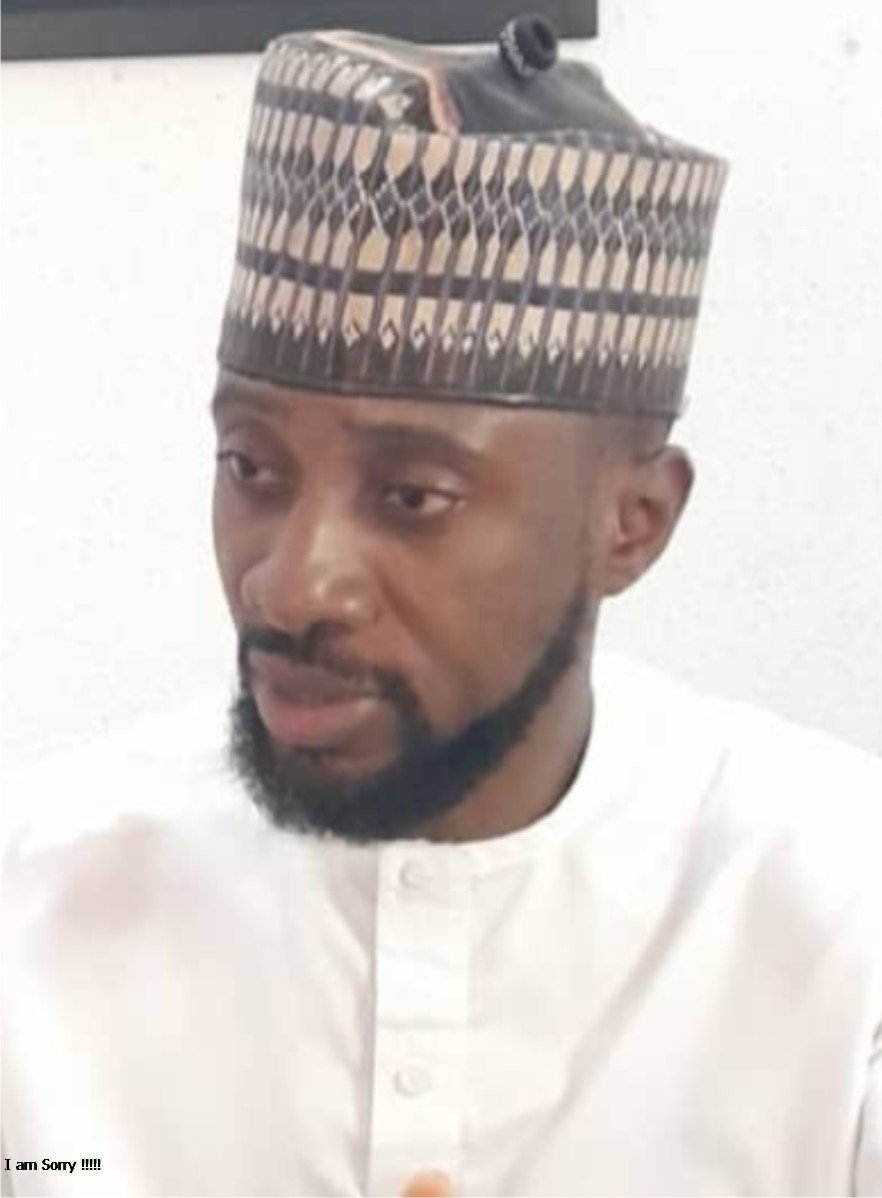
- YUSUF, NEWSWATCH Co-Founder, YAKUBU MOHAMMED’s Son
A few weeks ago, the premises of the Nigerian Institute of International Affairs (NIIA), Victoria Island, came alive as reputable columnists, media icons, academics, and students gathered for the public presentation of “Beyond Expectations”, a memoir written by renowned journalist and media entrepreneur, Yakubu Mohammed.
Mohammed, one of the co-founders of Newswatch magazine, was celebrated for his remarkable contributions to journalism during Nigeria’s golden era of media practice.
Asides the distinguished guests who paid glowing tributes at the occasion, Yusuf Mohammed, publisher son of the man of the moment and publisher of The Columnist NG and two of his siblings also spoke about their father. While delivering his speech, Yusuf reflected on how deeply his father’s values and discipline shaped his path as a journalist.
In a chat with City People reporter, JAMIU ABUBAKAR, Yusuf opened up more about his father’s personality, principles, and the lessons that continue to guide his life and career. Below are excerpts:
Growing up with a father as accomplished as Yakubu Mohammed must have been quite an experience. What are some things people don’t know about him outside of journalism and public life?
There’s not much difference between his public life and private life when it comes to his conduct. His views about life is holistic. He is the same person inside and outside. He believes in doing things the proper way. For instance, on our way to his book presentation, one of the people who was meant to drive one of the cars in the convoy had an expired driver’s license. The person suggested that since there were four cars, he would be in the middle and that no police, LASTMA or FRSC official would stop him since he would be driving in the company of other drivers whose papers were intact. But my father refused. He found someone else whose licence was in order, to drive the car instead. Like a friend of mine would say, my father is a ‘’proper man.’’
He is a lover of movies and football, especially tournaments like AFCON, World Cup and the Euros. When he was a bit younger than he is today, he loved playing table tennis. He’s a lover of sports. He once woke up everyone in the house for us to watch Mike Tyson vs. Lennox Lewis. Unfortunately, Tyson lost that match.
He is also a devout Muslim who doesn’t miss his five daily prayers. Despite his level of devoutness, you don’t see him talking to a non-Muslim about religion, unless the person comes up to him and wants to learn. In fact, he raised a son of one of his late friends who is a Christian. We all stayed in the same room as kids. My dad would come into the room to wake us up for the Morning Prayer and leave the boy who was a Christian alone. On Sundays, the boy would pick up his Bible and go to Church from our house. That happened for about 18 years until his job took him out of Lagos. The person in question is still a Christian.
Your father is known for his discipline and commitment to truth in journalism. How did those values influence your own approach to life and work?
Unconsciously you get influenced by your environment and sometimes you could imbibe a habit and exhibit it to a fault. I’m usually hell-bent on giving Caesar what belongs to Caesar, irrespective of how I feel or how any other person feels. Doing the correct thing, not the popular thing is my approach to life. For instance, my insistence of logic over emotion irrespective of the situation might just be too much. And in life, there are some situations that you have to accommodate people’s emotions. Some have accused me of trying to be too logical in every situation. I’m trying my best to separate my practice from how I conduct myself across board. I’m learning that it isn’t all ‘truth’ that you say. There are some things you keep to yourself. Being brutally honest especially when you find yourself in an environment or society that isn’t ready for such level of honesty could backfire.
But generally speaking, many have accepted me for who I am. In fact, when some people want to hear the honest truth about some events, they call me because they know I won’t sugar-coat it. My late boss, Prince Emeka Obasi, who was the publisher of Business Hallmark newspaper, used to call me on the phone, and sometimes invite me to his house, to ask for my honest opinion on issues he believed others might not be truthful about. He saw me as someone with little filter, and he liked me for that. Sometimes he would put the phone on speaker when he had important guests and call me for my opinion on politics (local and international), sports, religion and others. That was how much confidence he had in my opinion.
There are many Nigerians, especially those in the Diaspora who value honesty. In fact, some of them in places like the U.S, U.K and Canada who want to invest back home, are asking me to go into real estate business because they know I wouldn’t cheat them or anyone they refer me to.
Can you recall a specific lesson or piece of advice your father gave you that still guides your decisions today?
He once said no matter how tall you are you can’t reach the mountains in height and no matter how proudly you walk or stomp your feet when you are walking, you can never make holes in the ground. I don’t know if I said it accurately but I know it is an adage about humility. I think it’s an Islamic adage. So, I try to be as humble as possible. Also, telling us not to go where we aren’t invited is one advice that has stuck with me. No matter the person or the occasion, if you are not invited, don’t go.
He also encouraged us to greet people even before they greet us. For people who weren’t raised that way, they might interpret it the wrong way. So I try to balance my father’s influence and teaching with how others in society behave. I’m not saying my father’s way isn’t the right way but it isn’t the general way of society, especially today.
Many know Yakubu Mohammed as a respected columnist and administrator — but what is he like at home, as a dad?
He is humble. I have never heard him using abusive words on anyone including his domestic staff. From gatemen to cooks, drivers, house helps, I have never heard him insult them. The highest he says when they do something wrong is: ‘’my friend, are you alright?’’
And he has been accused of raising us with kid gloves. My father doesn’t believe in flogging. He said his father never flogged him. There are many homes where parents flog their children, yet they end up as miscreants. Some have become junkies. None of us today is a miscreant or junkie. None of us today can be accused of crime. We aren’t all the same in personality but one thing I can beat my chest about my brothers and sisters is that none of them would run away with your money if you do business with them. That is something that runs in the family.
Like I said earlier, there are people who were flogged by their parents while growing up but ended up as social deviants. Some are into prostitution. I’m not judging anyone, I’m just stating reality.
Speaking of discipline, since we became adults, we started becoming more conscious of our fathers’ name. When we were much younger, we knew we had a famous father who made sure we didn’t lack. But we didn’t think of his name that much. But we are a lot wiser now. We know we have a name to protect.
Were there moments when his demanding career ever clashed with family life, and how did he balance being a father with being a national figure?
There’s a lot to say in this regard but I will keep it brief. It was a conscious decision he made to share his time equally with his family and career. In fact, in the mid-90s, his social life had to take the back seat at a point. He made sacrifices. I would say he was able to create a balance. I think he managed it well.
Your father’s memoir, Beyond Expectations, chronicles his professional journey. If you were to write a chapter from your perspective, what would you title it and why?
I would title my chapter ‘Unintentional Footsteps.’ It captures how, even without consciously trying to follow my father’s path, I found myself drawn to journalism, the same world that shaped him. It reflects both coincidence and destiny. First of all, as a kid, I was one of those boys who used to turn into ‘Rambo’ when it was time to go to school. No one could force me once I made up my mind I didn’t feel like going to school. All the hefty men in the world couldn’t overpower me into the car.
As a result of that, i learned how to read and write late, compared to my peers back then. I did nursery one twice. Have you ever heard anyone in this world repeating nursery one? It got to a point my father told my mum to accompany me to school to know what it was that used to make me fight tooth and nail sometimes to avoid going to school.
In fact it was in primary two I knew how to read. It was like a miracle. From not knowing how to read, to knowing how to read quickly. One of my cousins, Tahir Abdullahi took it upon himself to teach me how to read. He was really determined and he succeeded. As soon as I learnt, it unlocked something inside of me, I became a regular visitor to my dad’s library. I became interested in reading more than those who knew how to read before me. But it wasn’t novels I was in his library to read, it was newspapers. I loved going through old newspapers and magazines, especially the foreign ones. My father used to bring home Time Magazine and Newsweek Magazine. I became in love with history. I knew about Adolf Hitler and the World War stories when many of my mates didn’t.
As I got older, I think when I got to secondary school, during holidays, my dad used to encourage me and my siblings to read. Sometimes he would give us a novel, especially that of Jeffery Archer, to read and ask us to tell him something from the book. But there’s a saying that you can force the horse to the river but you can’t force it to drink water. I didn’t show interest in the novels. I think at some point my dad gave up trying. (Laughter!)
At the University level, I didn’t study Mass Communication. I studied History and International Relations. I became a journalist officially 11 years ago. Two years earlier than that (13 years ago) if you had asked me if I was going to become a journalist I would have said I didn’t know. No one saw it coming. But not many are surprised because they saw some glimpses of it. They knew I loved history and current affairs and I knew how to tell stories accurately.
What qualities or habits have you inherited from him — whether consciously or unconsciously — that you see showing up in your daily life?
There are quite a few of them. One of them is not looking down on anyone. I could be in an event taking pictures with Aliko Dangote in the afternoon and be seen in the evening sharing jokes with a gateman.
I also ensure that I keep my word. If I make a promise, I try my best to fulfil it. And if it’s something I know I can’t fulfil. I would let the person know rather than waste their time. And then the one I noticed recently which I believe I inherited unconsciously is ensuring the driver of a car I am seated in, doesn’t speed too much. My father doesn’t just sit and fold his arms while the driver is driving. He cautions. And since I became an adult, I found myself doing the same. I keep my eyes on the road like I’m the one driving. I’m so big on gentle driving that when I used to travel frequently from Lagos to Ilorin, I used to give the bus driver extra money or refreshment just for him not to drive recklessly. And when some people are shouting ‘’driver why are you driving this way, why are you not speeding?’’ he doesn’t answer them. Some would call that ‘’positive bribery.’’ (Laughter!).
Now that the world is celebrating his achievements, what would you say is the most misunderstood or overlooked part of who Yakubu Mohammed truly is?
This question takes me back to your previous question about qualities I inherited from him whether consciously or unconsciously. For instance, you reached out to me for this interview. It shows that apart from being his son, you know a bit about my background in journalism and feel that I’m worthy of being interviewed. When I first appeared on TV for an interview, I didn’t ask for it. I was invited. There are people who go about wanting to be on TV and on the pages of newspaper without them being invited. I’m not saying that that’s a bad thing. But it’s not our style. We let nature take its course.
In 2005, when my father was appointed by Obasanjo as Pro-Chancellor and Chairman of Governing Council of Ahmadu Bello University, Zaria, he didn’t lobby for it. He was in his house in Lagos when he got the call. There were many political bigwigs jostling for that position. Same thing when Goodluck Jonathan appointed him as Pro-Chancellor of Federal University Birnin-Kebbi. He didn’t lobby for that. It was based on his success at ABU, Zaria that he was remembered.
Based on his approach to life, I always say that he was lucky to grow up in the era he did. There was much value placed on integrity and competence back then.
Not lobbying for positions sometimes is interpreted as he doesn’t need it or he’s laidback. But he believes in merit. Even if he offers himself for something, he doesn’t believe in making it seem like he is begging for it. For him, as long as he has a roof over his head and can afford the basic things, he is fine. That is his approach to life. He believes that his name and the work he has put over the years would make any administration think about him. But gone are those days. Nowadays, people put themselves out there, the good the bad and the ugly. Separating the wheat from the chaff is becoming almost as difficult as getting a camel through the eye of a needle.
