

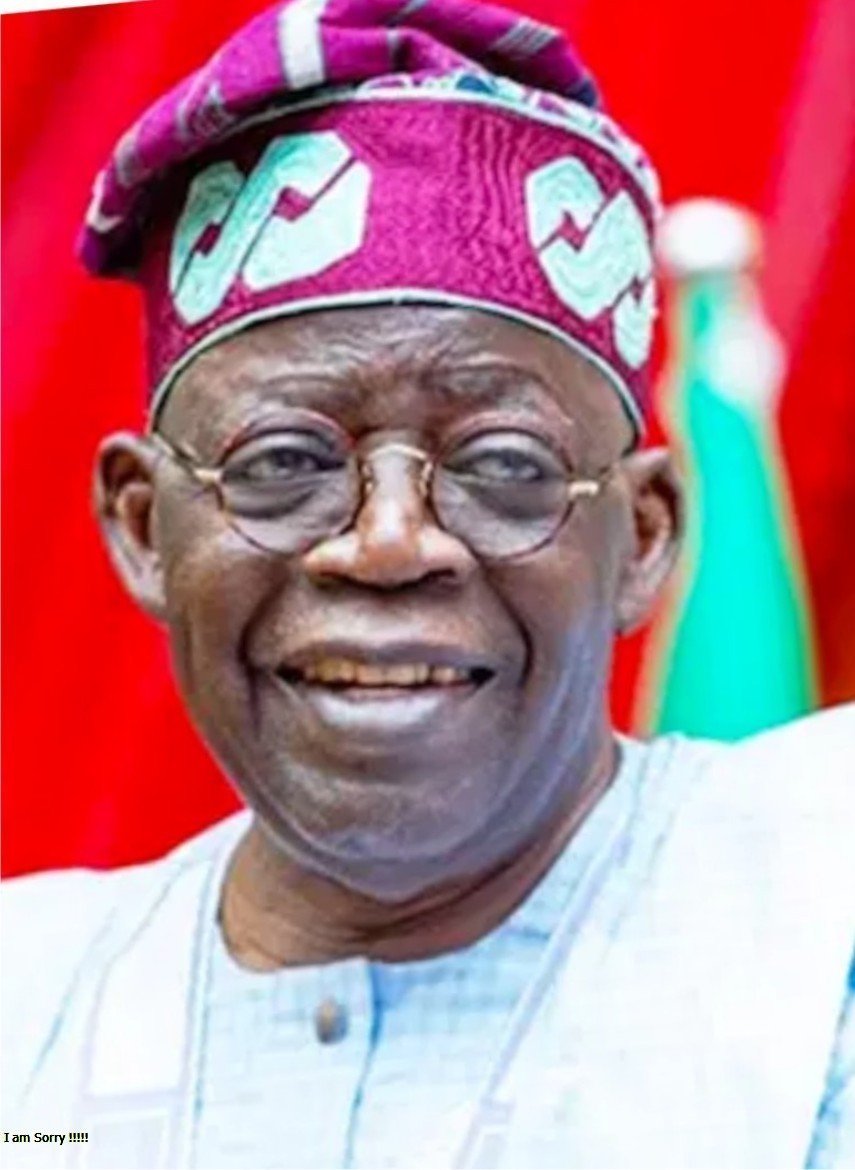
President Bola Ahmed Tinubu is widely known as a top political master strategy and a visionary leader, much like the late Obafemi Awolowo during his time. In fact, there are many debates and arguments over who has achieved more in terms of leadership, political strategy, influence, vision, etc. President Tinubu is frequently compared to the late Chief Obafemi Awolowo, a Yoruba leader and former Premier of the Western Region, primarily due to their shared status as dominant political figures in Nigeria’s Southwest region and their similar approaches to political organisation, welfarism, and strategic planning. However, this comparison is contentious, with supporters viewing Tinubu as a modern-day continuation of Awolowo’s legacy, while critics argue they are fundamentally different in ideology and character. Just as Awolowo was the undisputed leader of the Yorubas in the First Republic, Tinubu is seen as having taken over that mantle in the modern era, particularly by dominating politics in the Southwest and influencing politics across multiple states. While many people still respect the legacy of the Awos, the majority feel President Tinubu has achieved more based on the facts and figures available.
This week, we shall be discussing many of the things President Tinubu has achieved over the years that make him stand out from other political leaders, especially in Yoruba land.
Let us begin with his personal record on why he remains the only top political figure in the history of the country not to have lost any election. He has won all the elections he contested as an individual. He won the Lagos West senatorial election (1992), two terms as Governor of Lagos State (1999, 2003), and the 2023 Presidential Election.
This has remained an unbeatable record to date for any Yoruba politician, dead or alive.
Tinubu is the only Nigerian politician to have played a pivotal role in the formation of two major opposition parties—Action Congress of Nigeria (ACN) and All Progressives Congress (APC)—that successfully challenged and defeated a ruling party.
He was the only Alliance for Democracy (AD) governor re-elected in 2003, when the ruling People’s Democratic Party (PDP) swept the South-West but he didn’t leave the party and today the same party has become the strongest, although the party had gone through many reforms and all that.
The Architect of Modern Lagos: Tinubu’s reforms in Lagos transformed the state into Nigeria’s economic powerhouse, increasing its Internally Generated Revenue (IGR) from ¦ 600 million in 1999 to over ¦ 8 billion by 2007.
President Tinubu is widely recognised for his immense political influence in Lagos State, having established a robust political structure that has, in effect, helped determine the state’s leadership since 1999. Since ending his tenure as Governor in 2007, he has been credited with influencing the election of his successors. At least he has had three successive governors, a record that has remained viable in the political scene.
Survived Multiple Assassination Plots: Over the years, reports have surfaced about attempts on his life, especially during his tenure as Lagos governor and while leading opposition movements.
Supreme Court Victory: His legal battle against the Obasanjo-led government over the creation of 37 Local Council Development Areas in Lagos resulted in a landmark Supreme Court ruling in his favour.
Influence in Presidential Elections: Tinubu was instrumental in the victory of Muhammadu Buhari in 2015 and later secured his own presidential win in 2023. In fact, he was a central figure in late President Buhari becoming President.
Unprecedented Political Survival: Despite numerous political battles, including betrayals and attempts to sideline him within the APC, he remained a dominant force and emerged as Nigeria’s 16th president.
Nicknamed ‘Jagaban’. He is the first Yoruba with the title. He holds the traditional title of ‘Jagaban Borgu,’ signifying his status as a warrior leader in Nigeria’s political landscape.
Fought Against Military Rule: As a key figure in NADECO, he was at the forefront of the fight against military dictatorship in Nigeria during the 1990s.
Master of Political Strategy: His ability to forge alliances and outmaneuver political opponents has earned him a reputation as one of Nigeria’s most formidable politicians.
The First Lagos Senator to Become President: Tinubu’s political career started as a senator for Lagos West in 1992, making him the first former Lagos senator to rise to the nation’s highest office.
Massive Economic Impact: His administration’s policies laid the foundation for Lagos to become Africa’s fifth-largest economy.
A History-Making Presidency: Tinubu’s election in 2023 made him Nigeria’s first president to win with less than 50% of the total votes cast since 1999.
Political Longevity: With over three decades in active politics, he remains one of Nigeria’s longest-surviving and most influential political figures.
He remains the only person to remove the fuel subsidy that many past presidents had failed to do. Tinubu removed the fuel subsidy on his first day in office, leading to an immediate surge in fuel prices, sparking panic buying and public outcry.
In August 2023, Tinubu, as ECOWAS Chairman, advocated for military intervention in Niger following a coup but faced opposition from Nigerian lawmakers and the public.
Mentor to Political Heavyweights: Many of his protégés, including former Lagos governors Babatunde Fashola, Akinwunmi Ambode, and current governor Babajide Sanwo-Olu, have held key leadership positions.
On 29 May 2024, Tinubu signed a law restoring Nigeria’s old national anthem, “Nigeria, We Hail Thee,” replacing “Arise, O Compatriots”.
Foreign exchange rates were unified, ending multiple official rates and thus improving transparency in the FX market.
The tax-to-GDP ratio improved significantly, showing better tax revenue mobilisation.
The establishment of a student-loan framework, the Nigerian Education Loan Fund, widened access to higher education.
President Tinubu has become the first President to implement local government autonomy. His administration pushed for local government autonomy, empowering grassroots governance.
The creation of federal support for states and local governments will enable them to meet obligations, such as salaries and pensions, thanks to increased revenues.
Initiatives for youth empowerment and the digital/creative economy, including programmes under IDiCE, aim to spur job creation.
Digitalisation and transparency reforms in government processes, including services and payments, will reduce opportunities for corruption.
The conversion and roll-out of the compressed natural gas (CNG) initiative will utilise Nigeria’s natural gas reserves for transport and energy.
Legislative reforms include the passage of major tax bills and the restructuring of revenue agencies to improve the tax system.
A Rare Political Comeback: After leaving office as Lagos governor in 2007, he maintained national political relevance, eventually ascending to the presidency 16 years later.
Development of regional commissions and targeted funds to balance growth across Nigeria’s zones and reduce regional disparity.
Under President Bola Tinubu, Nigeria has witnessed bold economic reforms, improved infrastructure, renewed foreign investments, revamps in the education and energy sectors, enhanced security efforts, and digital governance, all aimed at building a stronger, more self-reliant, and prosperous nation.
In 2003, as Governor of Lagos State, Bola Ahmed Tinubu created 37 Local Council Development Areas (LCDAs) from the existing 20 Local Government Areas (LGAs) to decentralise administration and bring governance closer to the grassroots. Despite disputes over their constitutionality, they fostered localised development, although they remain distinct from the constitutionally recognised LGAs.
President Bola Tinubu’s administration has initiated the 700km Lagos-Calabar Coastal Highway, with the first 30km of Phase 1 inaugurated on 31 May 2025.
He was also a freedom fighter and activist. He was a prominent member of the National Democratic Coalition (NADECO), a group that fought against military rule in Nigeria.
Kingmaker Status: He is often referred to as a “kingmaker” in Nigerian politics, helping to install various political leaders.
Third Time’s the Charm: While often implied, his 2023 run was his first successful attempt to win the presidential ticket.
Political Resilience: Known for his ability to survive major political battles and betrayals.
Party Strategist: He played a pivotal role in the formation of the All Progressives Congress (APC) in 2013.
He is the only politician who has influenced the election of south-west states and he determines who emerges as a candidate of his political party, APC.
Small Business Tax Exemption: The proposed tax reforms aim to exempt 90% of small businesses and income earners from certain taxes.
A History-Making Presidency: Tinubu’s election in 2023 made him Nigeria’s first president to win with less than 50% of the total votes cast since 1999.
Despite numerous corruption allegations, Tinubu has never been convicted, and his political influence continues to grow.
Exile and Return: Fleeing Nigeria in 1994 due to threats from the Abacha regime, Tinubu played a crucial role in the struggle for democracy while in exile before returning in 1998.
Isaac Abimbade
08155107955
