

-
The Inside Story Revealed!
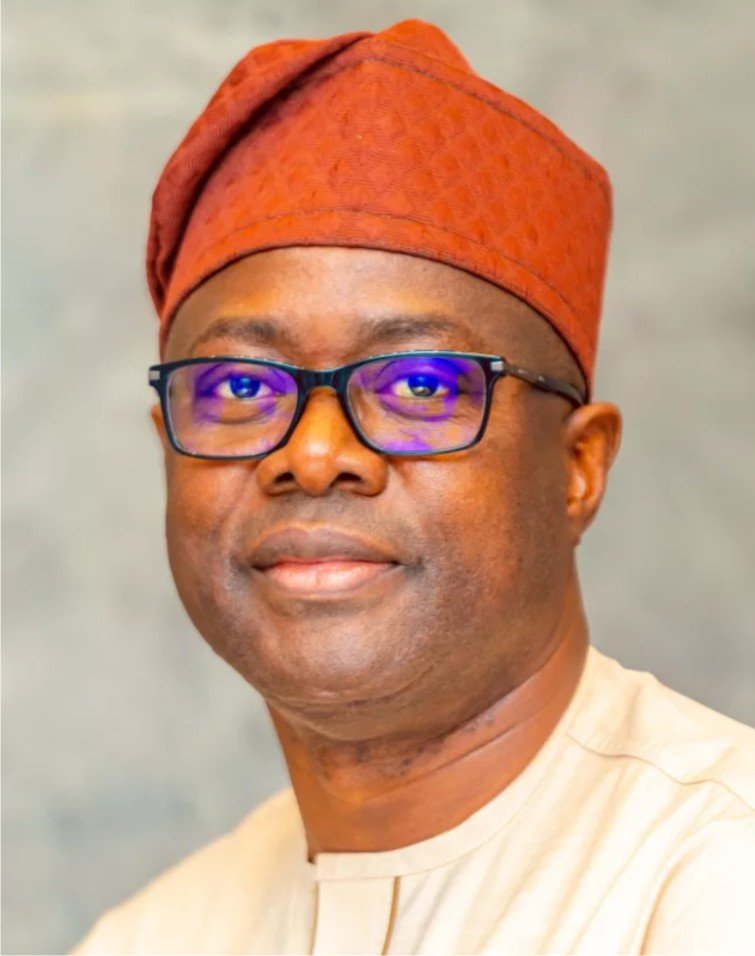
The Alaafin of Oyo, Oba Akeem Abimbola Owoade & Gov. Seyi Makinde are no longer in good terms. Obviously so. Both have parted ways.
Their relationship in recent times has been a subject of much political and traditional discourse across Oyo State. The sad part of it is that their relationship was initially cordial and mutually beneficial. But it appears to have developed into a strained alliance. Don’t forget that it was Gov. Makinde that installed the Alaafin.
Let’s quickly remind you that the Alaafin stool became vacant about a year ago, and the Oyo traditional institution was in deep mourning. So, a decisive step was taken by Governor Makinde when he stopped the selection process then and invited renowned Ifa scholar, Prof Wande Abimbola to perform spiritual consultation in the selection of a newAlaafin. This was part of the governor’s efforts to ensure legitimacy in the selection of Oba Akeem Abimbola Owoade. Prof. Wande Abimbola presented Oba Owoade’s nane to Gov, Makinde, who promptly set in motion the machinery to instal Oba Owoade.
The governor was said to have presented the Staff of Office to Oba Owoade, signifying his recognition of the king as the Alaafin under his administration. The governor also played a pivotal role in the coronation ceremony. This showed a sign of a strong alliance between the Governor and the Alaafin.
The alliance was said to be so strong that many people in Oyo State perceived the Alaafin to be enjoying the full backing of the governor, until cracks began to show in the leadership structure of the Oyo State Traditional Council. Traditionally, the Alaafin had enjoyed enormous traditional authority, and the throne had long been accepted as the natural and permanent seat of the traditional council’s chairmanship.
But in a major policy rethink, Governor Makinde recently gave the go-ahead for a rotational system for the traditional council’s chairmanship. This policy decision now sees the Olubadan of Ibadanland, Oba Rasheed Ladoja, as the Chairman, followed by the Soun of Ogbomoso, before the Alaafin’s own turn. The new rotational system did not go down well with Oba Owoade who came out openly to accuse the governor of not consulting with him on the matter.
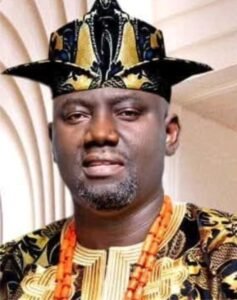
The restructuring reportedly created tension in the state. Oba Owoade supporters believed the rotational policy has diluted the ancient throne’s supremacy.
There are those who have also read politics into the ongoing face off. The tension heightened as Oba Owoade was perceived to be getting to close to leaders of the opposition APC. Speculation was rife when the Alaafin conferred the prestigious Okanlomo of Yorubaland title on President Bola Tinubu’s son, Seyi Tinubu. There was also the conferment of another prestigious traditional title on Senator Abdulaziz Yari, a prominent APC leader.
The Alaafin reportedly symbolically allied itself with the APC, a party that does not see eye-to-eye with Governor Makinde who is a prominent leader in the People’s Democratic Party (PDP).
While traditional leaders are traditionally expected to remain apolitical, the close interrelationship between politics and traditional leaders in Nigeria means that symbolic actions carry a lot of weight.
Compounding the situation was the speculation that surrounds Governor Makinde’s political prospects in 2027. His tenure as governor will soon end, and there speculation that he will seek to become a Senator. This would mean that he would be competing politically in Oyo, which is currently dominated by Senator Yunus Akintunde.
So, the Alaafin of Oyo, Oba Abimbola Owoade, is angry with Governor Seyi Makinde because of the selection process for the Alaafin stool. The Oyomesi (kingmakers) had recommended Prince Lukman Gbadegesin for the role, but Makinde approved Owoade instead, citing consultations and divinations. What happened was that the Oyomesi has challenged Makinde’s decision, alleging that it is unlawful and disregards traditional customs. They’ve taken the matter to court, urging Makinde to present evidence supporting his claims.
What are the key issues? We can tell you.
(a) Disputed Selection Process: Makinde bypassed the Oyomesi’s recommendation, sparking controversy.
(b) Allegations of Bribery: Makinde accused Oyomesi members of accepting bribes, prompting them to demand proof.
(c) Court Battles: Multiple lawsuits have been filed, with the Oyomesi seeking to nullify Owoade’s appointment that is considered normal.
What is the Alaafin selection process that is considered moment?
City People gathered that the Alaafin selection process has both traditional and ritualistic procedure in the old Oyo Empire. Here’s how it works:
– Nomination: The Oyomesi, a council of seven kingmakers, invites eligible princes from the ruling houses (Alowolodu and Agunloye) to contest for the throne.
– Screening: The Oyomesi screens the candidates, considering factors like physical health, character, and lineage.
– Selection: The Oyomesi selects a candidate, typically through a secret vote, and forwards the name to the government for approval.
– Approval: The government reviews and approves the selected candidate, ensuring they meet traditional and legal requirements.
– Coronation: The selected candidate undergoes rituals and ceremonies, including sacrifices and spiritual cleansing, before being enthroned as the new Alaafin.
The process is steeped in Tradition and Mythology, with the Oyomesi playing a crucial role in selecting the next Alaafin.
The kingmakers argue that in choosing Oba Owoade Makinde’s actions violate the Alaafin Chieftaincy Declaration of 1961 and the Chiefs Law of Oyo State, 2000. They claim Owoade’s appointment is invalid, citing issues with the selection process, including alleged bribery and the use of Ifa consultation, which a 2022 court ruling deemed unlawful.
Why is Oba Owoade not happy with the Governor?
Recently, Owoade denied being consulted by Makinde on the rotational chairmanship of the Oyo State Council of Obas and Chiefs, contradicting Makinde’s claims. This has escalated tensions between them, with Owoade boycotting a council meeting and expressing dissatisfaction with Makinde’s actions.
Why did Governor Makinde upgrade some Baales under Alaafin to kings?
Governor Seyi Makinde recently upgraded 14 Baales to crown-wearing Obas, citing his administration’s commitment to strengthening traditional institutions and promoting peace and grassroots development. The move has sparked controversy, with the Alaafin of Oyo, Oba Abimbola Owoade, challenging the decision in court, arguing it’s unlawful and disregards previous court judgments.
The newly crowned monarchs include the Alago-Oja of Ago-Oja Land, Oba Ganiyu Busari, and 13 other high chiefs and Baales. Makinde’s administration maintains that the elevation is a recognition of the leaders’ contributions and a reaffirmation of traditional institutions’ relevance in governance and community development.
The implication of Governor Seyi Makinde’s actions shows a power struggle between the Oyo State government and the Alaafin of Oyo, Oba Abimbola Owoade. By upgrading Baales to kings, Makinde has undermined the Alaafin’s authority and traditional jurisdiction. This has led to:
– Court challenges: The Alaafin has filed lawsuits against Makinde and the newly crowned Obas.
– Tensions: The move has created tension between the Oyo State government and the Alaafin’s palace.
– Traditional institution instability: The dispute threatens the stability of Oyo’s traditional institution and the Alaafin’s role.
Some analysts see Makinde’s move as a strategic play to assert control over traditional institutions, while others view it as a challenge to the Alaafin’s authority.
What are key issues contributing to the rift?
-Dispute over selection process: Makinde’s reliance on Ifa consultation, deemed unlawful by a 2022 court ruling.
– Allegations of bribery: Two Oyomesi members accused others of receiving bribes, sparking controversy.
– Power struggle: Makinde’s actions seen as undermining the Alaafin’s authority and traditional institution.
The conflict has led to court challenges, protests, and tensions between the governor and the Alaafin.
Insiders say, the Alaafin of Oyo, Oba Abimbola Owoade, isn’t obeying Governor Seyi Makinde because he believes Makinde’s actions are undermining his authority and the traditional institution. Despite being installed by Makinde, Owoade has taken a stand against the governor’s decisions, including the upgrade of Baales to kings, which he sees as a challenge to his jurisdiction.
Owoade has denied being consulted by Makinde on key issues, contradicting the governor’s claims. He’s also challenged Makinde’s actions in court, alleging violations of traditional customs and laws. This suggests Owoade is asserting his independence and protecting the Alaafin’s traditional role.
The power struggle between Governor Seyi Makinde and the Alaafin of Oyo, Oba Abimbola Owoade, has significant implications for Oyo’s traditional institution and governance.
The dispute has created tension between the Oyo State government and the Alaafin’s palace, threatening the stability of Oyo’s traditional institution.
The power struggle may impact governance and development in Oyo State, as traditional institutions play a significant role in community development and social cohesion.
