

-
Fresh Facts Emerge
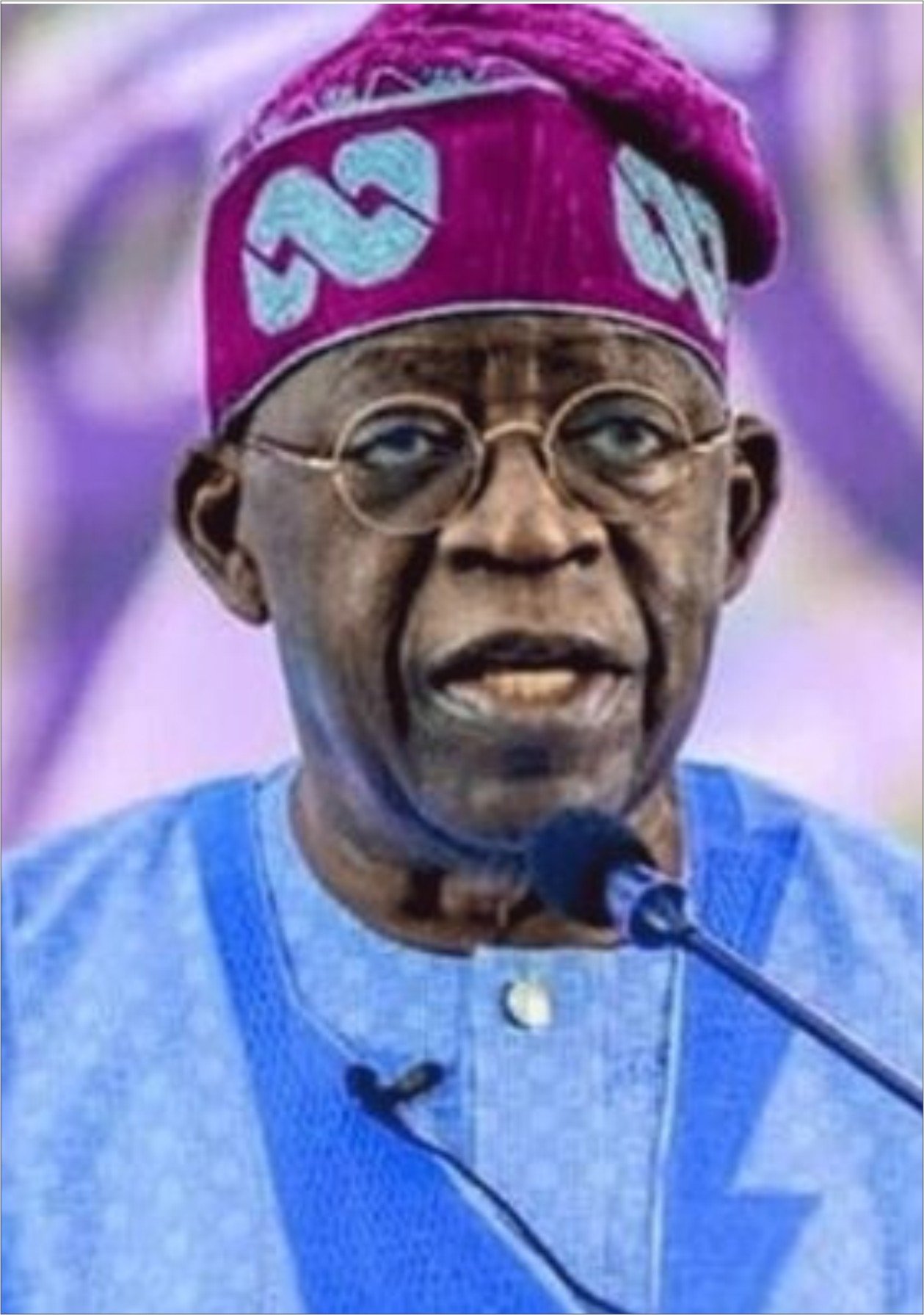
Not many people know that Pres. Bola Tinubu is strong in the North Central part of Nigeria. Since 2023 when he came in, he has done a lot for that zone to woo the people of North Central. And in just 2 and a half years, the result is showing already.?
Unknown to many, President Bola Tinubu has been actively engaging with North Central leaders, addressing regional challenges and promoting development. Recently, he appointed Prof. Joash Amupitan, a Senior Advocate of Nigeria, as INEC Chairman, marking a historic milestone for the region.
There are other key initiatives like (1) Infrastructure Development: Completion of major road projects, including Abuja-Kaduna Expressway and Sokoto-Badagry Superhighway
(2) Agricultural Growth: Promoting agribusiness and investing in agriculture to boost economic growth
(3) Security: Combating insurgency and stabilizing the region
(4) Economic Empowerment: Establishing the North Central Development Commission to drive sustainable development.
No wonder, the North Central APC has endorsed Tinubu for re-election in 2027, citing his commitment to fairness, justice, and equitable representation.
For those who don’t know, North Central is one of Nigeria’s 6 geopolitical zones, covering a vast area of 242,425 square kilometers. It comprises 6 states: Benue, Kogi, Kwara, Nasarawa, Niger, and Plateau, as well as the Federal Capital Territory (FCT), Abuja.
The region is dominated by the Guinean forest-savanna mosaic, with the western portion falling into the West Sudanian savanna ecoregion.
It has approximately 30 million people, accounting for around 11% of Nigeria’s total population.
Agriculture is a significant sector, with Benue State known as the “Food Basket of the Nation”.
The region is home to diverse ethnic groups, including Nupe, Ibira, Idoma, Tiv, and Gwari, alongside Hausa and Yoruba communities.
Some notable cities in North Central include:
Abuja: The capital city, known for its modern architecture and vibrant cultural scene.
Ilorin: A multicultural gateway between northern and southern Nigeria.
Jos: Famous for its cold weather and rich cultural heritage.
Politically, what is the significance of North Central votes?
We can tell you that the North Central votes holds significant political weight in Nigeria, often serving as a swing region that can influence election outcomes. Here are some key reasons why:
(a) Balancing Act: The North Central zone is seen as a balancing force in politics, with its leaders emphasizing the region’s strategic importance.
(b) Zoning and Rotation: The region has never produced a Civilian President or Vice President, leading to demands for zoning and rotation of power to ensure fairness and equity.
(c) Electoral Impact: North Central’s votes can significantly impact election results, with leaders warning that sidelining the region could lead to electoral losses for major parties.
(d) Diverse Representation: The zone’s diverse ethnic and cultural landscape makes it a microcosm of Nigeria, with its leaders advocating for inclusive governance and representation.
(e) Constitutional Review: North Central senators and stakeholders are actively engaged in constitutional review processes, pushing for reforms that address emerging socio-political challenges.
So, the North Central vote is crucial in shaping Nigeria’s political landscape, with its leaders seeking greater recognition, representation, and influence in national decision-making.
Who are the prominent politicians from North Central?
Prominent politicians from North Central Nigeria include
Yahaya Bello: Former Governor of Kogi State and a strong contender in the region
Abdullahi Sule: Governor of Nasarawa State and Chairman of the North Central Governors’ Forum
Senator Abba Moro: Senator representing Benue North-East and a key figure in the National Assembly
Senator DachungGyang Pam: Senator representing Plateau North and a stakeholder in the North Central Development Commission (NCDC)
- J Umaru: Representative and sponsor of the NCDC bill
Yaya Bello: Also mentioned as a prominent figure in North Central politics, alongside Yahaya Bello
These politicians are actively involved in shaping the region’s politics and development.
Has North Central benefited a lot from Pres Tinubu?
Yes, it has North Central has greatly benefited from President Tinubu’s leadership, with notable achievements in education, infrastructure, and agriculture.
What are the key Initiatives:
Education: Approval of new universities and colleges, including a converted Federal College of Education in Benue State
Infrastructure: Major highway projects, rural irrigation schemes, and agricultural development programs
Agriculture: Renewed Hope agricultural initiatives, focusing on wheat, rice, and other essential crops, with Jigawa State as a key producer
Economic Reforms: Ongoing reforms aimed at boosting national productivity, self-reliance, and sustainable growth
Senator George Akume, the APC leader in North Central, expressed confidence in Tinubu’s re-election, stating it’s already a “walkover.
Will they vote for Tinubu we asked political watchers?
Yes. The North Central APC is solidly behind President Bola Tinubu for re-election in 2027. In fact, they’ve already opened a support group office in Benue State and are planning a door-to-door campaign to mobilize support.
The Director General of the Tinubu Support Group, Alhaji Tanko Yakassai, has assured that Northerners will support and re-elect Tinubu, citing a moral obligation to reciprocate his past political support for late President Muhammadu Buhari.
The North Central APC has pledged to mobilize 6 million votes for the APC in the 2027 elections, with Senator George Akume expressing confidence that Tinubu’s re-election is already a “walkover”.
The North Central APC is targeting 6 million votes for President Bola Tinubu in the 2027 elections, with some leaders even predicting a 100% vote in the zone. In the 2023 presidential election, the North Central region contributed over 1.7 million votes to Tinubu’s campaign.
How many states form the North Central? Who are their governors?
We can tell you that North Central Nigeria comprises 6 states, with their respective governors as follows: Benue State: Hyacinth Alia (APC), Kogi State: Ahmed Usman Ododo (APC), Kwara State: AbdulRahman AbdulRazaq (APC), Nasarawa State: Abdullahi Sule (APC), Niger State: Mohammed Umar Bago (APC), Plateau State: Caleb Mutfwang (PDP)
The North Central region is expected to contribute significantly to President Bola Tinubu’s re-election campaign in 2027, with some leaders predicting a substantial number of votes.
One writer, Adebamiwa Olugbenga Michael says under Tinubu, the North-Central has reclaimed its voice.
“For decades, Nigeria’s North Central region, home to states like Niger, Kwara, Kogi, Plateau, Benue, Nasarawa, and the Federal Capital Territory was often cast in the shadows of national politics. Historically, the region’s influence in federal appointments, major political decisions, and strategic national roles was perceived as marginal. Analysts frequently described the North Central as a political “no-man’s land,” overshadowed by the dominance of the South West, South East, and the Northern power blocs. Yet, under President Bola Tinubu’s administration, a striking recalibration appears underway, signaling both recognition and strategic integration”.
“The appointments of key figures from North Central to top positions ranging from the Independent National Electoral Commission (INEC) chairmanship, leadership at the Nigerian National Petroleum Corporation (NNPC), and recently, one of the country’s foremost security service chiefs, the Chief of Army Staff suggest a deliberate political strategy. Observers argue this is more than mere symbolic gesture, it is a tactical deployment by a seasoned political strategist to consolidate national support, balance regional interests, and expand the administration’s legitimacy. For North Central, this is unprecedented visibility, offering a sense of inclusion that aligns with citizens who have long felt sidelined.
Political analysts describe Tinubu’s approach as that of a chessmaster, each appointment carefully calculated to achieve both immediate and long-term strategic gains. North Central’s elevation is not merely symbolic, it strengthens federal cohesion while also ensuring the administration has a representative footprint across Nigeria’s diverse geopolitical zones. By integrating this historically marginalized region into critical decision-making roles, the government signals a commitment to equity and inclusivity, which could reshape voter perceptions and political alliances ahead of the 2027 elections.
Yet, the implications of this regional focus extend beyond politics. North Central states are strategically located and culturally diverse, balancing between both Northern and Southern influences. The infusion of federal appointments has the potential to accelerate infrastructural development, enhance security coordination, and stimulate economic growth. The region’s newfound visibility may also amplify its voice in national policy debates, from agriculture and energy to inter-ethnic relations, presenting both opportunities and challenges for governance.”
“At its core, the North Central’s current political ascendance under Tinubu underscores the intricate dynamics of Nigerian federalism. A region once perceived as peripheral is now central to national strategy, a “new bride” whose importance cannot be ignored. How this relationship evolves, and whether it leads to sustainable development and political influence, will be closely watched by both citizens and analysts alike. For now, it represents a modest but significant recalibration of power, orchestrated by a political leader whose understanding of Nigeria’s complex landscape continues to surprise and reshape the nation’s narrative.”
