
-
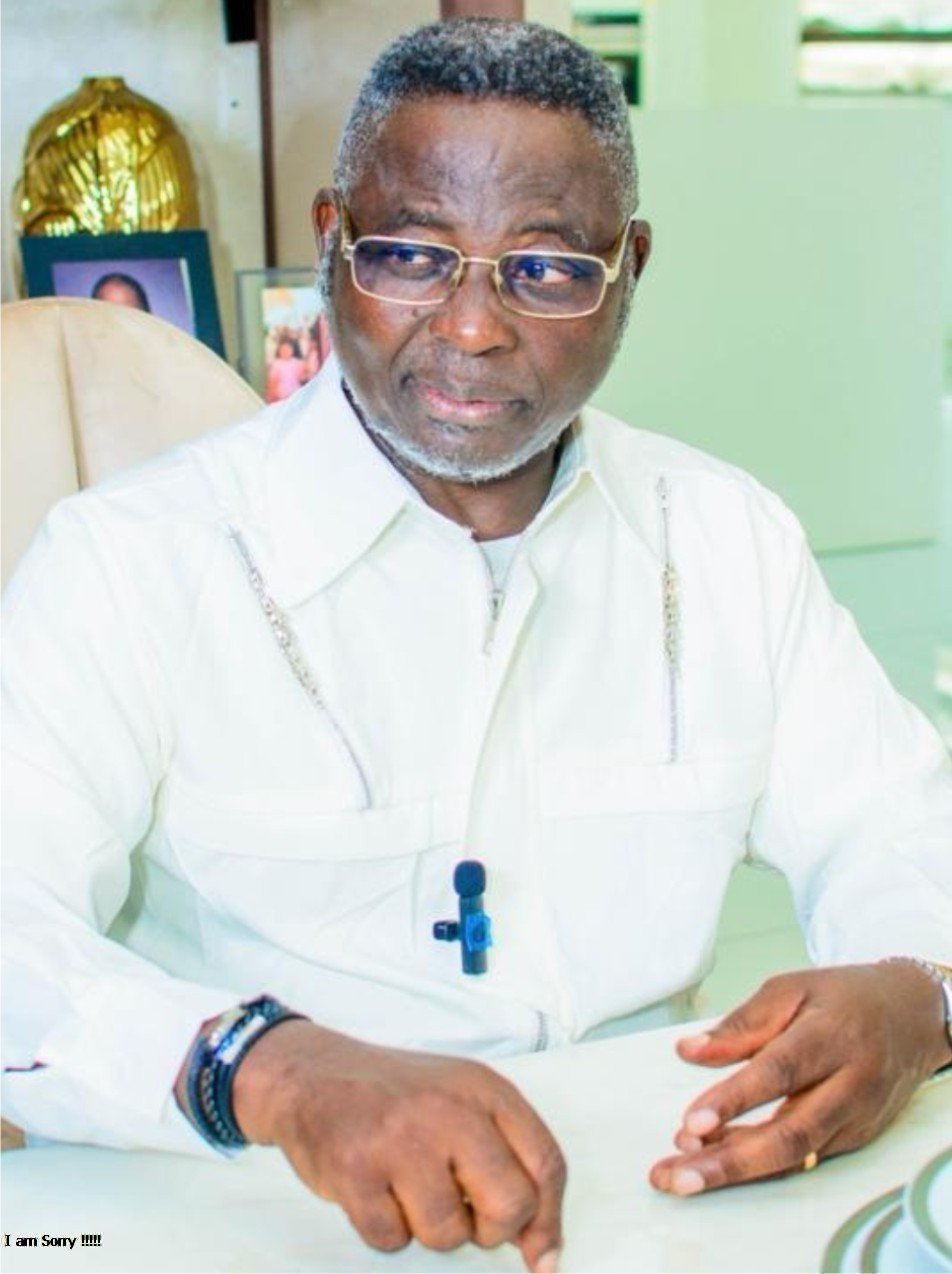
Pastor MATTHEW ASHIMOLOWO Explains
What can you say about the role of Social media today?
Let me first start by saying one of the biggest problems of Nigeria is System failure. And that system failure is from the microcosm—the smallest things, like knowing how to stay in your lane, keep the law, and do the right thing.
The system has failed, and that system failure has spilled into every area. So, people being critical on social media is a mirror of who we are. For example, this is the same Nigeria where you couldn’t drive your car with just one broken light in the past. In Nigeria, you could not do anything without the fear that the police would stop you, and the police would not take bribes.
The system has so failed that the man who says the government is corrupt is himself breaking the law. I don’t know how to put it. So now, take that and bring it down to the micro level. Out of the abundance of the heart, the mouth will speak. So, you find that somebody will pick up their phone and begin to abuse the president. They can even abuse Dangote: “Why is he selling petrol to us? Is it not our crude oil that they are selling to him?”
They do not realize that, in the first place, the man needs to recover the money used to build that project over 10 years. Number two, you are only hearing about the refinery—it is on loan, borrowed money, not his personal money. The crude oil itself is not being given to him for free. So, people don’t take all this into account, and because now everybody can voice an opinion—and lastly, people don’t verify and don’t think there are consequences.
Every time my driver takes me out, I say the reason Nigeria is the way it is is that there are no consequences. I’ve just driven to Ibeju, and there were four vehicles that broke down on the road and were left in the middle of the road. Ah, England! Your vehicle breaks down on the road—first of all, you are required to stand by it and quickly find a way to call for recovery. They will help you recover it and send you the bill. You are not allowed to walk on the expressway—you can go to jail for it.
But here, people just leave their vehicles in the middle of the road. After Songotedo, a forty-foot container broke down and was left on the lane. Another trailer, probably at night, maybe speeding and using a phone while driving, rammed into it. If the driver survives—though they usually have a driver’s assistant—there is almost no way he can survive.
If you go now between here and Ibeju, you will see about five vehicles in the middle of the road. What do they do? They put a tyre there. Some even sit inside, or stay under the vehicle repairing it instead of pulling it aside. So, system failure—that’s just a microcosm. I can give you 100 examples of system failure. One hundred.
The government has its own issues—lack of planning. The other day, I was telling somebody that what we know today as the transportation system in Nigeria was not planned. Danfo was not planned. Lagos suddenly exploded in growth, then the Udoji awards came money flowed. So people started buying Danfo buses, carrying passengers on their way to work, dropping them off, and then continuing to work. In those days, Lagos had limited structured transport—like LMTS buses in the 70s. So there was no plan. The government is now catching up.
Look at areas like Ikeja, Surulere, Ikoyi, and Victoria Island—tell me which of these the government originally designed? People developed them, and the government later took over. So we are a nation growing faster than our systems.
So, what do we do? How do we move forward? I personally think we should also acknowledge the current governor of Lagos State. There is an attempt to sanitize the system. Yet, even with that, people go on social media to criticize. Didn’t they know an estate was coming there? Did they ask if there is a C of O? Do they have documentation? Do they have physical planning approval?
A C of O means you are authorized to own the land. Physical planning approval means the estate is approved as designed. But people don’t check. When the government enforces regulations, they shout tribalism. So yes, there is system failure.
The only way forward is, number one, for the government to continue doing the right thing. Number two, for those of us on social media—I want to put out a warning.
Many people do not realize that there are now actions on social media that can land you in jail for between 2 and 15 years.
As you sit here, I can say something about you privately, but if I publish it, I must prove or it becomes defamation and online bullying. There are cases where, when you hear both sides, you will rethink your judgment.
For instance, a man was recently accused publicly by some young ladies. But unknown to many, DNA tests had shown that while he was married to their mother, they were not his biological children. The public never heard that side, yet he chose to remain silent to protect their future. Meanwhile, he was being publicly shamed. If that case goes to court, some people may face serious consequences.
So, people need to be cautious—especially social influencers and content creators. Because you want to make money, you now use people to trend. You take respected figures like Pastor Adeboye and insult them for attention. That is dangerous.
There was a man who used to do this—he targeted people like me, Pastor Adeboye, and Bishop Oyedepo. He insulted us publicly and said he would come to Nigeria and change the church system. When war broke out in Ukraine, his life was scattered. Today, he is an asylum seeker in Sweden.
Don’t use people to trend. If you need money, trust God. Don’t publish lies.
And finally, this may be controversial—some Content creators now charge money to attack others. They leverage their influence to blackmail people: “If you don’t pay me, I will call you out.” Everything has consequences. You may make money, buy cars, buy houses—but life does not end there.
Many of my generation have gone quiet because they don’t want to be attacked online. But I will speak. If someone asks you to call someone out, investigate first. Make sure your claims are accurate before speaking.
Because in the end, everything has consequences.
How is the Real Estate sector like now?
Real estate is the only estate that is truly real. I am in real estate because I like people to win. I believe in a win-win approach.
One of our biggest customer groups has been Nigerians in the diaspora. Now, many of them are happy they got involved when they did. Who would have imagined that global policies would begin to shift the way they have? For instance, we’ve seen stricter immigration checks in countries like the United States and the United Kingdom. Even holding a passport is no longer an absolute guarantee of entry in some cases. These realities are making people rethink long-term security and that’s where real estate comes in.
Real estate has been a powerful opportunity for wealth creation. It allows people to build something tangible, to own something meaningful. For me, it is a way of leaving a legacy, empowering people, and also showcasing Nigeria in a positive light.
When we launched Makarios, some people were skeptical. They asked, “Is this really possible in Nigeria?” because of what they hear about insecurity. But the truth is, challenges exist everywhere. Sometimes, the way issues are reported—both internationally and locally—can create a distorted image. Every society has its own struggles.
That said, real estate is not without its challenges. There are cases where you purchase land and still have to deal with multiple claims of ownership. Sometimes, people unknowingly buy land from the wrong sources and later try to build on property that isn’t legitimately theirs. When issues arise, they turn to social media instead of proper verification channels.
I recall a situation involving an elderly woman who purchased land in Mowe. Her family later discovered through the Ogun State Land Registry that the land belonged to our company. Unfortunately, she had been misled by the Seller. In some cases like this, we’ve had to let go out of compassion. But moving forward, we are taking a firmer stance in protecting what is rightfully ours.
Looking ahead, the future of Lagos is incredibly promising. By 2050, Lagos is projected to become one of the largest cities in the world, with a population of around 40 million people. This means one thing: property value will continue to rise significantly.
If you come across an estate with proper structure, documentation, and long-term value, take advantage of it. Even if it requires sacrifice, think legacy. Many people say, “I’ll go back to the village when things get tough.” But whose house are you going back to? The one your grandfather built? What legacy are you creating for the next generation?
The value of land continues to appreciate, even when buildings become outdated. In areas like Yaba, Surulere, and Shomolu, old houses are being demolished to make way for modern developments. The structures may age, but the land itself only increases in value.
I know of a case where land bought for just N500 many years ago was recently sold for ¦ 140 million. There is virtually no other investment where such a return is possible over time. Real estate remains one of the most reliable ways to build lasting wealth.
Tell us about Makarios?
At Makarios Luxury Place, we have seen significant success. We offer plots, villas, and terrace houses. We also have plans for future high-rise developments, with full planning approvals already secured. One of our standout features is the Water show—it is unique in Sub-Saharan Africa—which we plan to relaunch and run continuously.
In addition, we are introducing Makarios Champions Place, which is designed to be more accessible. This development focuses on four key elements: family, fun, friendship, and football. The streets are named after popular football clubs, creating a vibrant and relatable environment.
Within Champions Place, we also have a section called “The Villagio,” which consists of one-, two-, and three-bedroom apartments. This offers an entry point for those who may not be able to afford a villa. It is also ideal for people living abroad who want to invest in Nigeria. They can use the property during visits and have it managed as a short-let when they are away, generating steady income.
Overall, we are excited about what we are building. These projects represent not just business ventures, but opportunities for people to create wealth, security, and lasting legacy.
