

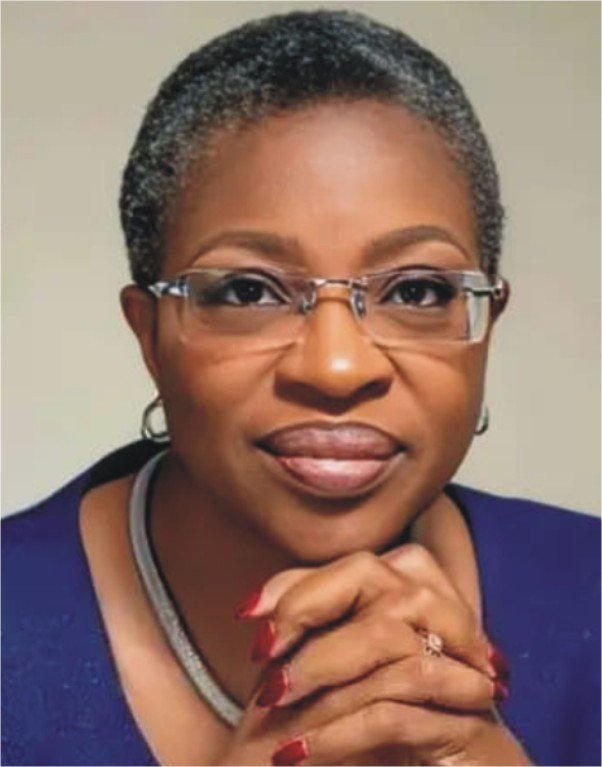
For decades, women in Nigeria’s legal profession had to fight for recognition, respect and a place at the table. They studied law alongside men, went to courtrooms alongside men, argued cases before male judges and built some of the country’s most respected legal careers.
But today, something extraordinary has happened. The women are no longer simply asking for a seat at the table. They are now sitting at the head of it.
In what has emerged as one of the most remarkable moments in the history of Nigeria’s legal profession, four women are simultaneously occupying the most influential leadership positions in the country’s justice system and legal profession.
From the Supreme Court to the Court of Appeal, from the institution that trains every new lawyer in Nigeria to the association that represents the country’s lawyers, women are now in charge.
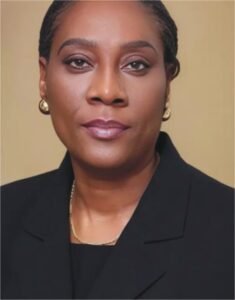
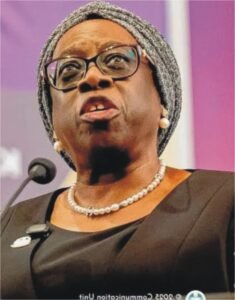
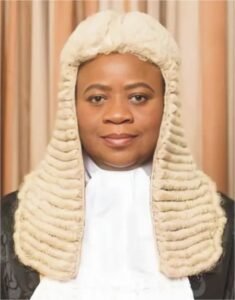
They are Justice Kudirat Motonmori Olatokunbo Kekere-Ekun, Chief Justice of Nigeria; Justice Monica Bolna’an Dongban-Mensem, President of the Court of Appeal; Dr Olugbemisola Titilayo Odusote, Director-General of the Nigerian Law School; and Mrs Oyinkansola Badejo-Okusanya, SAN, the newly elected President of the Nigerian Bar Association.
Together, they represent a powerful new picture of Nigerian womanhood, professional excellence and institutional leadership. And this is not just a story about women occupying offices.
It is the story of four women who have spent decades building their careers, rising through institutions that were, for much of Nigeria’s history, heavily dominated by men.
THE WOMAN AT THE TOP OF THE JUDICIARY
JUSTICE KUDIRAT KEKERE-EKUN
At the very top of Nigeria’s judicial pyramid sits Justice Kudirat Kekere-Ekun. She is the Chief Justice of Nigeria and the head of the nation’s judiciary. But her rise to the highest judicial office did not happen overnight.
Born in London on May 7, 1958, Justice Kekere-Ekun studied law at the University of Lagos, earning her LL.B degree in 1980 before being called to the Nigerian Bar in 1981. She later obtained a Master of Laws degree from the London School of Economics and Political Science.
Her legal journey began in private practice before she moved into the Lagos State Judiciary. From the magistracy, she rose to become a High Court judge. She later moved to the Court of Appeal and, in 2013, was elevated to the Supreme Court of Nigeria.
It was the culmination of more than four decades in the legal profession. In 2024, she became the second female Chief Justice of Nigeria, following in the historic footsteps of Justice Aloma Mukhtar, who became the first woman to head Nigeria’s judiciary. Today, Justice Kekere-Ekun occupies one of the most powerful judicial offices in the country.
As Chief Justice of Nigeria, she presides over the Supreme Court and chairs the National Judicial Council, the body responsible for a major part of the administration and discipline of Nigeria’s judiciary.
Her office places her at the centre of the country’s most important constitutional, political and legal questions. Every major judicial system needs someone at the top who understands the weight of history. Justice Kekere-Ekun is now that person.
THE WOMAN WHO OVERSEES NIGERIA’S APPEAL COURTS
JUSTICE MONICA DONGBAN-MENSEM
If Justice Kudirat Kekere-Ekun is at the summit of the judiciary, Justice Monica Bolna’an Dongban-Mensem oversees one of the most important stages of Nigeria’s judicial process.
She is the President of the Court of Appeal.
The Court of Appeal is Nigeria’s second-highest court and handles appeals from the Federal High Court, State High Courts, National Industrial Court and other courts and tribunals.
This means that the court is often at the centre of the country’s most important legal disputes.
Election petitions. Constitutional battles. Commercial disputes. Human rights cases. Political controversies. Major criminal and civil appeals.
Justice Dongban-Mensem sits at the head of the institution that reviews many of those decisions.
Born on June 13, 1957, she comes from Plateau State and is the daughter of a retired Court of Appeal Justice. She studied law at Ahmadu Bello University, Zaria, where she obtained both her LL.B and LL.M degrees.
Before becoming a judge, she worked in legal education and administration. She served as Deputy Chief Registrar of the Superior Courts and Protocol Affairs before becoming a judge of the Plateau State High Court.
She later moved to the Federal Capital Territory Judiciary and was elevated to the Court of Appeal in 2003.
In June 2020, she was sworn in as President of the Court of Appeal. That made her one of the most powerful women in Nigeria’s justice system.
For more than six years, she has overseen the appellate court system, presiding over an institution that plays a critical role in determining whether decisions from lower courts stand or are overturned.
And now, with Justice Kekere-Ekun leading the Supreme Court, the two most senior levels of Nigeria’s regular court system are being led by women.
THE WOMAN WHO NOW TRAINS NIGERIA’S FUTURE LAWYERS
DR OLUGBEMISOLA ODUSOTE
Then came another history-making appointment. In January 2026, Dr Olugbemisola Titilayo Odusote became the first woman to serve as Director-General of the Nigerian Law School since the institution was established in 1962.
For more than six decades, the institution had been led by men. Then Dr Odusote arrived at the top.
Her appointment was not simply a symbolic breakthrough. It was the culmination of a long career within the Nigerian Law School itself.
Dr Odusote obtained her LL.B and LL.M degrees from Obafemi Awolowo University and later earned a Ph.D. in Law from the University of Surrey in the United Kingdom.
Her doctoral research focused on public law and the administration of justice.
She was called to the Nigerian Bar in 1988 and joined the Nigerian Law School as a lecturer in 2001.
Over the years, she rose through the academic and administrative ranks. She served as Head of the Academic Department, Director of Academics and Head of Campus. Before her appointment as Director-General, she was Deputy Director-General and Head of the Lagos Campus of the Nigerian Law School.
She also had international academic experience, including work as a visiting scholar at Nottingham Trent University in the United Kingdom.
Now, as Director-General, she is responsible for the institution that prepares prospective lawyers for their final professional training before they are called to the Nigerian Bar.
In simple terms, almost every new lawyer who will eventually appear before Nigerian courts must pass through the institution she now heads.
She is therefore not just leading a school. She is helping to shape the next generation of Nigerian lawyers.
Every young law student dreaming of becoming a Senior Advocate, a judge, a magistrate, a legal scholar, a politician or a corporate lawyer will, in one way or another, be connected to the Nigerian Law School. And today, that institution is being led by a woman.
THE WOMAN WHO WON THE NBA PRESIDENCY
OYINKANSOLA BADEJO-OKUSANYA, SAN
The fourth woman completing this extraordinary picture is Oyinkansola Badejo-Okusanya. Unlike the other three women, she did not arrive at the top through a judicial appointment or a government appointment. She had to win an election. And she did.
On July 19, 2026, Senior Advocate of Nigeria Oyinkansola Badejo-Okusanya was elected the 33rd President of the Nigerian Bar Association.
She polled 12,317 votes, representing 47.18 per cent of the 26,106 votes cast, defeating fellow Senior Advocates Lateef Omoyemi Akangbe and Olumuyiwa Akinboro.
Her victory made her only the second woman in the history of the NBA to lead the association. The first was Dame Priscilla Kuye, who served as NBA President between 1991 and 1992.
But Badejo-Okusanya’s victory carries another important distinction. She is the first woman to be directly elected to the NBA presidency by members of the association.
That makes her emergence even more significant. Her story is also one of unusual academic determination.
She first studied English at the University of Lagos, earning a Bachelor of Arts degree. Then, about a decade later, she returned to study Law.
She eventually obtained her law degree, attended the Nigerian Law School and was called to the Nigerian Bar in 2002.
She later earned a Master of Laws degree in Commercial and Corporate Law from Queen Mary University of London.
Over more than two decades, she built a career in commercial litigation, dispute resolution, arbitration and public sector law.
She also became involved in professional legal organisations and the wider justice sector. In September 2025, she was elevated to the prestigious rank of Senior Advocate of Nigeria.
Less than a year later, she achieved one of the highest positions available to a Nigerian lawyer. Her victory also came with a clear message. Women were not simply being appointed to the top. A woman had gone to the Nigerian legal profession, asked for its votes and won.
THE WOMEN ALSO LEADING THE NBA’S SPECIALIST SECTIONS
The story becomes even more remarkable when one looks beyond the NBA presidency.
The Nigerian Bar Association’s specialist sections are also being led by women.
The NBA Section on Business Law is chaired by Ozofu ‘Latunde Ogiemudia.
The NBA Section on Legal Practice is led by Folashade Alli, SAN.
The NBA Section on Public Interest and Development Law is chaired by Professor Uju Agomoh.
These specialist sections represent important areas of legal practice.
Business law deals with the commercial engine of the economy.
Legal practice focuses on the professional development and practice of law.
Public Interest and Development Law deals with some of the most important questions around human rights, justice, development and vulnerable communities.
So, while four women are leading the biggest legal institutions in the country, other women are also occupying influential positions across the NBA’s specialist professional structures.
It is a remarkable picture of female leadership.
FROM THE COURTROOM TO THE BOARDROOM
For many years, conversations about women in Nigeria’s legal profession focused on representation. How many women were judges? How many were Senior Advocates? How many were partners in leading law firms? How many occupied leadership positions?
Today, the conversation is changing. The women are not merely present. They are in command.
Justice Kekere-Ekun is at the top of the judiciary. Justice Dongban-Mensem leads the Court of Appeal. Dr Odusote heads the Nigerian Law School. Oyinkansola Badejo-Okusanya leads the Nigerian Bar Association. Together, they touch almost every major part of Nigeria’s legal ecosystem.
One leads the Supreme Court and the National Judicial Council. Another leads the Court of Appeal. Another oversees the education and professional training of future lawyers. And another leads the association representing Nigeria’s lawyers.
This means that at the same time, women are now shaping judicial administration, appellate justice, legal education and the organised legal profession. It is difficult to imagine a more powerful display of female leadership within Nigeria’s legal system.
THE SIGNIFICANCE OF THIS MOMENT
There is a tendency in Nigeria to celebrate appointments and elections for a few days before moving on to the next big story. But this particular moment deserves more than a few headlines.
The legal profession is one of the most powerful institutions in any democracy. Lawyers interpret the Constitution. Judges decide disputes. The courts determine the limits of government power. Legal educators train the people who will eventually run the justice system.
The Bar Association speaks for the legal profession and plays an important role in debates about the rule of law, justice and democracy.
For women to now lead these institutions at the same time is a major historical development.
It also tells a powerful story to the young girl studying law in a Nigerian university today. She can now look at the highest levels of the profession and see women.
Not one woman. Not two. But women leading across the entire legal system. The message is simple. The glass ceiling may still exist in many areas of Nigerian society, but in the legal profession, several women have now smashed through it.
THE LEGACY OF THE WOMEN WHO CAME BEFORE THEM
Of course, the four women did not arrive in an empty space. Before them were generations of women who entered the legal profession when the odds were far more difficult. Women such as Justice Aloma Mukhtar, Nigeria’s first female Chief Justice of Nigeria.
Dame Priscilla Kuye, the first woman to lead the Nigerian Bar Association.And countless female judges, lawyers, academics and advocates who spent decades proving that professional excellence had no gender.
The women currently at the top are standing on the shoulders of those pioneers. But they are also creating new paths for those coming behind them.
When the next generation looks back at 2026, it may remember it as the year when Nigerian women occupied the commanding heights of the legal profession.
THE NEW FACE OF POWER IN NIGERIA’S LEGAL PROFESSION
There is something powerful about the picture Nigeria’s legal profession now presents. At the Supreme Court, there is a woman.
At the Court of Appeal, there is a woman. At the Nigerian Law School, there is a woman.
At the Nigerian Bar Association, there is a woman. And across the NBA’s specialist sections, women are also leading. This is not just a gender story.
It is a story about professional growth, perseverance, institutional change and the gradual transformation of Nigeria’s idea of who can lead.
For generations, Nigerian women were told that certain positions were too powerful, too demanding or too traditionally male.
Today, four women are occupying some of the most powerful offices in the legal profession.
They have not arrived there because the law was changed to give them the positions.
They have arrived through education, experience, years of service, professional excellence and, in the case of the NBA presidency, the votes of their colleagues. The message from Nigeria’s legal profession is now impossible to ignore.
The women are no longer waiting outside the courtroom. They are presiding over it. And for the first time in Nigeria’s history, the country’s judiciary, appellate court system, legal education and organised legal profession are all being led by women at the same time.
That is not just a milestone. That is history in heels.
By Emmanuel Daniji
