

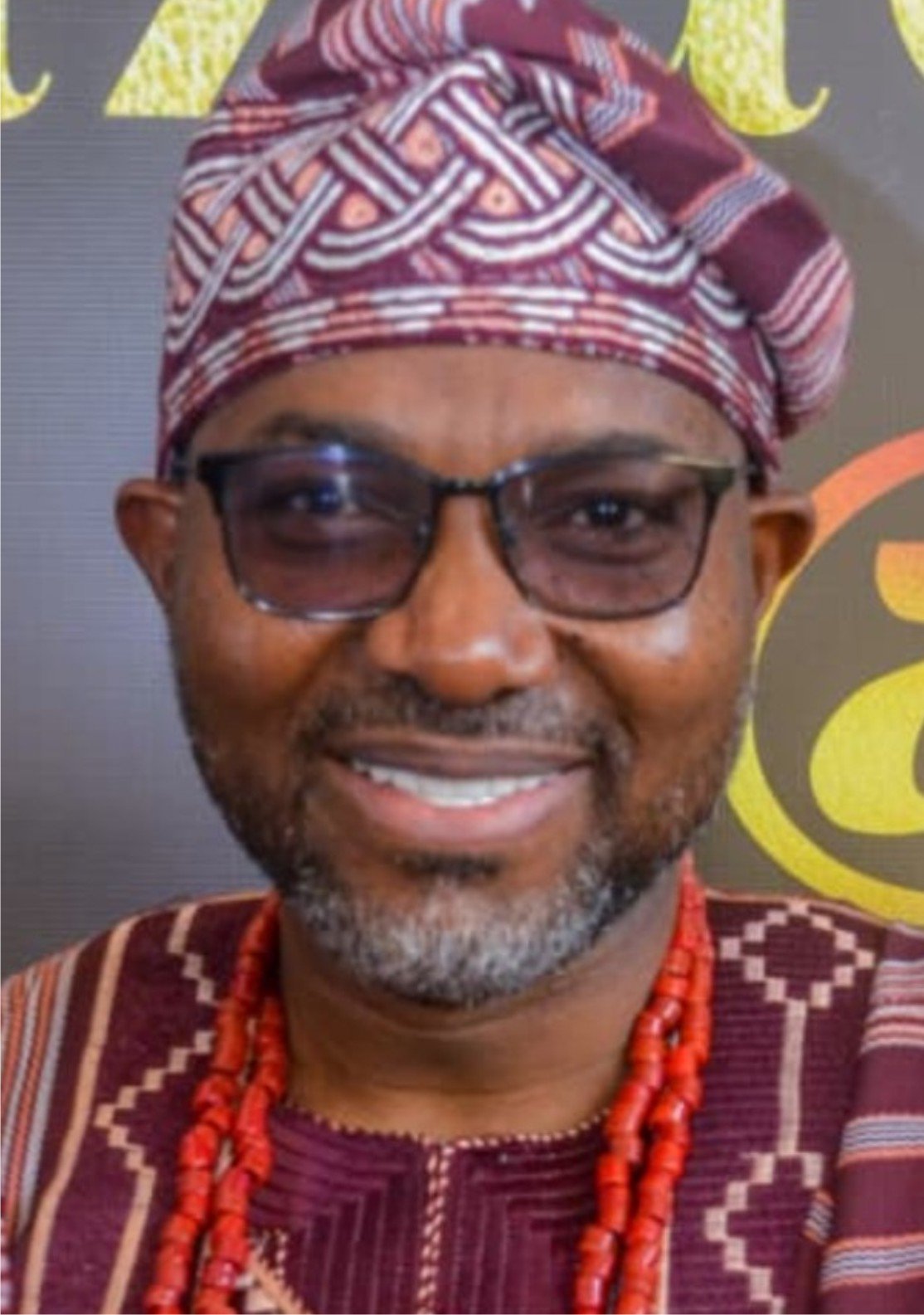
A few days ago, the whole world gathered at Dome Event Center in Akure to celebrate Engr Razak Obe.
His classy 50th Birthday celebration witnessed the presence of the No 1 man in Ondo State, Gov. Lucky Ayedatiwa, Monarchs and other important dignitaries, as planned by Psquare Events, the best event planner in Akure.
At 50, the story of Razaq OBE is one that serves as an inspiration to many Nigerians. From a humble background in Ilara-Mokin to rising through the ranks in top organisations like Globacom and ExxonMobil, and now playing a key role in the Ondo State Government, his journey is a true reflection of hard work, discipline, and purpose.
In this interview with the Head of City People TV, SUNDAY ADIGUN, the soft-spoken but highly focused technocrat opens up on his life journey, his values, and why he walked away from a thriving corporate career to embrace public service. He speaks candidly about his upbringing, the influence of his parents, his leadership journey, and the principles that have shaped him into the man he is today, one whose story offers valuable lessons for younger generations navigating similar paths.
Congratulations on the you on the success of your 50th Birthday celebration. For the purpose of this interview, who is RAZAQ OBE?
Razaq Obe is like any other person, but a man who has chosen to define his values in life, right from childhood, choosing the path of hard work, honesty, consistency, and a path that is dispassionate.
I always seek things that are beyond me. If it’s just about me, I’m not fascinated.
If you look at the time I’ve spent in this life, 70% and above of my time, resources, everything has been about others. And that has made me provide leadership, even from primary school where I served as health prefect, to secondary school, and then the university. I was the President of the Engineering Students Association at the University of Benin, and later led the entire student body. I left the school with legacies people still refer to today.
When I started working as well, I was briefly with Globacom, then with ExxonMobil, where I spent 13 years. I left there as well as a branch chairman, and I was a board member of the Employee Savings and Pensions Fund—handling hundreds of billions of naira. I’ve always provided leadership, and I’ve seen again and again that that’s everything we must do to make a difference in our country and in the world.
And that’s the reason, in 2021, I chose to leave the comfort of a beautiful corporate job to join public service. I came to Ondo State after taking early retirement at 45. Thankfully, Governor Rotimi Akeredolu appointed me as Commissioner for Energy and Mineral Resources.
When he passed, Governor Lucky Aiyedatiwa, his successor, reappointed me to the same role. Just last November, Governor Aiyedatiwa called me and, in this new tenure of his, made me the Director General, Performance and Project Implementation Monitoring Unit of the government. My role is to oversee policy formulation, incubation, and execution—ensuring everyone is doing their job right and that the state has a clear path to prosperity.
We are not just playing in the air. Somebody has to ensure that things are done properly in the state. So that has been my life, and I believe the remainder of my days will be committed even more to public service. In fact, as I chose from age 45, it is my desire to serve humanity till I breathe my last.
So when we are no longer here, as Lee Kuan Yew said in Singapore, people will live hundreds of years later and look back to see that they had leaders who served selflessly—who built not for today, but for posterity, sustainably. That is what other parts of the world have done, and Nigeria should not be an exception. I believe if our people are committed to making a difference, it will not take as long as expected for Nigeria and Africa to come out of the woods and build a nation that works for everyone, if we decide to do so.
Would you say your background actually prepared you for all these successes?
Absolutely. My father, Alhaji OBE, my hero, I lost him when I was just 17 years old. But this man imparted so much in me that, even from his grave, his values are still with me.
My dad prepared me for everything. He taught me the power of what they call heuristic learning, reading for yourself, not depending entirely on your teachers. That for you to win in life, you have to do much more than what teachers will tell you in the classroom. You have to imagine beyond the walls of your classroom. You have to fend for yourself, and you must do so responsibly, with a sense of duty, that everything you do, you are doing it unto God and for humanity.
That has equipped me to know that I must win—not just for myself, but for others. Because Obafemi Awolowo said, “A man who carries people must first of all carry himself.”
So, for you to be valuable to society, you have to prepare yourself academically. You must be sound. You must build your own value system that is unimpeachable before you can step forward and ask for leadership. Because society, as bad as it may seem, always gravitates toward order. Nobody likes chaos, and where chaos is allowed, it is only a matter of time before disaster occurs. Everyone desires peace, and to achieve that, you need the right people in the right places to provide order. That is what politics is about. That is what leadership is about.
So I thank Alhaji OBE. I thank my mother as well. When I was growing up, we were not close, because she was a tough woman. But looking back now, I can say her strict approach to raising us paid off. Not just for me—my entire family. All my siblings are doing very well. Our last born is a researcher, a PhD holder in Washington, a first-class graduate. So all of my mother’s children are doing well, which means she did something right.
What fascinates others, the things people do, I wouldn’t do them. Last night, after the party, I declined to host any after-party. Someone offered, and I was invited. I went there briefly, but as the loud music played and people were dancing, I couldn’t stay. I don’t club; I have no reason to. I don’t spend my time on things I cannot see as consequential.
I don’t even spend my time watching Manchester United or Arsenal play football, because I ask myself, what am I gaining from it? The same applies to movies—sitting down for two hours just watching?
If I pick a topic—say quantum computing, which is coming after AI—I ask, what can I learn about it now? I’ve done a lot of work trying to understand it. I can study politics, classics, just to understand the world better. I can decide to learn about Napoleon Bonaparte, to understand how wars were fought and how leaders behaved in those times.
The more you learn, the better you become, a better citizen, a better leader. Maybe some movies are useful, no doubt, but wasting my time watching football or attending parties and dancing in clubs, I won’t do that. That has been me since childhood, and it is not going to change.
Sir, at 50, looking at your journey from age one, what has life taught you?
I just must say I’m thankful. I’m so grateful to God. I grew up in my community. If you go to my primary school, Muslim Primary School, Ilara-Mokin, and pick children who went to the same school who are on the same pedestal I am today—or you go to my secondary school and pick people who went to the same school who are on the same pedestal or similar—very, very few. Because the background actually put our backs on the ground.
Why would I say I was different? Because my dad was a civil servant; he was fairly educated. He equipped me more because he knew more. What about those whose fathers were just agrarian farmers, who never knew better? So my background was just like any other rusting village primary school, where you just barely had to wear something and get to class.
Imagine the selection of meals in the morning, and my mom didn’t know better. You don’t give a child eba in the morning; when you eat eba in the morning, by 11 a.m., you are sleeping in class. Imagine if my mom knew better, that you eat lightly in the morning and something else in the afternoon. And then, garri, kuli kuli, epa—that was standard lunch. Nobody imagined any other kind of food. You want to have lunch and you are eating rice? Lunch? Are you a thief? No. Taking garri in the afternoon was just normal. That was life; we didn’t know any better.
Then, in the evening, you would eat pounded yam—a heavier meal. I mean, we just reversed the entire thing. What you shouldn’t have been eating at all garri you were eating. Lunch should have been served around 1 p.m., and something light should have been eaten as dinner. But that was what we knew; we didn’t know any better.
And then going through that, getting to the university, seeing things differently, seeing the world from a different prism, realizing I needed to compete with people from the best places on this planet—I just had to evolve. In the university, my leadership journey—much of what pushed me to leadership, was to fix problems.
At the University of Benin, they were imposing handouts for student lecturers—a paper you could photocopy for 50 Naira. I didn’t even have 20 Naira. Somebody was selling it for 350 Naira. That was a lot of money in those days at the university, because 350 Naira could make my soup in school for a week; it would cost 50 Naira.
So when someone was taking my 350 Naira to buy, it felt like you were beating somebody who was already on the ground. I checked that if this wasn’t channeled, nobody was going to solve it. I ran to the president of the Faculty of Engineering. When I became president, I attacked it. I got those lecturers punished—one eventually got fired from the first panel; they were rebuked, they were reprimanded. That was the beginning of change, because we definitely stopped that menace at the time in the university. And that was good for so many students who didn’t have the money to pay in the first place.
And so many other things at work as well—I’ve always aimed to make an impact. You saw the events yesterday; people came from everywhere I’ve passed. I’ve left something that people are rejoicing about. You saw my primary school teachers, my secondary school teachers, my University professors, even my PhD supervisors at the University of Abuja. A professor came all the way to be part of the event.
Fellow students came all the way to be part of the event.
The interesting thing is, from what you saw, tens of millions were expended on that event. Would it shock you that it was outsourced? People were donating money in ways I never imagined. I’m not a party person. In fact, I was surprised. At the end of the day, contributions from people carried maybe 90% of the money spent. So I finished my event, all the people were paid off, no liability—despite the quantum of cash spent.
That gives me a new persuasion to do even much more, because human beings actually appreciate all this. Anybody that says, “People don’t care,” is wrong. People really care, because I’ve got favors—from where I’ve passed, in the university, in the workplace. Globacom was represented there yesterday; a top leader in Globacom sent a representative and a fat gift. Former HR managers, serving managers, and the university were all present.
So I’m just grateful that my life has been what it is. You can see the government—the governor was there, the deputy governor was there, the speaker was there, the Chief Judge was there, almost all assembly members, almost all council chairmen, almost all commissioners, almost all special advisors. the entire space stood still. That is not what you find when the person celebrating is not dear to their hearts.
We had to manage crowds. You could see the effort we made to ensure we contained access. If we had allowed people to stroll in freely, we would have worried about a stampede. But thank God, God helped us. We were able to have that decent event.
