

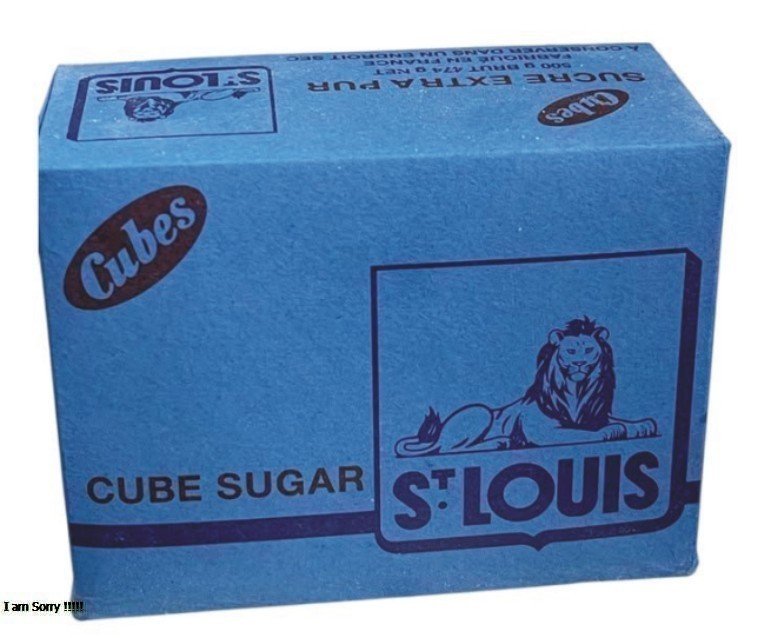
St. Louis Sucre, made by French company Saint Louis Sucre since 1865 landed in Nigeria during the colonial era. Back then, tea was ceremony and sugar was status. Cubes meant you could afford portion control. You did not “pour” sugar like you were in a hurry. You “dropped” it.
Granulated sugar existed, but it came in sacks from the factory or market. It was for bulk users (bakeries, breweries, and restaurants). If you had granulated sugar in your kitchen, you were either rich enough to buy a sack or you ran a business.
The old bakers used the granulated sugar instead of the cube form as it is not possible to cream butter with cubes and there was no way to scale recipes with cubes. Granulated dissolved faster in dough.
Those same bakers had St. Louis at home. Cubes were not for production, they were for presentation. Granulated was for the kitchen. Cubes were for the parlor.
Fast forward to 2026. Dangote Sugar and BUA Foods now control over 70% of Nigeria’s sugar market with granulated sugar and sachets. They are cheaper, faster, and everywhere. Yet St. Louis cubes still sit on shelves in Shoprite, Spar, and the neighborhood supermarkets.
Why Does St. Louis Cubes Still Sell?
(1) RITUAL BEATS CONVENIENCE
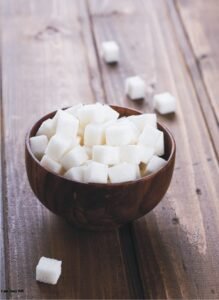
Sugar in Nigeria is not just sweetener, it is hospitality. When an older visitor comes to your house, you do not toss them a sachet. You bring a tray tea, milk, and St. Louis cubes in a small bowl. The cube signals care, portion control, and respect. Sachets say “manage it.” Cubes say “you’re welcome.”
That ritual keeps St. Louis alive at weddings, naming ceremonies, Ramadan visits, hospital gifts, Christmas hampers and office meetings. Hotels still use cubes because guests expect it. Caterers at Owambe buy it because it photographs better on the tray.
(2) THE OLDER GENERATION’S EMOTIONAL ATTACHMENT
For Nigerians over 45, St. Louis is muscle memory. It was used in pap, custard, it was used in Lipton. It dissolves slower, so you sip longer. It is tied to memory, “this is the sugar we grew up with”.
They are not buying sugar. They are buying the 1980s. And they have the purchasing power. While Gen Z buys sachets daily, older Nigerians buy cubes monthly for the whole house.
(3) THE “NO COMPETITION” LANE
There are other Nigerian companies that also make cube sugars but St. Louis owns the brand recall. In Nigeria, “sugar cube” means St. Louis the way “noodles” means Indomie. Even when people buy cheaper cubes, they call it “St. Louis.” That brand power is default.
(4) THE UNOFFICIAL SUGAR FOR RELIGIOUS ACTIVITIES
Due to Nigeria being a highly religious country, the use of the product is still in high demands regardless of the granulated sugar winning the mass market. This is because the sugars are used for spiritual supplications or fortification by white garment churches and even by Muslim clerics.
St. Louis Sucre might not outsell other companies granulated sugar, it doesn’t need to. Nigeria is a dual market: one for survival, one for status. Granulated and sachets feed the country. Cubes feed the culture.
St. Louis might not be the king of the sugar aisle anymore but in Nigeria, it is still the last king of the tea tray. And that still pays.
–Oluwatoyin Fowobaje
