

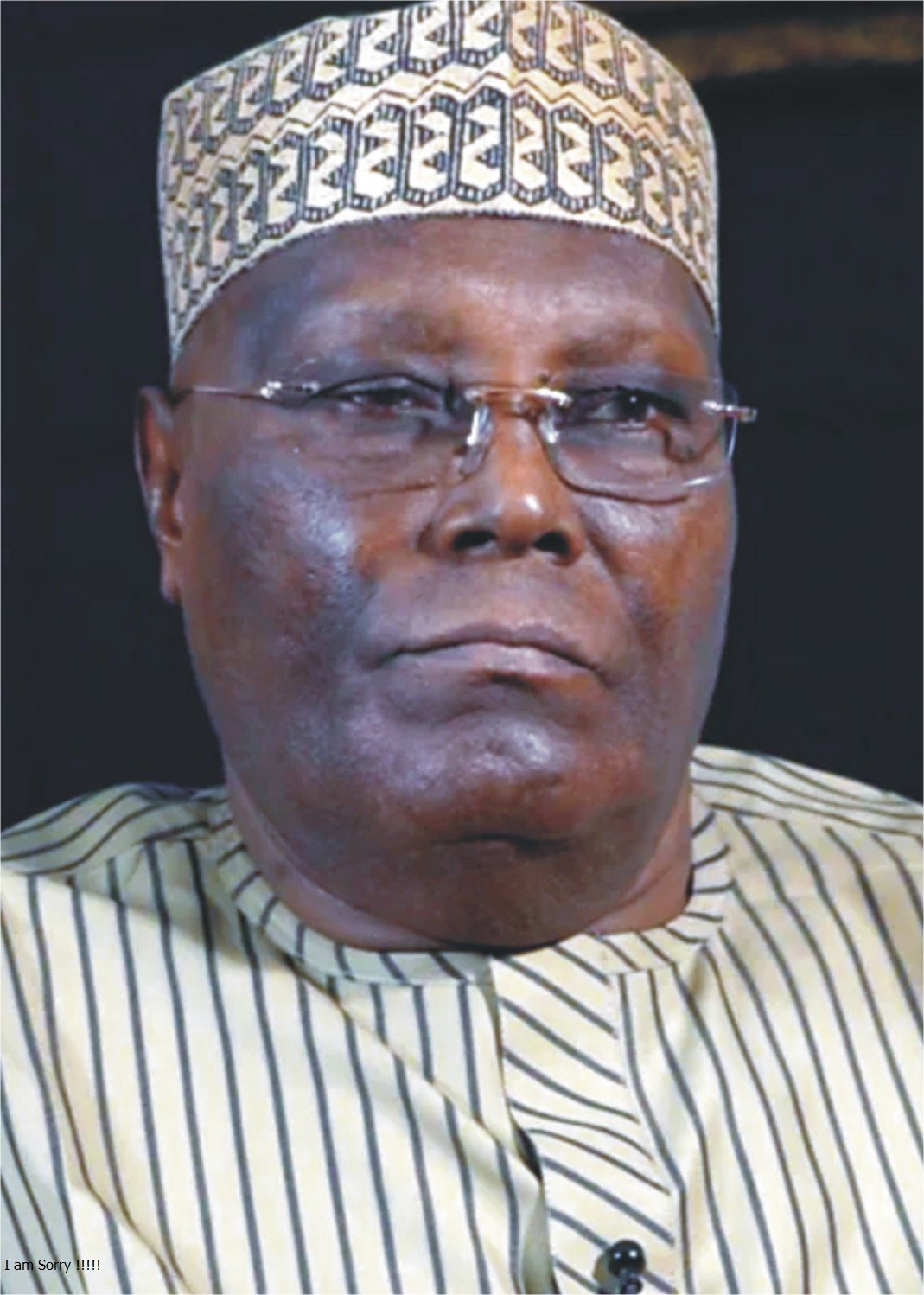
Can the former Vice President build a winning national coalition against Tinubu? As Nigeria enters the 2027 presidential election campaign, former Vice President Alhaji Atiku Abubakar remains one of the most experienced and formidable opposition figures in the country. Atiku has contested the presidency several times since 1993. But the political environment of 2027 is significantly different from previous years.
The critical question is whether Atiku can expand that base beyond the North and persuade voters in the South that he can provide a credible alternative to Tinubu. The 6 geopolitical zones provide the clearest way to examine his chances.
(1) NORTH-EAST: ATIKU’S STRONGEST ZONE
If there is one geopolitical zone where Atiku starts the 2027 race with a clear historical advantage, it is the North-East. In 2023, he won the region decisively, polling 1,737,846 votes, or 50.58 per cent, compared with Tinubu’s 1,185,458 votes, or 34.50 per cent. The North-East consists of Adamawa, Bauchi, Borno, Gombe, Taraba and Yobe. Atiku’s strongest asset is his personal connection to the region. He is from Adamawa State and has built political relationships across northern Nigeria over several decades. His political network is also deep. He was Vice President from 1999 to 2007, has been a major PDP power broker and has repeatedly contested the presidency. His political experience gives him a level of familiarity with northern political structures that relatively newer opposition figures may struggle to match. Adamawa remains Atiku’s political fortress. It is his home state and the centre of his political organisation. The challenge, however, is that winning Adamawa overwhelmingly is not enough. He must translate his personal popularity into strong performances across the other five states. Bauchi and Gombe states will be particularly important because they have historically produced strong PDP votes. Atiku’s task will be to maintain those relationships while preventing APC from making significant gains. Borno and Yobe are more complicated because of the strength of APC and the influence of the Shettima political network. Vice President Kashim Shettima’s continued presence on Tinubu’s ticket gives APC an important regional advantage. Atiku therefore faces a difficult battle here.
(2) NORTH-WEST: THE ZONE THAT COULD MAKE OR BREAK ATIKU
The North-West is arguably more important to Atiku than any other zone because of its enormous voting population. In 2023, Atiku came second in the region with 2,329,540 votes, or 34.82 per cent, behind Tinubu’s 2,652,235 votes, or 39.64 per cent. Rabiu Kwankwaso also obtained 1,268,250 votes, or 18.96 per cent. This result tells the story of Atiku’s problem. He had a huge northern base, but the anti-Tinubu vote was divided. Atiku and Kwankwaso together received significantly more votes than Tinubu in the North-West. But because they were competing separately, Tinubu emerged ahead. That makes 2027 potentially different. If Atiku can consolidate a significant portion of the northern opposition vote, his chances improve dramatically. The North-West consists of Jigawa, Kaduna, Kano, Katsina, Kebbi, Sokoto and Zamfara.
Kano: The biggest complication
Kano is the biggest challenge. Kwankwaso’s political movement remains extremely influential in Kano, and the 2023 election demonstrated the power of the NNPP’s structure. For Atiku, the question is whether Kwankwaso’s supporters can be persuaded to support him if the opposition ultimately chooses Atiku as its presidential candidate. That is far from automatic. The personal and political relationship between Atiku and Kwankwaso has been complicated, and northern politics is often driven by strong personalities. Kaduna, Katsina and Sokoto states provide Atiku with significant opportunities. His northern identity and long political experience could help him compete strongly. But APC has powerful structures in all three states. The president’s control of the federal government and the movement of politicians into the APC camp could make the contest much tighter. Zamfara and Kebbi states could become important battlegrounds because of security concerns, poverty and rural voting patterns. Voters may judge both Tinubu and Atiku according to their perceptions of which candidate can address insecurity and economic hardship. Jigawa could also become competitive depending on the strength of the opposition’s organisation and the direction of local political alliances.
(3) NORTH-CENTRAL: ATIKU HAS ROOM TO GROW
The North-Central is another important zone for Atiku. In 2023, he received 1,162,087 votes, or 25.46 per cent, behind Tinubu’s 1,760,993 votes and Peter Obi’s 1,415,577 votes. The region includes Benue, Kogi, Kwara, Nasarawa, Niger and Plateau, as well as the Federal Capital Territory in the conventional geopolitical classification. Atiku’s problem here is that his vote was squeezed between Tinubu and Obi. The 2027 question is whether he can reclaim voters who supported Obi in 2023 while retaining his existing northern support. That will not be easy. Peter Obi’s support in the North-Central was substantial in 2023, particularly in states such as Plateau and the FCT. Atiku therefore needs to present himself as more than a northern candidate. He must convince voters across the region that his presidency would represent a national rather than sectional project. Benue could become particularly interesting because of its complex political alliances and the influence of prominent political figures. Atiku needs strong grassroots organisation here. Plateau was one of the areas where Obi demonstrated considerable strength in 2023. For Atiku, taking votes from Obi’s political base will be difficult unless the opposition presents a genuinely unified campaign. Kwara and Niger states have strong APC structures, but economic hardship and local political calculations could make the contest competitive. FCT: Abuja could be one of Atiku’s most important targets. The FCT electorate tends to contain a large number of politically active, educated and mobile voters. The opposition will need a strong campaign in the capital. But Wike is a formidable stumbling block in the FCT.
(4) SOUTH-EAST: ATIKU’S BIGGEST PROBLEM
The South-East presents perhaps Atiku’s most complicated electoral challenge. In 2023, he received only 90,968 votes, representing 4.09 per cent of the region’s valid votes. Peter Obi, by contrast, obtained 1,952,998 votes, or 87.78 per cent. The figures are extraordinary. Atiku did not merely lose the South-East. He was overwhelmingly rejected in the region. This presents a major strategic problem for 2027. Atiku’s political history in the South-East is not insignificant. The PDP traditionally maintained strong relationships with the region, and Atiku has had political allies there. But Obi’s 2023 performance fundamentally changed the political landscape. For many South-East voters, Obi became the dominant opposition figure. The question is whether those voters would transfer their support to Atiku if he becomes the main opposition candidate. That depends largely on the structure of the coalition. If Obi remains a major independent political force, Atiku could struggle badly. If Obi supports Atiku as part of a negotiated opposition arrangement, the calculation changes dramatically.
The importance of the coalition
The South-East could therefore determine whether Atiku’s candidacy becomes a genuine national coalition or remains predominantly northern. If Obi’s supporters move behind Atiku, the former vice president could make substantial gains. If they remain with Obi, Atiku could again finish far behind the APC and LP/Obi structures. The South-East is the zone where Atiku most urgently needs political reconciliation.
- SOUTH-SOUTH: ATIKU’S BIGGEST OPPORTUNITY IN THE SOUTH
The South-South offers Atiku a more promising environment. In 2023, he scored 717,908 votes, representing 25.12 per cent, behind Peter Obi’s 1,210,675 votes and ahead of Tinubu’s 799,957 votes. The region includes Akwa Ibom, Bayelsa, Cross River, Delta, Edo and Rivers. Atiku has historically enjoyed significant support in this part of the country because of the PDP’s longstanding political network. But the 2023 election demonstrated how fragmented the region has become. Obi won five of the six states under the regional breakdown, while Atiku and Tinubu also maintained significant support. Atiku’s biggest opportunity is to present himself as the candidate capable of bringing the opposition together. Rivers is particularly important. Its political structure is enormously influential in national elections, and the relationship between Atiku and the state’s political establishment has been complicated by the Wike factor. The former governor and current FCT minister, Nyesom Wike has remained politically influential and has been associated with the opposition’s internal disputes. Atiku cannot simply assume that traditional PDP loyalty will automatically return. Akwa Ibom has historically been a PDP stronghold, although APC has made significant political advances. The state could become highly competitive. Delta and Edo states could provide Atiku with opportunities if he can mobilise the traditional PDP base while attracting voters dissatisfied with the APC government. Bayelsa and Cross River states have their own political dynamics and could be affected by alliances between national and local politicians.
- SOUTH-WEST: THE MOST DIFFICULT SOUTHERN ZONE FOR ATIKU
The South-West may be Atiku’s most difficult major battleground outside the South-East. Tinubu’s personal political roots in the region give him a substantial advantage. He is a former Lagos governor and has maintained a powerful political network across the South-West for decades. For Atiku, therefore, the objective cannot simply be to defeat Tinubu across the entire zone. He must reduce Tinubu’s margins. Lagos is the most important prize. It is Nigeria’s most populous state and Tinubu’s political stronghold. Atiku’s challenge is enormous. But Lagos is also one of the most politically diverse states in Nigeria. The 2023 election demonstrated that the APC’s dominance is strong but not absolute. A highly coordinated opposition campaign could improve Atiku’s numbers considerably. Ogun is another important battleground. The state has a complex political history and contains large numbers of voters with strong ties to Lagos and other parts of Nigeria. Oyo could be more competitive than Lagos because of the state’s distinct political dynamics. The relationship between Governor Seyi Makinde and the opposition coalition could become important. Recent reports have indicated that Makinde has participated in consultations involving Atiku and other opposition figures. Osun and Ondo states could offer Atiku opportunities if opposition forces unite. But APC’s structures remain substantial. Ekiti has traditionally been difficult territory for opposition presidential candidates when APC’s machinery is fully mobilised.
