

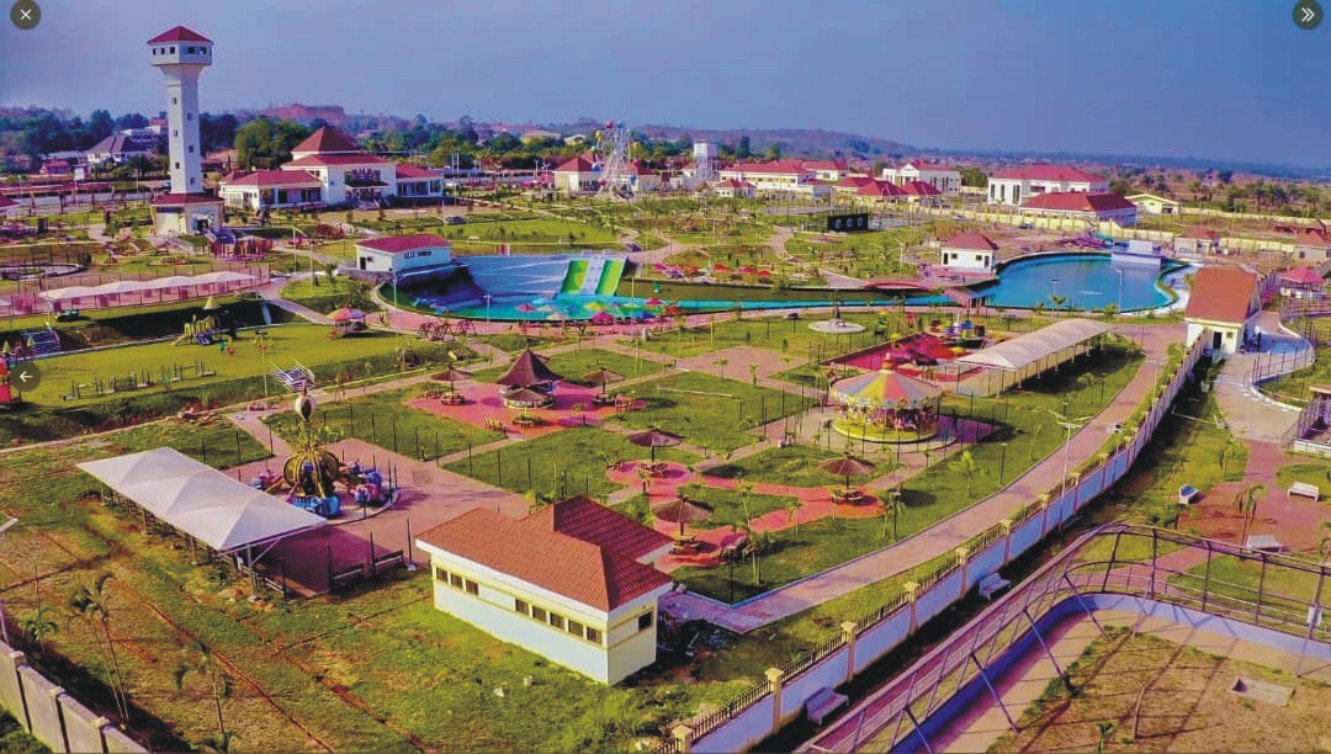
There is a part of Nigeria where the sound of “Action!” and “Cut!” has become almost as familiar as the sounds of everyday life. It is a place where actors arrive with scripts, producers move from one location to another, cameras are mounted, houses become movie sets and stories rooted in Igbo culture are brought to life for audiences across Nigeria and beyond. This place is Asaba, the capital of Delta State, and at the centre of its growing reputation as one of Nigeria’s major filmmaking destinations is the Asaba Film Village.
Although Asaba is not located in the South-East, its close cultural, commercial and historical connections with the Igbo-speaking world have made it an important base for the production of Igbo-language films and movies targeted at audiences across the eastern part of Nigeria. Over the years, the city has developed what is popularly known within the industry as “Asabawood”—a vibrant filmmaking ecosystem populated by actors, producers, directors, marketers, cinematographers, editors, technicians and countless other workers whose livelihoods are connected to the movie business.
The establishment of the Film Village did not create Asaba’s movie industry from nothing. In many ways, the opposite happened. The movie industry came first; the Film Village came later.
For years, filmmakers had already been travelling to Asaba to shoot movies because of the city’s accessibility, relatively affordable production environment and availability of locations. As more productions came, more actors and crew members followed. Hotels, houses, businesses, transport operators, makeup artists, costume designers, food vendors and other service providers gradually became part of an expanding film economy. Eventually, what had developed organically into one of Nigeria’s busiest movie-production centres received a permanent physical infrastructure designed specifically for filmmaking.
The story of the Asaba Film Village therefore goes beyond the buildings and shooting huts standing on the site. It is also the story of how a city in Delta State became one of the most important centres of Nigerian filmmaking.
FROM ENUGU TO ASABA
To understand why Asaba became so important, it is necessary to look backwards. Enugu has historically played an important role in the development of Nigerian and Igbo-language cinema. The city was one of the early centres of the Nigerian film industry, and filmmakers produced stories there long before Asaba became the powerhouse it is today.
But over time, production began moving south-westwards towards Asaba. Several factors contributed to this movement. Production costs mattered. Filmmakers needed locations where they could work without spending excessively. They needed accommodation for casts and crews, accessible roads and a variety of locations that could serve different stories. Asaba increasingly provided those advantages.
By the 2000s and 2010s, the movement had become noticeable enough for Asaba to develop its own identity within Nollywood. Research into Nigeria’s film industry has documented the growing importance of Asaba as a production centre, with substantial numbers of filmmakers choosing the city for their productions.
The result was the emergence of what became known as Asabawood. The name was not simply a geographical label. It represented an entire production culture. A producer could arrive in Asaba, assemble a cast and crew, secure accommodation, find a house to use as a location, hire local technicians, shoot the movie and move towards post-production without necessarily having to travel to Lagos. That convenience helped create a self-sustaining ecosystem.
THE CITY THAT BECAME A MOVIE SET
Talk through parts of Asaba and it can sometimes be difficult to separate everyday life from filmmaking. A large residential house can become the home of a wealthy movie character. A hotel can become the setting for a dramatic scene. A street can suddenly become a village road. A restaurant can become the location for a confrontation between two characters. A compound can be transformed into the palace of a fictional king. This ability to transform ordinary spaces into cinematic locations became one of the strengths of Asaba’s filmmaking economy. Instead of requiring expensive permanent sets for every production, filmmakers could make use of the city’s existing environment. That created opportunities for property owners and residents as well. Homes could be rented for productions. Businesses could provide services to crews. Young people could find work as extras or production assistants. Local artisans could participate in set construction, costume production, makeup and other areas. The movie industry therefore became more than entertainment. It became an economic ecosystem.
THEN CAME THE FILM VILLAGE
The Delta State Government eventually recognised the scale and potential of the industry and began working towards giving it dedicated infrastructure. The project was conceived as an ultra-modern filmmaking and entertainment village at Anwai, Asaba. According to the project’s designers, the facility occupies approximately 44,989 square metres and was planned to support filmmakers through different stages of production—from pre-production and filming to post-production and premieres.
The facilities were designed to include a shopping centre, amphitheatre and administrative building, studio and editing suites, workshop, guest house, clinic, staff quarters, hostels and shooting huts. That is significant because the idea was never simply to build another location where actors could stand in front of cameras. The broader ambition was to create an environment where filmmaking could happen almost from beginning to end. The project eventually became part of the wider Mariam Babangida Leisure Park and Film Village development in Asaba. In January 2023, the Asaba Film Village and Leisure Park were among projects commissioned during the administration of former Delta State Governor Ifeanyi Okowa.
The project has since remained part of Delta State’s strategy for developing Asaba as a major entertainment and tourism destination. The state government’s investment materials published in 2025 describe the Leisure Park and Film Village as commissioned projects intended to strengthen Asaba’s position as a home of Nigeria’s growing Nollywood industry.
A N5 BILLION-PLUS PROJECT
The Film Village also has an interesting financial history. Delta State government records show that in 2019, a contract of approximately ¦ 5.68 billion was awarded for the construction of a Film Village and Leisure Park at Ugbolu-Asaba. The project did not simply disappear from government budgets after construction began. Subsequent budget and performance documents continued to show allocations and expenditure relating to the Film Village creative centre and the adjoining leisure park. For example, Delta State’s 2024 budget performance records show spending of ¦ 27.635 million against a N40 million provision for the Film Village creative centre during the period covered by the report. The state’s 2025 approved budget also contained another ¦ 130 million allocation for the Film Village creative centre. These figures are important because they show that the Film Village has been a long-term public investment rather than a one-off construction project. They also raise questions that deserve answers.
How much has the entire project ultimately cost? How much of the original design has been completed? Which facilities are currently operational? How frequently are filmmakers using them? And most importantly, has the investment achieved the economic and creative impact that government originally envisioned? Those are questions that filmmakers, government officials and people working around the Film Village can answer.
MORE THAN JUST IGBO MOVIES
It would be easy to describe the Asaba Film Village simply as a place for Igbo movies. But that would not tell the complete story. The facility is intended for the wider Nigerian film industry, and productions made in Asaba are not exclusively Igbo-language films. English-language Nollywood productions, indigenous-language movies and other forms of visual entertainment have all found a place within the city’s filmmaking ecosystem. However, the strong presence of Igbo-language filmmaking is impossible to ignore.
Asaba’s geographical position, its cultural relationship with the wider Igbo-speaking region and the city’s established production network have made it particularly attractive to producers making stories centred on Igbo culture, family relationships, traditional institutions, wealth, marriage, community life and other themes that resonate strongly with eastern Nigerian audiences. This is where Asabawood has developed its distinct identity.
THE BUSINESS BEHIND THE CAMERA
Every movie production creates an economic chain. There are the actors whose faces appear on screen. But behind them are directors, producers, directors of photography, camera operators, lighting technicians, sound engineers, editors, makeup artists, costume designers, production assistants, location managers, drivers, caterers and countless others. Then there are the businesses that benefit indirectly. Hotels accommodate actors and crew. Restaurants feed them. Transport operators move them around. Property owners rent out locations. Fashion designers and tailors create costumes. Hairdressers and makeup artists work on productions. Printers produce publicity materials. Local businesses provide equipment and other supplies. This is why the significance of Asaba’s film industry cannot be measured only by the number of movies produced. There is a wider economy surrounding every production. UNESCO has gone as far as describing Asaba as a major centre of Nollywood and says the city estimates its population of film professionals and actors at around 100,000. UNESCO also notes that Asaba has a rich history of film production and identifies the city with the establishment of the country’s first Film Village. That figure should be treated as an industry estimate rather than a formal census, but it illustrates the scale of the city’s creative ecosystem.
– By Emmanuel Daniji
