

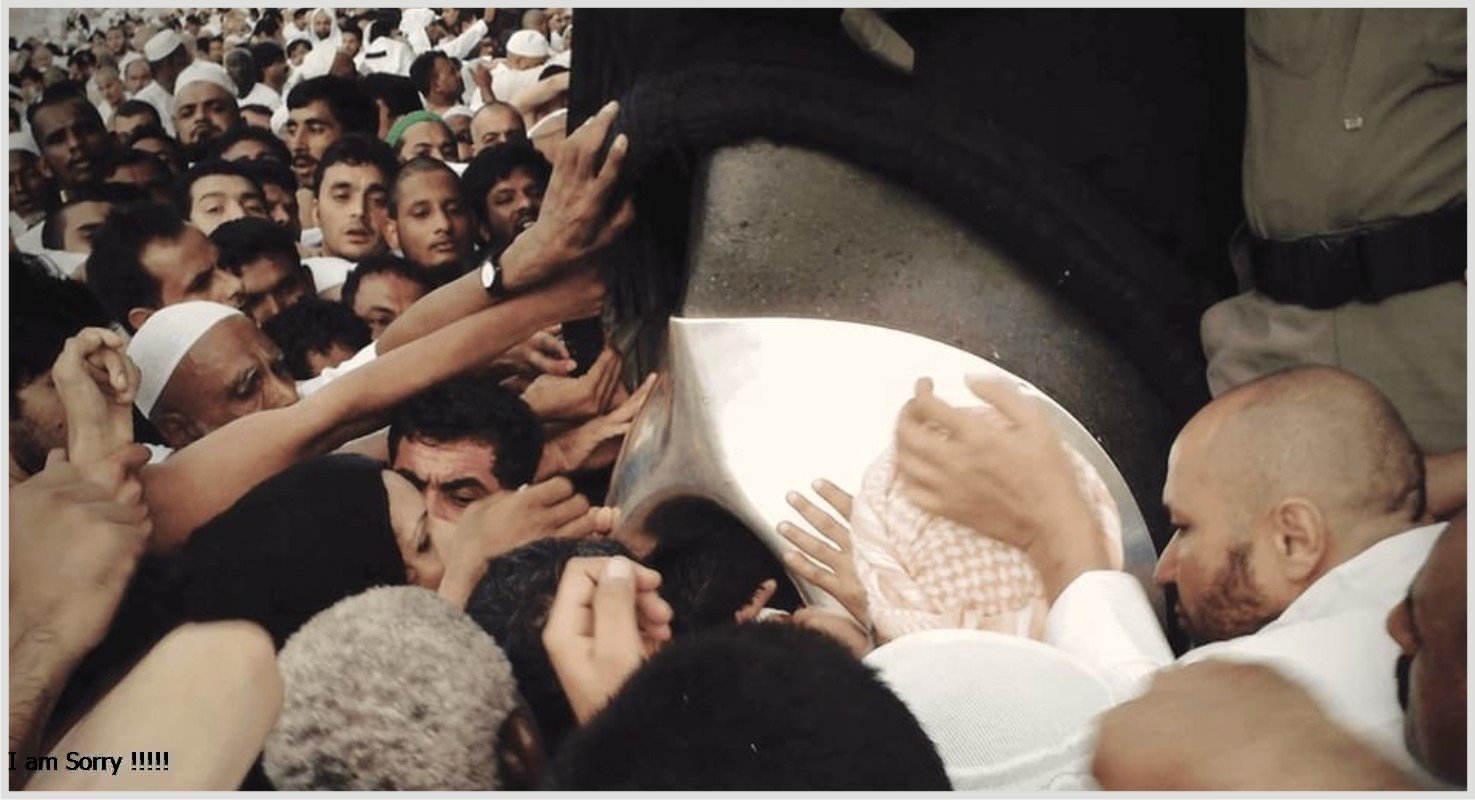
One of the most remarkable sights during Hajj and Umrah is the large crowd of pilgrims gathered around a particular corner of the Kaaba in the holy city of Mecca. Many of them stretch their hands towards it, some wave from afar, while others patiently wait for an opportunity to get close enough to touch or kiss it. That sacred object is known as the Black Stone, or Al-Hajar al-Aswad.
For many non-Muslims and even some Muslims who have not yet performed Hajj or Umrah, the question often arises: Why do millions of Muslims desire to touch the Black Stone?
The answer lies in faith, history, spirituality, and the desire to emulate the teachings and practices of Prophet Muhammad (SAW).
The Black Stone is embedded in the eastern corner of the Kaaba, the sacred house of worship located inside Masjid al-Haram in Mecca, Saudi Arabia. According to Islamic tradition, the stone has been associated with the Kaaba since the time of Prophet Ibrahim (Abraham) and his son, Prophet Ismail, who rebuilt the sacred structure under Allah’s command.
The Black Stone occupies a unique place in Islamic history because it serves as the starting point for Tawaf, the ritual of walking around the Kaaba seven times during Hajj and Umrah. Every circuit begins and ends at the location of the Black Stone.
Many people mistakenly believe that Muslims worship the Black Stone. This is not true. Islam teaches that worship belongs to Allah alone. The stone is revered and respected because of its connection to the prophets and because Prophet Muhammad (SAW) himself touched and kissed it.
One of the strongest evidences of this fact came from Umar ibn Al-Khattab, one of the closest companions of the Prophet and the second Caliph of Islam. While kissing the Black Stone, he famously said:
“I know that you are only a stone and can neither benefit nor harm. Had I not seen the Messenger of Allah kiss you, I would not have kissed you.”
This statement clearly explains the Islamic perspective regarding the Black Stone. Muslims do not attribute divine powers to it. Instead, touching or kissing it is simply an act of obedience and adherence to the Sunnah of Prophet Muhammad (SAW).
For pilgrims, touching the Black Stone is often an emotional and unforgettable experience. Many spend years saving money and preparing for the sacred journey to Mecca. By the time they finally stand before the Kaaba, every act performed there carries profound spiritual significance.
Touching the Black Stone symbolizes a direct connection to centuries of Islamic history. It reminds pilgrims of the sacrifices and devotion of Prophet Ibrahim, Prophet Ismail, and Prophet Muhammad (SAW). It also serves as a physical reminder of the unity of the Muslim Ummah, as people from different countries, races, cultures, and social backgrounds gather at the same spot for the same purpose.
There is also a belief based on prophetic traditions that the Black Stone will testify on behalf of those who touched it sincerely on the Day of Resurrection. This further strengthens the desire of many pilgrims to come close to it.
However, Islamic scholars have consistently emphasized that touching or kissing the Black Stone is not compulsory. If a pilgrim cannot reach it without causing harm, pushing others, or creating unnecessary hardship, it is perfectly acceptable to point towards it while saying “Allahu Akbar” and continue the Tawaf.
In fact, preserving the dignity, safety, and well-being of fellow pilgrims is considered more important than struggling to reach the stone. Despite this guidance, the Black Stone continues to attract millions of pilgrims every year because of the powerful emotions and spiritual fulfillment associated with it. For many Muslims, it represents a rare opportunity to perform an act practiced by Prophet Muhammad (SAW) more than 1,400 years ago.
This is why every Muslim dreams of touching the Black Stone. It is not about the stone itself. It is about faith. It is about history. It is about following the footsteps of the Prophet. Above all, it is about expressing love, devotion, and obedience to Allah through one of Islam’s most cherished traditions.
As millions continue to flock to Mecca each year, the Black Stone remains one of the most enduring symbols of Islamic heritage, drawing believers from every corner of the world towards a shared spiritual experience that transcends language, nationality, and status.

THE FASCINATING STORY BEHIND THE BLACK STONE IN MECCA
For centuries, the Black Stone, known in Arabic as Al-Hajar al-Aswad, has remained one of the most revered objects in Islam. Embedded in one corner of the Kaaba at Masjid al-Haram in Mecca, Saudi Arabia, the stone attracts the attention of millions of pilgrims who visit the holy city every year for Hajj and Umrah.
But what exactly is the story behind this famous stone?
Islamic tradition traces the origin of the Black Stone back to the time of Prophet Adam. According to several narrations, the stone was sent down from Paradise by Allah. It is reported that when it first came to earth, it was white and radiant. However, over time, the sins of mankind caused it to become dark, eventually turning black.
Although Islamic scholars differ on some details regarding these narrations, the story has remained an important part of Islamic heritage and literature for generations.
The Black Stone later became closely associated with Prophet Ibrahim (Abraham) and his son, Prophet Ismail (Ishmael). When Allah commanded Prophet Ibrahim to rebuild the Kaaba, the sacred house of worship in Mecca, Prophet Ismail is reported to have brought the stone, which was then placed in a special position on one corner of the Kaaba.
From that moment, the stone became an important landmark for worshippers visiting the sacred sanctuary. It marked the point from which pilgrims would begin and end their Tawaf, the act of circling the Kaaba during pilgrimage.
The history of the Black Stone also includes one of the most famous incidents in the life of Prophet Muhammad (SAW), even before he received prophethood.
When the Kaaba was damaged by floods and the people of Mecca decided to rebuild it, disagreement arose among the various tribes regarding who should have the honour of placing the Black Stone back in its position. The dispute became so serious that it almost led to a tribal conflict.
To resolve the crisis, the tribes agreed that the next person to enter the sanctuary would arbitrate the matter. That person happened to be Muhammad ibn Abdullah, who was then a young man known throughout Mecca as Al-Amin, meaning “The Trustworthy.”
Muhammad proposed a simple but brilliant solution. He spread a cloth on the ground and placed the Black Stone in the middle. Representatives of all the tribes then held the edges of the cloth together and lifted the stone. When it reached the desired height, Muhammad personally placed it in its position on the Kaaba.
The solution satisfied everyone and prevented what could have become a major conflict among the tribes of Mecca.
Throughout history, the Black Stone has survived numerous challenges. It has been damaged by natural events, conflicts, and attacks. One of the most significant incidents occurred in 930 CE when a group known as the Qarmatians attacked Mecca and removed the Black Stone from the Kaaba.
The stone remained away from Mecca for more than two decades before eventually being returned. Due to the damage it suffered during that period, the Black Stone today consists of several fragments held together within a silver frame.
Despite its physical condition, its spiritual significance remains unchanged.
Today, millions of Muslims attempt to touch or kiss the Black Stone during Hajj and Umrah because Prophet Muhammad (SAW) did so. However, Islamic teachings make it clear that Muslims do not worship the stone and do not believe it possesses divine powers.
The second Caliph of Islam, Umar ibn Al-Khattab, clarified this point when he addressed the stone, saying: “I know that you are only a stone and can neither benefit nor harm. Had I not seen the Messenger of Allah kiss you, I would not have kissed you.”
For Muslims around the world, the Black Stone is a symbol of faith, obedience, and continuity with the traditions of the prophets. It serves as a powerful reminder of the history of the Kaaba, the legacy of Prophet Ibrahim, and the example of Prophet Muhammad (SAW).
More than a stone, it represents a spiritual connection that has united generations of believers for thousands of years, masking it one of the most recognizable and cherished symbols in the Islamic world.
