

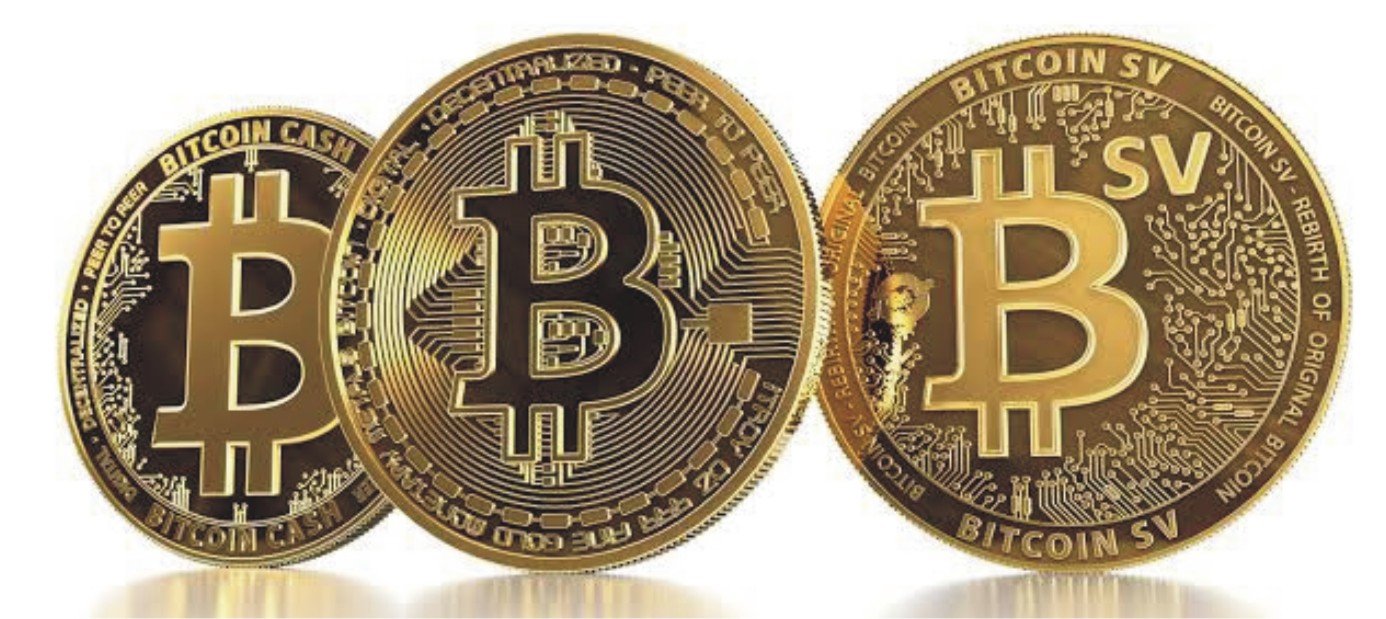
For many Nigerians, cryptocurrency was once something discussed quietly among technology enthusiasts, internet users and young people looking for alternative ways of moving and storing money. Bitcoin, Ethereum and other digital assets were largely foreign creations, traded through international platforms and peer-to-peer networks. But over the years, crypto has moved from the fringes of Nigeria’s financial conversation into a large digital economy of its own.
The journey, however, has not been straightforward. There was a period when the Federal Government, through the Central Bank of Nigeria (CBN), placed a major restriction on cryptocurrency-related banking transactions. On February 5, 2021, during the administration of former President Muhammadu Buhari, the CBN directed banks and other financial institutions to close accounts belonging to persons and entities involved in cryptocurrency transactions. The CBN said the decision was connected to risks including money laundering, terrorism financing, illicit financial flows and other criminal activities.
It was not the first warning. The CBN had already instructed banks in 2017 not to use, hold, trade or transact in cryptocurrencies, meaning the 2021 circular reinforced an existing position rather than creating the restriction from nothing.
But Nigerians did not stop using crypto.
Before and during the restriction, many users moved to peer-to-peer trading, international platforms and other methods that allowed them to buy and sell digital assets without depending directly on conventional bank channels for every transaction. Crypto remained attractive because it provided another way to transfer value, receive money from abroad and participate in a global digital market.
For some Nigerians, the weakening naira also made dollar-linked digital assets particularly attractive. Stablecoins such as USDT became increasingly important because they could provide exposure to a digital asset whose value is linked to the US dollar rather than the highly volatile movements of Bitcoin.
The turning point came under the administration of President Bola Ahmed Tinubu. In December 2023, the CBN lifted its restriction on banks and other financial institutions dealing with virtual-asset service providers, replacing the earlier prohibition with guidelines for banks dealing with licensed or regulated operators. The move helped bring cryptocurrency activity closer to the formal financial system.
This change coincided with something else that had already been happening quietly. Nigerians were no longer simply consumers of foreign crypto platforms. Local entrepreneurs had begun building businesses specifically for the Nigerian market.
Among the companies that emerged was Quidax, founded by Buchi Okoro and his co-founders. Okoro has explained that his own journey into Bitcoin helped inspire the company after he was scammed while trying to buy Bitcoin. Quidax was subsequently created partly to make buying and selling cryptocurrency easier and safer for African users.
In August 2024, Quidax became the first cryptocurrency exchange to receive a provisional Digital Assets Exchange licence from Nigeria’s Securities and Exchange Commission (SEC). Busha also entered the SEC’s regulatory framework, marking an important stage in the formalisation of Nigeria’s home-grown crypto industry.
For Okoro, the growth of the industry is about more than speculation. Speaking about his experience, he said, “It wasn’t a lot but it was all I had,” recalling the money he lost when he first tried to buy Bitcoin. He later asked how the industry could ensure that his experience would not be repeated by Africans trying to enter crypto.
That desire to make crypto easier to access has become one of the reasons local platforms have grown. They provide naira-based buying and selling, customer support, local payment options and interfaces designed for Nigerian users.
Busha, another Nigerian-founded platform, says it has grown from about 500 users in its early days to more than 700,000 users by 2024, illustrating how quickly interest in local crypto services expanded. Its current platform says it has more than one million users and operates under a licence from the SEC.
The numbers surrounding Nigeria’s crypto market also tell an important story. Chainalysis estimated that Nigeria received approximately $59 billion in cryptocurrency value between July 2023 and June 2024. Its 2024 Global Crypto Adoption Index placed Nigeria second worldwide, with particularly strong activity among retail users and in decentralised finance.
The International Monetary Fund also reported that Nigerians were among the world’s major crypto users and noted that Bitcoin remained the most popular crypto asset among Nigerian investors. It further reported that, until recently, crypto assets traded by Nigerians were issued overseas, while cNGN represented a new development as a naira-linked stablecoin issued in Nigeria.
This is where the phrase “Nigerian crypto market” has taken on a new meaning. Nigeria did not create Bitcoin or Ethereum, but it has developed its own ecosystem around digital assets. Local exchanges, fintech companies, payment businesses, blockchain developers, educators and traders now operate around the market.
The emergence of cNGN has also pushed that development further. Unlike Bitcoin, whose price is determined by market demand, cNGN is designed as a naira-linked stablecoin. It represents an attempt to combine blockchain technology with a digital representation of the Nigerian currency.
So how are Nigerians making money from crypto?
There are several routes. Some buy assets such as Bitcoin and hold them, hoping that their value rises. Others trade frequently, buying when they believe prices are low and selling when prices rise. Some participate in decentralised finance, staking and other digital-asset activities. Businesses can also use stablecoins for international payments and transfers, while some entrepreneurs build services around crypto infrastructure.
But making money is not guaranteed. Crypto prices can rise sharply and fall just as quickly. A trader can make a profit from a price movement and also lose money from another. The industry has also faced scams, hacks, fraud and platforms collapsing, which explains why regulation and security have become increasingly important.
A Nigerian crypto user interviewed by Quidax, Aisha, described her experience by saying, “Crypto is not a lottery ticket. It’s about knowledge, timing, and discipline.” She also explained that she now combines short-term trading with holding some assets for longer periods.
Another indication of how the market is changing comes from Busha’s 2024 adoption survey of 1,500 respondents. It found that holding, buying, selling and transferring crypto were among the most common activities, while security was the biggest concern for users. The survey also found that 68 per cent of respondents said crypto usage in their states had increased significantly over the previous year.
Busha co-founder and COO Moyo Sodipo told Chainalysis that Nigerians were increasingly seeing cryptocurrency as useful beyond investment. “People are starting to see the real-world utility of cryptocurrency, especially in day-to-day transactions, which is a shift from the earlier view of crypto as just a get-rich-quick scheme,” he said.
Quidax CEO Buchi Okoro has similarly observed a shift from speculation to practical use, saying that more consumers are using crypto for “cross-border and even e-commerce payments.”
The story of cryptocurrency in Nigeria, therefore, has moved through several stages: foreign technology, growing public interest, banking restrictions, peer-to-peer survival, regulatory reconsideration and finally the emergence of a more formal local ecosystem.
What started as Nigerians buying foreign digital currencies has gradually become an industry in which Nigerian companies build exchanges, payment systems and digital-asset products for Nigerian customers. The 2025 Investments and Securities Act has further strengthened the regulatory foundation by bringing digital assets under Nigeria’s securities framework.
The crypto business is still evolving, and its future will depend on regulation, security, technology, consumer confidence and the ability of companies to provide useful services beyond speculation. But one thing is clear: what was once treated largely as an unfamiliar foreign digital experiment has become a significant part of Nigeria’s growing digital financial economy.
By Benprince Ezeh
08068599879
