

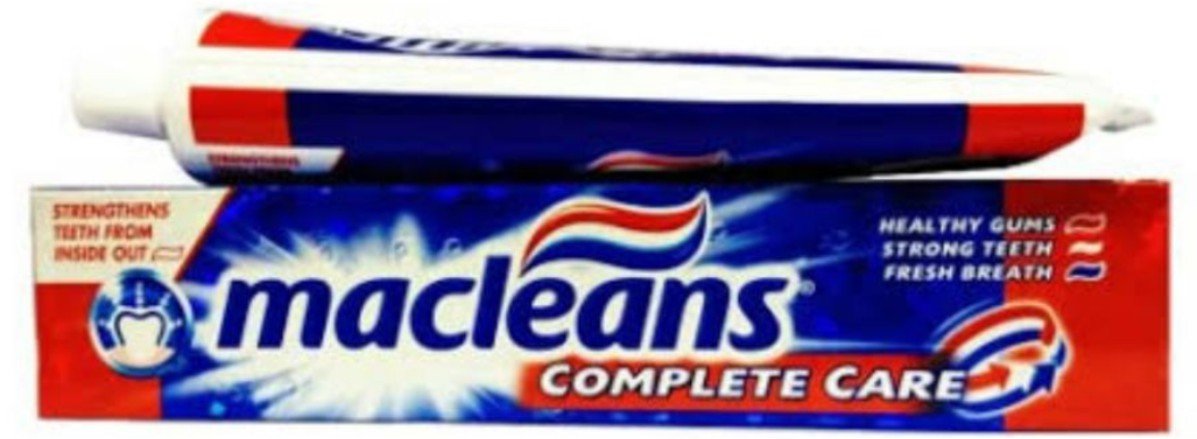
For many Nigerians who grew up in the 1980s, 1990s, and early 2000s, Macleans was one of the most recognizable toothpaste brands in the country. In fact, the brand became so popular that many people used the word “Macleans” to refer to toothpaste in general.
Today, however, the story is different. The once-dominant oral care brand has largely disappeared from neighborhood shops, supermarkets, kiosks, and open markets, leaving many consumers wondering what happened.
Industry experts point to a combination of aggressive competition, reduced marketing activity, changing corporate priorities, and the exit of its parent company from Nigeria as key reasons behind the brand’s decline.
COMPETITION CHANGED THE MARKET
Nigeria’s oral care industry became significantly more competitive over the past two decades.
While Macleans maintained a traditional approach, competitors introduced new products and marketing strategies that quickly attracted consumers.
Close-Up gained popularity with its red gel toothpaste, youth-focused campaigns, and affordable pocket-sized packs. Oral-B and Pepsodent also expanded aggressively, promoting dental health awareness programs and introducing products across multiple price categories.
A retailer at Oshodi Market, Lagos, Ibrahim Lawal, said shelf space gradually shifted toward brands with stronger consumer demand.
“Customers started asking for Close-Up, Oral-B, and other brands more often. Shop owners naturally stocked what people wanted to buy,” he explained.
THE ADVERTISING GAP
Marketing experts believe one of the biggest reasons for Macleans’ decline was its reduced visibility.
While rival brands consistently invested in television commercials, radio campaigns, social media promotions, and community activations, Macleans became less visible in public advertising.
Without regular reminders, younger consumers gradually became more familiar with competing brands.
Marketing analyst Chika Nwosu said brand awareness is crucial in Nigeria’s highly competitive consumer goods market.
“When consumers stop seeing a brand regularly, they eventually stop thinking about it. Visibility drives demand, and demand drives distribution,” she said.
CORPORATE FOCUS SHIFTED ELSEWHERE
Macleans is owned by Haleon, a global consumer healthcare company that emerged from GlaxoSmithKline’s consumer health business.
Over time, the company focused more heavily on premium oral care brands such as Sensodyne, which generates higher profit margins and targets consumers with specialized dental needs.
As a result, Macleans received less promotional attention and distribution support in several markets, including Nigeria.
THE GSK EXIT CHANGED EVERYTHING
The biggest turning point came in 2023 when GlaxoSmithKline Consumer Nigeria Plc announced its exit from Nigeria after more than five decades of operations.
The company ended its direct commercial presence, delisted from the Nigerian Exchange, and shut down local operations.
Industry observers say this decision had a significant impact on the availability of products associated with the company.
ECONOMIC CHALLENGES PLAYED A ROLE
The exit was largely influenced by broader economic challenges.
Businesses operating in Nigeria faced rising production costs, foreign exchange shortages, inflation, and difficulties accessing dollars for imports.
These challenges made it increasingly difficult for multinational companies to maintain profitability.
A financial analyst in Lagos, Tunde Adeyemi, noted that many multinational firms were forced to review their strategies.
“The operating environment became extremely challenging. Companies had to decide whether to continue investing locally or adopt alternative distribution models,” he said.

WHY IT’S HARDER TO FIND TODAY
Following the closure of local operations, Macleans shifted to a distributor-led import model.
Instead of being widely manufactured or distributed through traditional channels, the toothpaste is now imported by third-party distributors.
Because imported products face higher shipping, customs, and foreign exchange costs, distributors often prioritize faster-selling or higher-margin brands.
This has made Macleans increasingly difficult to find in everyday retail outlets.
Consumers are more likely to encounter the product on e-commerce platforms and specialized online stores than in traditional neighborhood shops.
NOT GONE, BUT NO LONGER EVERYWHERE
Despite its reduced presence, Macleans has not been discontinued.
The brand still exists globally and remains available through selected online retailers and import channels.
However, its dominance in Nigeria has faded significantly compared to previous decades.
THE VERDICT
Macleans’ disappearance from mainstream Nigerian markets was not caused by a single event. Rather, it was the result of several factors coming together: stronger competition, declining marketing visibility, shifting corporate priorities, economic pressures, and the exit of its parent company from Nigeria.
For many Nigerians, Macleans remains a nostalgic brand associated with childhood memories. But in today’s fast-moving consumer market, nostalgia alone is rarely enough to maintain a leading position on store shelves.
-By Michael Chinonso
