

-
What City People Found Out
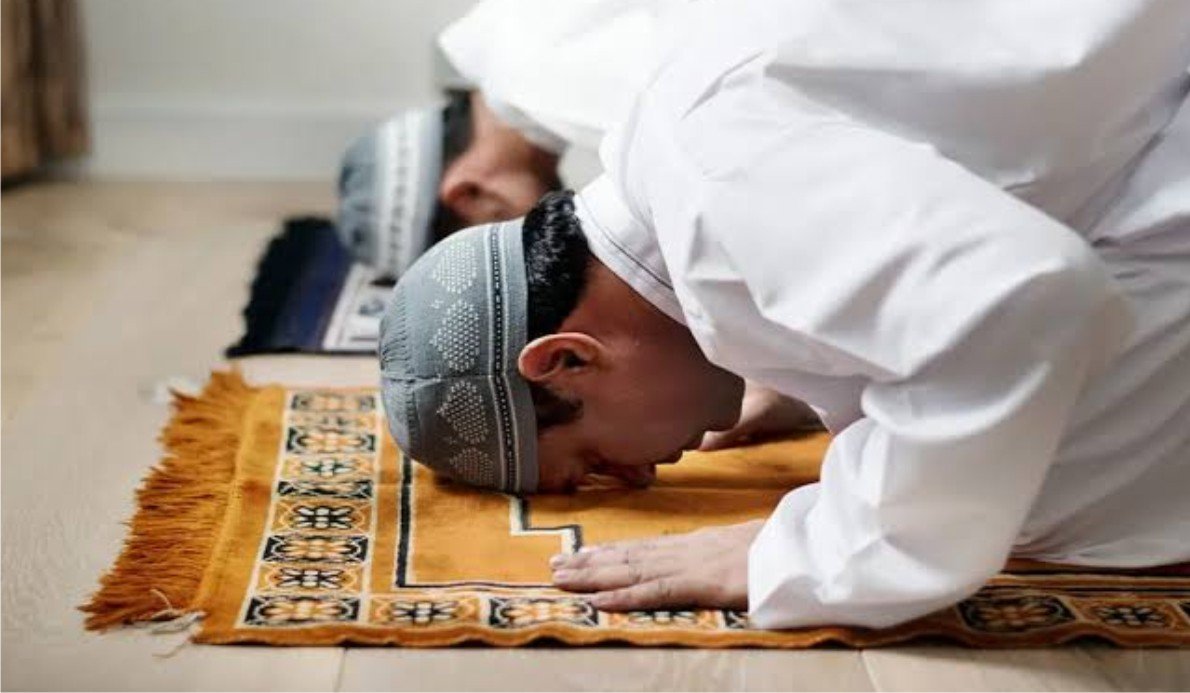
In a world defined by linguistic diversity, one question often arises about Islam: Why do Muslims across continents—from Nigeria to Indonesia, from the United States to Saudi Arabia—observe their daily prayers in Arabic, regardless of their native languages?
At first glance, it may seem unusual that a global religion with over a billion adherents maintains a single liturgical language. However, a closer look reveals that this practice is deeply rooted in the foundational sources of Islam—the Qur’an, the traditions of Prophet Muhammad (Hadith), scholarly consensus (Ijmâ¿), and analogical reasoning (Qiyâs). More importantly, it reflects a deliberate system designed to preserve authenticity, ensure unity, and protect the integrity of divine worship.
The Qur’an: A Revelation in Arabic
The foundation of Islamic worship begins with the Qur’an—the holy book of Islam—which was revealed in Arabic. The Qur’an itself makes this explicitly clear:
“Indeed, We have sent it down as an Arabic Qur’an so that you may understand.” (Qur’an 12:2)
In several other verses, the Qur’an is described as being in a “clear Arabic language,” emphasizing not just the medium but the precision and clarity embedded within it.
This has profound implications for prayer (balâh), the central act of worship in Islam. Every unit of prayer requires the recitation of portions of the Qur’an, especially Surah Al-Fâtiah, the opening chapter. Because the Qur’an is considered the literal word of God—not merely inspired text but divine speech—its exact wording, pronunciation, and structure are integral to worship.
Translations, while useful for understanding, are regarded as interpretations of meaning rather than the Qur’an itself. As such, substituting Arabic with another language in formal prayer would mean replacing divine wording with human explanation—something Islamic tradition does not permit.
The Hadith: Following the Prophet’s Model
Beyond the Qur’an, Muslims derive guidance from the teachings and practices of the Prophet Muhammad. His instructions on prayer are clear and universally binding:
“Pray as you have seen me pray.” (ba%î% al-Bukhârî)
The Prophet performed all acts of worship in Arabic and taught his companions to do the same. The structure of prayer—its recitations, phrases, and sequences—was not left open to personal adaptation but was demonstrated in a fixed and consistent form.
This includes expressions such as Allâhu Akbar (God is the Greatest), the recitation of Qur’anic verses, and the Tashahhud (testimony of faith within prayer). These elements are preserved exactly as practiced by the Prophet, reinforcing the use of Arabic as an essential component of ritual worship.

Ijmâh: The Consensus of Scholars
Over centuries, Islamic scholars across different regions and schools of thought have reached a consensus (Ijmâ¿) on this matter: the recitation of the Qur’an in prayer must be in Arabic.
The four major Sunni schools—$anafî, Mâlikî, Shâfi¿î, and $anbalî—are united on this position. While minor concessions exist for new converts who are still learning, the long-term expectation remains the same: prayer is to be performed in Arabic as originally established.
This consensus serves a critical purpose—it safeguards the uniformity and authenticity of Islamic worship across generations and geographies.
QIYÂS: PRESERVING MEANING THROUGH LANGUAGE
Islamic scholars also employ Qiyâs, or analogical reasoning, to reinforce the necessity of Arabic in prayer. The reasoning is straightforward yet compelling: language shapes meaning.
Arabic, as the language of the Qur’an, possesses unique grammatical structures and vocabulary that carry layered meanings. A slight change in wording or syntax can significantly alter interpretation. When applied to acts of worship, such variations could compromise accuracy and intention.
Thus, maintaining Arabic in prayer is seen as a way to preserve not just the words, but the precise meanings and spiritual depth intended in the original revelation.
Beyond Ritual: The Deeper Importance of Arabic in Islam
While the use of Arabic in prayer is a legal and theological requirement, its significance extends far beyond ritual observance.
- Preservation of Divine Message
Arabic serves as a protective vessel for the Qur’an. For over 1,400 years, the text has remained unchanged—memorized, recited, and transmitted in its original form. This level of preservation is unmatched in religious history.
(2) UNITY OF THE GLOBAL MUSLIM COMMUNITY
One of the most striking aspects of Islamic prayer is its universality. A Muslim in Lagos prays in the same language and format as a Muslim in Makkah or Kuala Lumpur. This creates a powerful sense of global unity—an embodiment of the Islamic concept of Ummah (community).
(3) PRECISION AND DEPTH
Arabic is renowned for its linguistic richness. A single word can convey multiple layers of meaning, making it uniquely suited for expressing complex spiritual and theological concepts.
(4) SPIRITUAL CONNECTION
For many Muslims, learning and understanding Arabic deepens their connection to worship. It transforms prayer from a routine act into a reflective and emotionally engaging experience.
It is important to note that while formal prayer (balâh) is performed in Arabic, Islam does not restrict personal supplication (Du‘â’) to any language. Muslims are free to call upon God in their native tongues—be it Yoruba, English, Hausa, or any other language.
This distinction highlights a balance within Islam: structure in ritual worship, and flexibility in personal devotion.
The use of Arabic in Islamic prayer is neither arbitrary nor exclusionary. It is a carefully preserved tradition rooted in divine revelation, prophetic practice, scholarly consensus, and intellectual reasoning.
More than just a language, Arabic in Islam represents authenticity, unity, and continuity. It connects over a billion people to a single source, a shared practice, and a timeless message.
In an increasingly fragmented world, this uniformity stands as a quiet yet powerful reminder: that beyond borders and languages, faith can still speak in one voice.
-Jamiu Abubakar
