

-
Details Of His Game Plan Revealed!
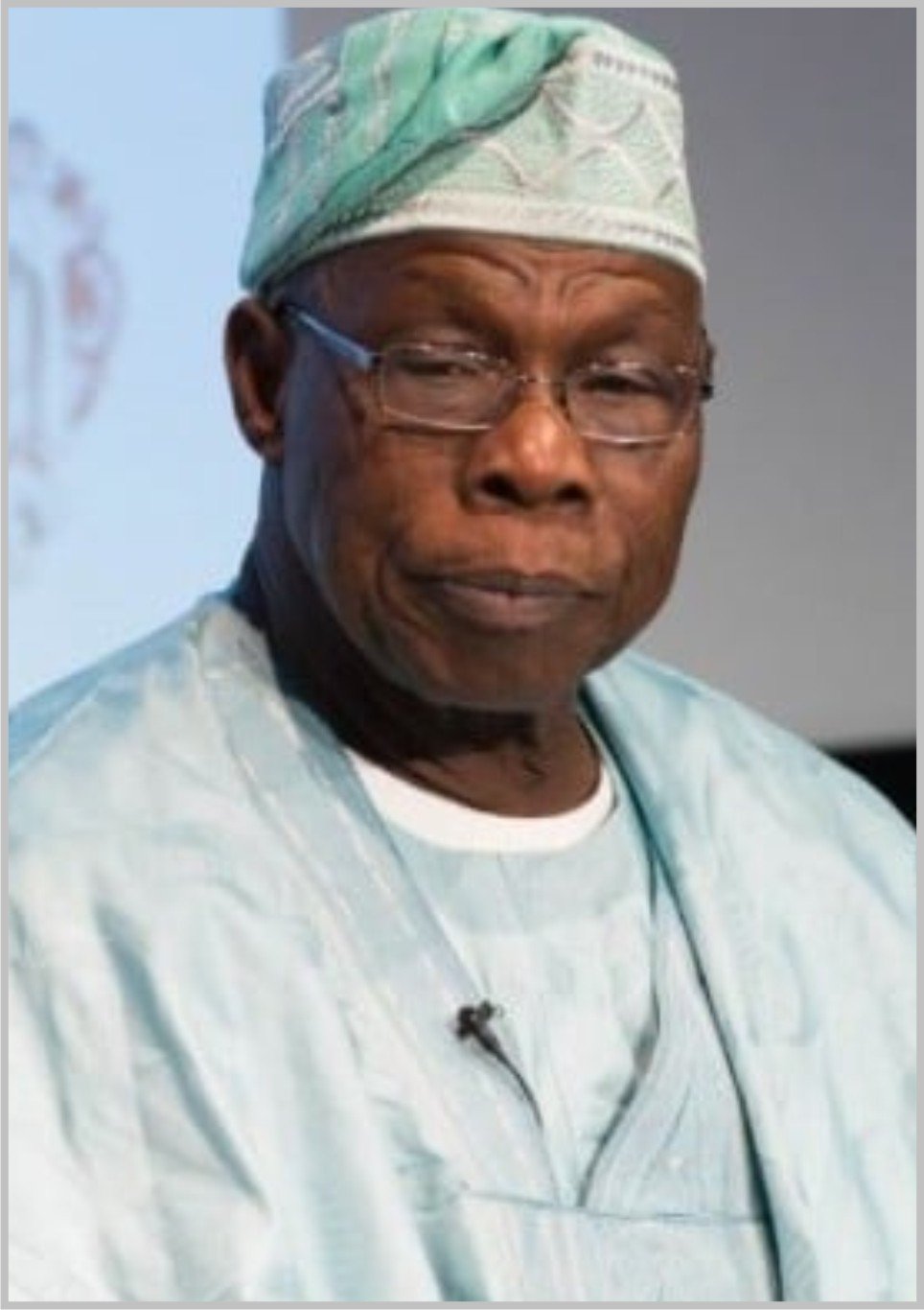
Former President, Chief Olusegun Obasanjo wants Peter Obi to be the next President of Nigeria. He believes it is possible to achieve.
He feels once Peter Obi teams up with Rabiu Kwankwaso, both will present a strong force to defeat Pres. Bola Tinubu at the 2027 polls.
He has met with the 2 of them to work together in the ADC and take the ticket from Alhaji Atiku Abubakar who is also interested in running for office.
He strongly believes that if Peter Obi gets the presidential ticket and Kwankwaso accepts to be his running mate they would win the 2027 elections.
But many politicians see this as diffucult to achieve. How Peter Obi and Kwankwaso plans to beat Tinubu remains unclear with the weak nature of the Opposition. According to an insider, the Opposition is weak. All the political parties are faced with serious internal disputes. The PDP, ADC, Labour are all in deep crisis.
Why is the opposition to President Tinubu weak? Within opposition parties, such as the Peoples Democratic Party (PDP), there have been defections and this has weakened their structure. For instance, the PDP has lost several governors and lawmakers to the ruling All Progressives Congress (APC).
Additionally, lack of ideological identity and clear vision among opposition parties has contributed to their weakness.
The opposition also struggles with grassroots organization and mobilization, often existing only as election vehicles rather than sustained movements. Furthermore, strategic maneuvers by President Tinubu, such as co-opting key opposition figures like Nyesom Wike, have neutralized potential threats.
These factors combined have resulted in a fragmented and ineffective opposition, allowing the ruling party to consolidate power.
Up till now the ADC has not sorted out the issue of the allocation of offices.
The African Democratic Congress (ADC) is currently facing internal conflicts, particularly regarding the allocation of offices. The party’s leadership, led by Senator David Mark, is grappling with disputes over the legitimacy of appointments and the distribution of resources.
Some state chairmen are questioning the authority of the Mark-led National Working Committee (NWC), citing alleged irregularities in the appointment process. This has led to divisions within the party, with some factions calling for greater transparency and adherence to party rules.
Additionally, the ADC is seeking to formalize its leadership structure, which has been a point of contention. The party’s attempts to assert its influence as an opposition force have been complicated by these internal power struggles.
Also the ADC has not done its primaries.
The African Democratic Congress (ADC) is facing challenges in conducting primaries due to internal conflicts and disputes over leadership recognition.
Some party members, including ward executives, have approached the Federal High Court in Abuja to challenge the legality of the interim national leadership, citing constitutional breaches. The Independent National Electoral Commission (INEC) has also expressed concerns, stating that the party has not fulfilled necessary conditions for recognition.
The ADC’s internal conflicts have led to speculation about its ability to participate effectively in the 2027 elections.
Who will be ADC’s Presidential flag bearer?
The ADC Presidential flag bearer for 2027 is still undecided, with several prominent politicians vying for the position.
The ADC leadership, led by interim National Chairman David Mark, has stated that the party has no preferred candidate and will conduct an open and transparent primary.
Some analysts believe the ticket should be zoned to the South, with Peter Obi as potential candidate. However, Atiku Abubakar has dismissed calls for him to step down, stating that all aspirants will present themselves freely.
And 2027 election is just a few months away
The 2027 presidential election is fast approaching with various Opposition parties and politicians jockeying for position. The African Democratic Congress (ADC), led by Interim National Chairman David Mark, has declared its intention to unseat President Bola Tinubu.
Some analysts believe that the opposition’s current state is too weak to present a formidable challenge to Tinubu, citing concerns about internal divisions and the ruling All Progressives Congress’ (APC) control of the Independent National Electoral Commission (INEC) .
Is it true that Peter Obi has been meeting with Kwankwaso for both of them to contest for primaries in ADC?
There’s speculation about a possible alliance between Peter Obi and Rabiu Kwankwaso for the African Democratic Congress (ADC) presidential ticket in 2027. Former President Olusegun Obasanjo is facilitating talks between the 2 leaders, with Kwankwaso considering joining the ADC if Obi gets the presidential nod.
Obi has already joined the ADC and is eyeing the presidential ticket, while Kwankwaso, currently with the New Nigeria People’s Party (NNPP), hasn’t made a final decision. The proposed alliance aims to challenge President Bola Tinubu’s re-election bid.
Atiku Abubakar, another contender, has expressed readiness to work with Obi and Kwankwaso, but some analysts believe the Obi-Kwankwaso ticket could be a strong contender.
What is the significance and implications of this alliance?
The alliance between Peter Obi and Rabiu Kwankwaso has significant implications for the 2027 presidential election. This partnership is seen as a strategic move to challenge President Bola Tinubu’s re-election bid and unite opposition forces under the African Democratic Congress (ADC) .
What are the key implications?
– Strengthened Opposition: The alliance combines Obi’s national appeal and Kwankwaso’s grassroots influence, potentially creating a formidable challenge to Tinubu’s APC.
– North-South Unity: The partnership bridges regional divides, with Obi’s southern base and Kwankwaso’s northern stronghold creating a national coalition.
– Economic and Governance Reforms: The alliance signals a commitment to fiscal responsibility, social impact, and institutional reforms, appealing to investors and development partners.
What are the potential outcomes?
– A united Opposition could lead to a competitive election, potentially altering Nigeria’s political landscape.
– The alliance may prompt other politicians to reposition themselves, leading to further realignments.
Is Obi that strong politically?
Peter Obi is considered a strong political figure known for his integrity, credibility, and commitment to transparency and accountability. His presidential campaign in 2023 resonated with many young voters, and earned him a significant following, often referred to as the “Obidients”.
Obi’s strength lies in his reputation for as demonstrated during his tenure as Governor of Anambra State, where he prioritized education and infrastructure development. His advocacy for electoral reforms and criticism of the government’s policies have also positioned him as a vocal opposition figure .
However, some analysts question his influence, citing his party’s weak grassroots structure and his ambiguous approach to local politics. Others point out that his support base is largely virtual, and his ability to translate popularity into votes remains uncertain.
What are Peter Obi’s chances?
Peter Obi’s chances in the 2027 presidential election are uncertain, but he’s considered a strong contender. He’s declared his intention to run.
Some analysts believe Obi’s chances are better now than in 2023, citing his growing popularity and the fact that he’s not tied to traditional party structures. However, others point out that he’s facing stiff competition.
Analysts feel Obi’s alliance with Kwankwaso could be a game-changer, combining Obi’s credibility in cost control and debt moderation with Kwankwaso’s grassroots appeal and experience in Education and Urban renewal.
But what is Kwankwaso bringing to the table?
He is bringing a wealth of experience and achievements to the table.
Is he strong politically?
Rabiu Kwankwaso is a significant political figure with a strong following in the north-west, particularly in Kano State. His experience as a two-time Governor of Kano State and former Minister of Defence has given him a strong foundation in Nigerian politics.
Kwankwaso’s strength lies in his grassroots appeal, populist approach, and commitment to education and empowerment. He’s known for implementing notable projects and initiatives that have benefited the people of Kano State.
However, some analysts point out that his influence is largely regional, and his national appeal is still uncertain. Others note that his party, the New Nigeria People’s Party (NNPP), is relatively new and lacks a strong national structure.
Rabiu Kwankwaso is a seasoned Nigerian politician with a career spanning over two decades.
But there are those who argue that Kwankwaso’s strength only won in Kano.
That’s a valid point oberseved an analyst. Rabiu Kwankwaso’s electoral success has been largely limited to Kano State, where he has a stronghold. His presidential bids have not yielded significant results outside of Kano, and his party, the New Nigeria People’s Party (NNPP), has struggled to expand its reach nationally.
While Kwankwaso has a loyal following in Kano, his influence and appeal beyond the state are uncertain. His alliance with Peter Obi and the African Democratic Congress (ADC) is seen as an attempt to broaden his national appeal and challenge President Bola Tinubu’s re-election bid.
Former President Olusegun Obasanjo is pushing for a Peter Obi and Rabiu Kwankwaso Ticket for the 2027 presidential election. He’s reportedly initiated an alliance between the two, with Obi potentially leading as President and Kwankwaso as Vice President, under the African Democratic Congress (ADC) party. Obasanjo believes this combination would create a strong challenge to President Bola Tinubu’s re-election bid, leveraging Obi’s national appeal and Kwankwaso’s northern influence.
He feels Obi’s popularity among young voters and Kwankwaso’s grassroots support in the North could unite disparate factions and redefine Nigerian politics.
And there is the Strategic alliance. Obasanjo aims to sideline former Vice President Atiku Abubakar, who is also vying for the ADC ticket.
Obasanjo’s involvement is seen as an attempt to strengthen opposition forces and potentially reshape Nigeria’s political landscape.
