
Henry Ford, an American industrialist and business magnate, once said, “Coming together is a beginning, staying together is progress, and working together is success.”
In a nation as richly diverse as Nigeria, unity has often been both a goal and a challenge. With over 250 ethnic groups, varying religious affiliations, and distinct cultural identities, the quest for cohesion has required deliberate and sustained efforts across generations. Yet, amid these complexities, one powerful unifying force continues to stand tall — sports.
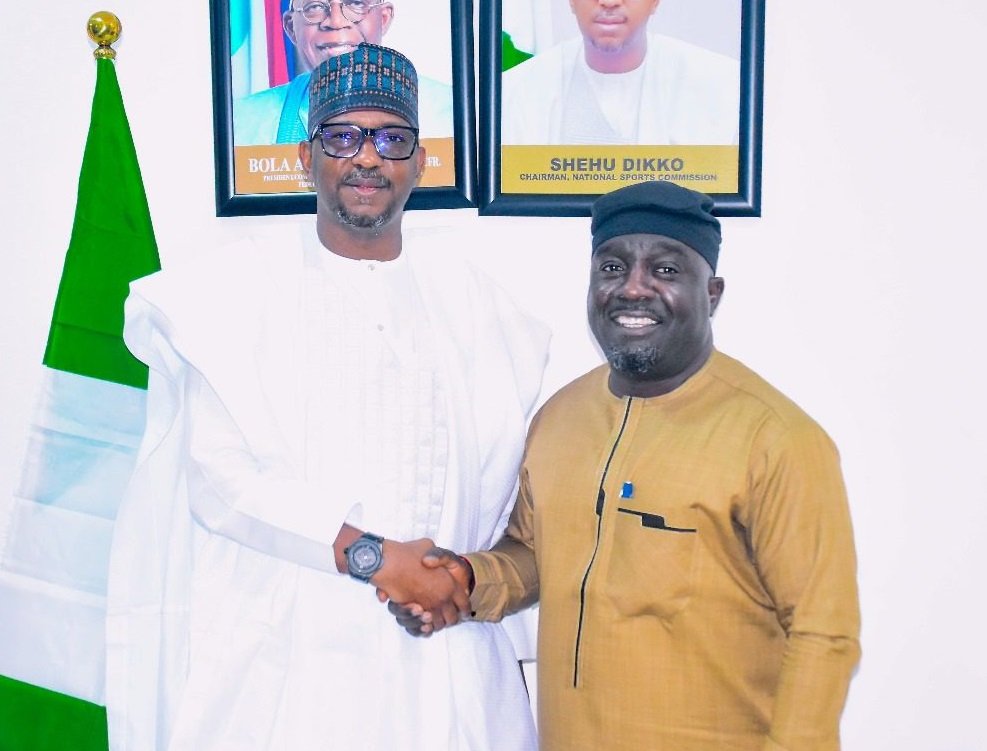
From the dusty football fields of Kano to the bustling stadiums of Lagos, sports have long served as a common language understood by all Nigerians. It is within this context that the leadership of Mallam Shehu Dikko, Chairman of the National Sports Commission, and Hon. Bukola Olopade, Director-General of the Commission, has begun to reshape not just the sports sector but also the broader narrative of national unity and development.
Appointed by Bola Ahmed Tinubu, both men have embarked on a reform-driven agenda aimed at repositioning sports as a cornerstone of national integration, youth empowerment, and economic growth. Their work, though still unfolding, is already signalling a new chapter — one where northern and southern Nigeria are not divided by differences but united through shared aspirations.
Nigeria’s sports sector has long grappled with structural inefficiencies, inconsistent funding, and administrative bottlenecks. While the country has produced world-class athletes and recorded remarkable international successes, the underlying system has often lacked the cohesion needed to sustain progress.
Recognising these challenges, Dikko and Olopade have approached their roles with a clear vision: to institutionalise reforms that prioritise transparency, grassroots development, and national inclusion. Their strategy goes beyond winning medals — it is about building systems that work; systems that identify talent from every corner of the country, nurture it, and create opportunities for young Nigerians irrespective of their geographical or socio-economic backgrounds.
One of the most compelling aspects of the current reforms is the symbolic and practical collaboration between northern and southern leadership within the Commission. Dikko, with his roots in northern Nigeria, and Olopade, from the southern region, represent more than administrative figures — they embody a deliberate balance that reflects the nation’s diversity.
This partnership sends a powerful message: national progress is best achieved when all regions are represented and actively involved in decision-making. It challenges divisive narratives that pit one region against another, instead promoting a model of cooperation and mutual respect.
In practical terms, this collaboration has influenced policy direction. Talent development programmes are being structured to ensure equal access across all states of the federation. Investments in sports infrastructure are also being distributed more equitably, with attention given to historically underserved areas in both the North and the South.
At the foundation of sports development lies grassroots engagement, and this has received renewed focus under the Commission. For too long, talent discovery in Nigeria has been uneven, often concentrated in urban centres while rural areas remain overlooked. Under the leadership of Dikko and Olopade, the Commission is working to change this narrative.
Notably, President Tinubu has also appointed a seasoned sports administrator as Special Assistant on Grassroots Sports Development — a move that underscores the administration’s commitment to nurturing talent from the ground up. Initiatives such as reviving school sports competitions, organising regional tournaments, and establishing community-based training programmes are gaining momentum.
These efforts are not merely about identifying the next generation of athletes; they are about fostering interaction among young Nigerians from different backgrounds. When a young footballer from Kaduna competes alongside a counterpart from Ibadan, barriers begin to dissolve, friendships are formed, stereotypes are challenged, and a shared sense of identity begins to take root.
In terms of infrastructure, Dikko and Olopade inherited a system with severely deteriorated sports facilities. At one point, only one stadium in the country met CAF standards. Since their appointment, however, they have prioritised the rehabilitation and development of sports facilities nationwide.
By ensuring that both northern and southern states benefit from these investments, the Commission is promoting a more balanced sports ecosystem. This approach not only enhances athletic performance but also stimulates local economies. Construction projects create jobs, sporting events attract visitors, and communities benefit from increased economic activity. In cities like Jos and Abeokuta, renewed sports infrastructure is already serving as a catalyst for development and community engagement.
Economically, both Dikko and Olopade understand the vast potential of sports. Globally, the sports industry generates billions of dollars annually, creating employment opportunities in areas such as coaching, sports management, media, and merchandising. Their efforts have already led to the creation of hundreds of jobs within less than two years in office — a development recently acknowledged by the President.
Ultimately, what is unfolding within the National Sports Commission is more than administrative reform; it is a blueprint for national unity. By leveraging sports as a tool for integration, the Commission is addressing one of Nigeria’s most pressing challenges: how to build a cohesive nation from a mosaic of identities.
The collaboration between northern and southern leadership also serves as a model for other sectors. It demonstrates that diversity, when properly harnessed, can be a source of strength rather than division.
As Nigeria continues its journey toward development, the role of sports cannot be underestimated. Under the stewardship of Dikko and Olopade, the National Sports Commission is redefining what is possible. The reforms being carried out are not just about building athletes — they are about building bridges: bridges between North and South, between communities, and between generations.
In a time when unity is more important than ever, sports offer a powerful reminder of what Nigerians can achieve when they come together. The ball does not ask where you come from; it only responds to how well you play the game. And perhaps, in that simple truth, lies the future of a united and prosperous Nigeria.
Adetunji Isaac writes from Abuja, Nigeria.
