

-
How He Has Kept The Brand Alive For Over 60 Yrs
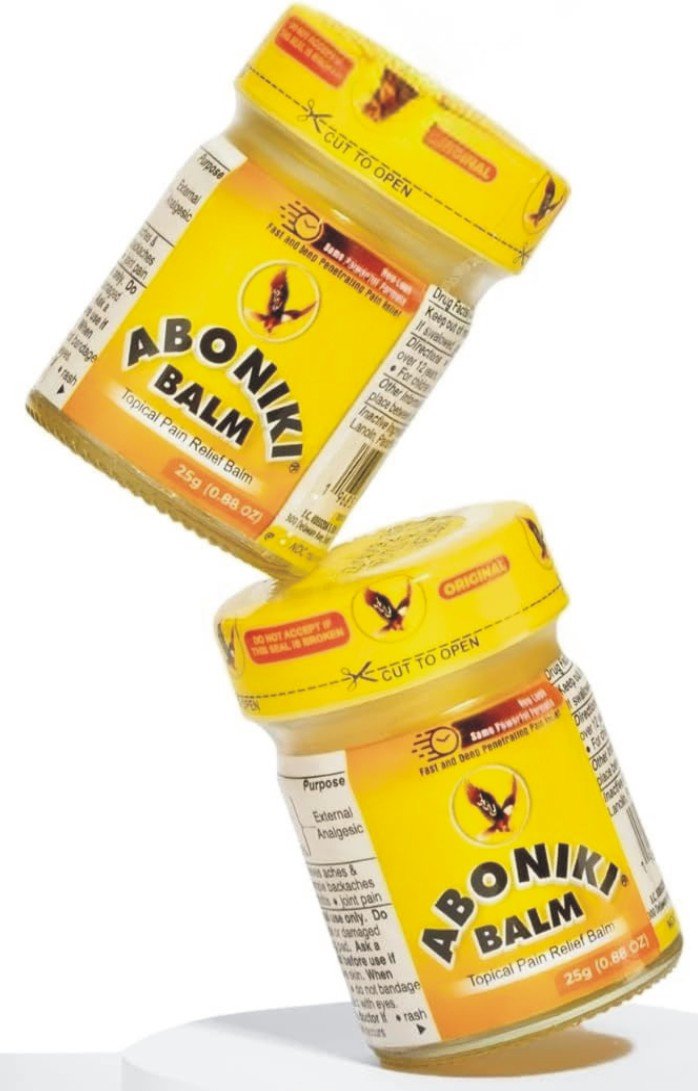
For generations of Nigerians, the name Aboniki has been almost as familiar as the pain it is meant to relieve. It is the small container of balm that has found its way into homes, shops, pharmacies, travel bags, sports kits and family medicine cabinets, surviving changing tastes, new competitors and generations of consumers.
What makes the story even more interesting is that behind the famous balm is an Igbo entrepreneur, J.C. Udeozor, whose name is not immediately associated with the product by many Nigerians. Aboniki Balm is produced by J.C. Udeozor & Sons Global Industries Limited, a family-owned Nigerian business that has built its reputation around the product. The company is now led by Jude Udeozor, who serves as its chairman and chief executive officer.
The story of Aboniki goes back to the 1960s, when the balm was first formulated and sold in Nigeria. The product was originally developed with athletes and labourers in mind, particularly people who needed relief from muscle soreness and pains resulting from physical activity. Over time, however, it moved beyond those original users and became a household product.
That transition from a product associated with physical workers and athletes to an everyday household name became one of the most important chapters in the Aboniki story.
For many Nigerians, the balm became something kept close at home for moments when someone complained of back pain, muscle aches, joint discomfort, bruises or other minor pains. Its strong smell and warming sensation also became part of the experience associated with using it.
The company’s own account describes Aboniki as a topical product used for pain relief and says millions of people use it. It also says the business has expanded beyond manufacturing into marketing, distribution and the importation of chemical raw materials. Its present head office is in Iduowinna, Edo State.
One of the remarkable things about the brand is how little its identity has changed over the decades. While many consumer products have repeatedly changed their formulas, packaging, positioning and advertising strategies to remain relevant, Aboniki has maintained a strong connection with the product that older Nigerians remember.
Aboniki is more than 60 years old and remains popular in West Africa, while relatively few changes have been made to its brand and format over the years.
Its staying power has also been helped by what is inside the balm. Nigeria’s National Agency for Food and Drug Administration and Control, NAFDAC, lists Aboniki Balm as a topical product containing methyl salicylate, menthol, camphor and eucalyptus oil.
The ingredients help explain the distinctive sensation that consumers associate with the balm. The company’s information says it provides penetrating heat that helps loosen tight and aching muscles, while also producing a cooling and moisturising effect.
It is this combination of smell, heat and cooling sensation that has helped make Aboniki instantly recognisable. A person may forget the name of another balm, but once the familiar scent of Aboniki enters a room, many people immediately know what is being used.
Over the years, Aboniki has had to compete in a Nigerian market filled with different balms, ointments and topical pain-relief products. Brands such as Robb, Mentholatum, Deep Heat and other local and international preparations have all occupied space in the pain-relief market. Some products have focused on cooling sensations, others on stronger heat, while some have built their identities around particular medical or sporting uses.
ABONIKI’S ADVANTAGE HAS LARGELY BEEN ITS FAMILIARITY
It did not have to introduce itself to every new generation from scratch. Parents who grew up using it introduced it to their children, and some of those children eventually introduced it to their own families. That kind of intergenerational familiarity is difficult for newer brands to reproduce.
The company has also continued to expand its presence outside Nigeria. Aboniki’s management says the brand is now available internationally, while a company representative has described the business as having expanded from Nigeria to more than 100 countries.
This international journey is particularly interesting because Aboniki started as a Nigerian product created for a very specific need. What began decades ago as a balm for athletes and labourers eventually became a product recognised by Nigerians at home and abroad.
One of the funniest mysteries surrounding the product, however, is its name.
Aboniki does not immediately sound like the name of an Igbo-owned product. In fact, Nigerians hearing the name for the first time may associate its sound with Yoruba or even Hausa naming patterns. It does not have the obvious structure many people expect from an Igbo name, and that has led to years of curiosity about where the name actually came from.
Yet the available company and product histories establish the Nigerian origin of the balm and identify J.C. Udeozor as its founder. They do not provide a reliable explanation that the word “Aboniki” is Yoruba, Hausa or Igbo. That means the popular assumption about the linguistic origin of the name should be treated as speculation rather than established history.
That mystery, in itself, has become part of the brand’s charm.“Whenever I hear Aboniki, I don’t think of the name of a person. I think of the smell of the balm,” one longtime consumer might say. “It is one of those Nigerian products that you grow up knowing without asking who made it.”
Another user could put it more simply: “The name sounds like it could come from another part of Nigeria, but the interesting thing is that the product has become everybody’s own.”
For an Igbo entrepreneur and his family, what started in the 1960s as a balm intended largely for athletes and labourers became something much bigger: a household name that crossed ethnic, regional and national boundaries.
More than 60 years later, Aboniki remains on the shelves, in homes and in the memories of Nigerians who grew up seeing that familiar container whenever somebody complained of an aching back, painful joint or sore muscle.
By Benprince Ezeh
08068599879
