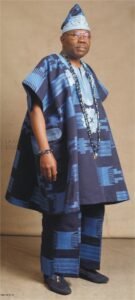

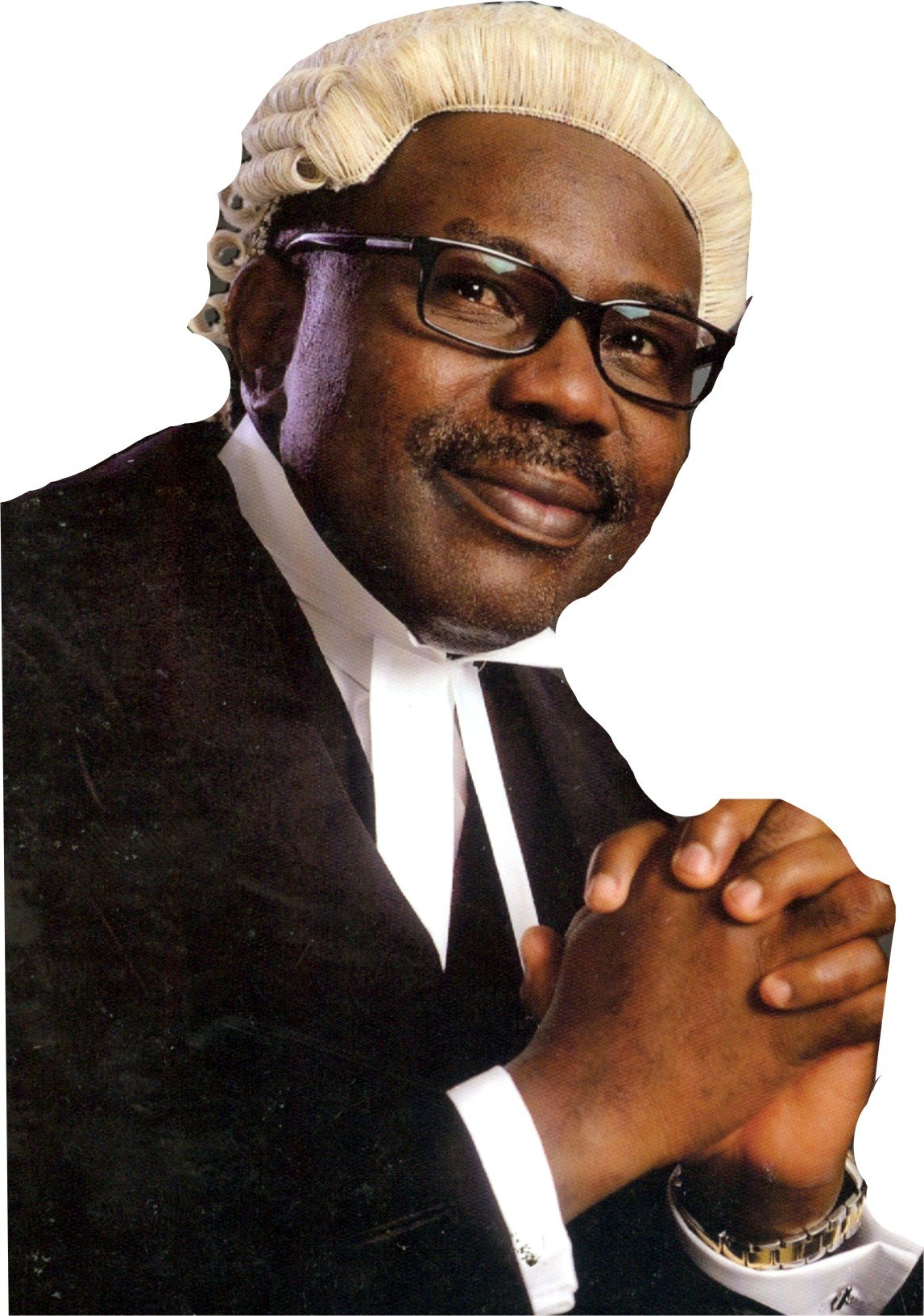
In the next few weeks, former Lagos Commissioner, Dr. Muiz Banire, SAN will be 60. City People got him to grant a Birthday interview last Wednesday at his law chambers in Lagos. He opened up on his life, career, politics, public service and his views on the state of the nation. He reflects on another year of his life. Speaking candidly about growing older; he expressed deep gratitude to God for the gift of life, the journey so far and the opportunity to have impacted the lives of others. Below are excerpts.
As you mark this milestone birthday, what is the feeling like? What is going through your mind?
There are so many perspectives to it. In one way, you are grateful to God for sparing your life to see this moment. I am also particularly grateful for all the provisions He has made for me and my family. On the other hand, whether you like it or not, you feel it in your body that, yes, you are getting old. I remember when I tell my son that I have body ache, maybe my leg is hurting, and he would say, “Don’t bother yourself Daddy. Those are just symptoms of old age.” As you grow older, you begin to feel certain things physically. There are things you could do several years ago that you can no longer do now. When we were in government, I used to tell people that I could substantially go two or three days without sleep. Today, if I don’t sleep for a day, it becomes a problem. There is also another reality of life. As you grow older, you are getting closer to death. That is a reality that can cause some remorse and make you reflect more deeply on your life. At this stage, you must, as much as possible, try to please God and make sure that things are done properly. Those are the different perspectives from which I look at growing older and reaching this stage of life.
How do you plan to celebrate your birthday?
Honestly, if it were entirely left to me, I would prefer to simply share my thoughts and reflections over the years. There may be a few other things afterwards, perhaps a cocktail, where everybody can come together and leave. Of course, at a certain age, your family, friends and associates have their own ideas about what they believe should be done. But the most fundamental thing for me is to travel and go on a lonely pilgrimage, where I can go and renew my own relationship with God. That is the most significant part of the celebration for me.
When you look back at your life and everything you set out to achieve, how do you feel?
I must confess that God has been very, very gracious and merciful towards me. He has been extremely magnanimous to me. There are so many aspects of life that I have gone through that others may not have experienced. I have travelled through certain paths without getting injured, and I have survived. Not only have I survived, I have survived well.] So, when I look back at everything, I give God the glory for His protection, provision and security. There is a verse from the Holy Quran that I constantly remember: which of the favours of your Lord can you deny? Is it the air that I breathe? Is it the earth that I enjoy? Is it the food, clothing or children? Which one can you deny? At every point, you must continually realise and appreciate that so many people who were conceived around the same time as you never got this far. Some people who were born around the same time are no longer alive. Some are alive but are not in good health. Others may be healthy but are not comfortable in life. When you combine all these privileges, it means God has favoured you. And to the extent that God has favoured you, you must show appreciation in every possible way. It is not necessarily through worship and prayer alone. You can also extend God’s benevolence to other people. You can positively impact the people around you. That, for me, is another way of expressing gratitude to God. So, each time you look back, you must give thanks. And giving thanks means not only going to God and saying, “I thank You,” but also impacting human beings around you positively.
Are there things you still wish you had achieved?
Maybe the only thing I did not achieve is becoming a Professor. I prematurely exited the academics, so perhaps that is one thing. Even beyond that, I have done a lot of work that I believe and am convinced could be equivalent to what some professors have achieved, even outside the university community. But because I am no longer within the four walls of the university, it is not possible for me to go back and pursue that career path. I wanted to reach that peak in my academic career, and I think that is one thing I did not really achieve. The other thing I still want to achieve is the ability to speak Arabic fluently. I struggle with it, and I have not really gained much traction in that regard, but I am still working towards it.
How would you describe your years in Politics and Public service?
It has been really good. Politics and Public Service provided a platform that gave me the opportunity to impact human beings and humanity in general. I honestly appreciate that platform. Through, I can say today that, in terms of public service, I contributed my time. I am happy, and I believe that in terms of humanity, I did well. But unlike today, when Politics has become something different, when we started, politics was purely about Service. It was about sacrifice, sleepless nights and working for the people. I still have a slight injury on my knee from those days. I was running around trying to mobilise people and organise things, and at some point, I ran into a poor man who injured my knee. But at the end of the day, the experience was worthwhile because we can speak about it from experience. When people talk about government and how things should be done better, people like us can contribute meaningfully because we have done it before. For me, my years in politics have been productive.
You have been relatively quiet politically in recent years. Why is that?
Yes, you are right. I have tried as much as possible to stay away from the public, particularly politically. Politically, I have withdrawn somewhat, except for media interventions where necessary. But I also discovered that, over time, my legal practice has overwhelmed me. I am a litigator, and I tell you for free that, despite having about three lawyers working between my two offices, I still end up handling an average of three to five cases a day. People also know that when it comes to litigation, God has given us the competence and capacity. As a result, more briefs continue to come in from time to time, and that keeps me very occupied. Then, because of my intellectual interests, writing has also become a major part of my life. I write a column weekly, and I also write a leadership series every week. All of these things are sufficiently overwhelming. Even at parties, I hardly want to stay long. Some people call me the “15-minute man” because I can attend an event and sneak out after a short while. When I stay for up to an hour, people sometimes see me with my phone and assume I am playing a game. But most times, I am writing an article, reading something or doing one productive thing or another while everyone else is enjoying the music. That has kept me away from public life.
You have also not been involved much in the activities of current administration. Is that deliberate?
It is not just the current administration. Generally, I do not honestly fancy public office anymore. That is the truth. I still undertake certain public responsibilities. For example, I chair the Governing Council of a federal university, and I also help to chair the board of Lagos State-related institutions. But in terms of major public office, I am not too sure. The first reason is that I enjoy my legal practice. I enjoy what I do, and I don’t want to be taken away from it. Law is a profession that demands continuous practice. If you leave legal practice alone, it will leave you. You have to keep practising and updating your knowledge regularly, otherwise you become distracted. That is one of the major impediments to my returning to public office.
There was a period when you had a major disagreement with the party APC over internal democracy. What was the real issue?
What happened was what I normally call institutional disagreement. Institutional disagreement is healthy and necessary. I felt strongly that we needed to ensure internal democracy within the political space. I was passionate about it. You know, when people disagree with somebody, especially in our environment, they immediately say the people are fighting. But disagreement on institutional issues does not necessarily mean people are fighting. Sometimes, people are simply trying to build a consensus that will help the community or society. That was what transpired. I believed that political parties must allow internal democracy. Even the emergence of the current President as a candidate involved a competitive primary process. There was stiff competition from several people. That is the beauty of internal democracy. You allow people to compete and allow the process to determine who emerges. So, what happened was an institutional disagreement. It was not a personal fight.