

-
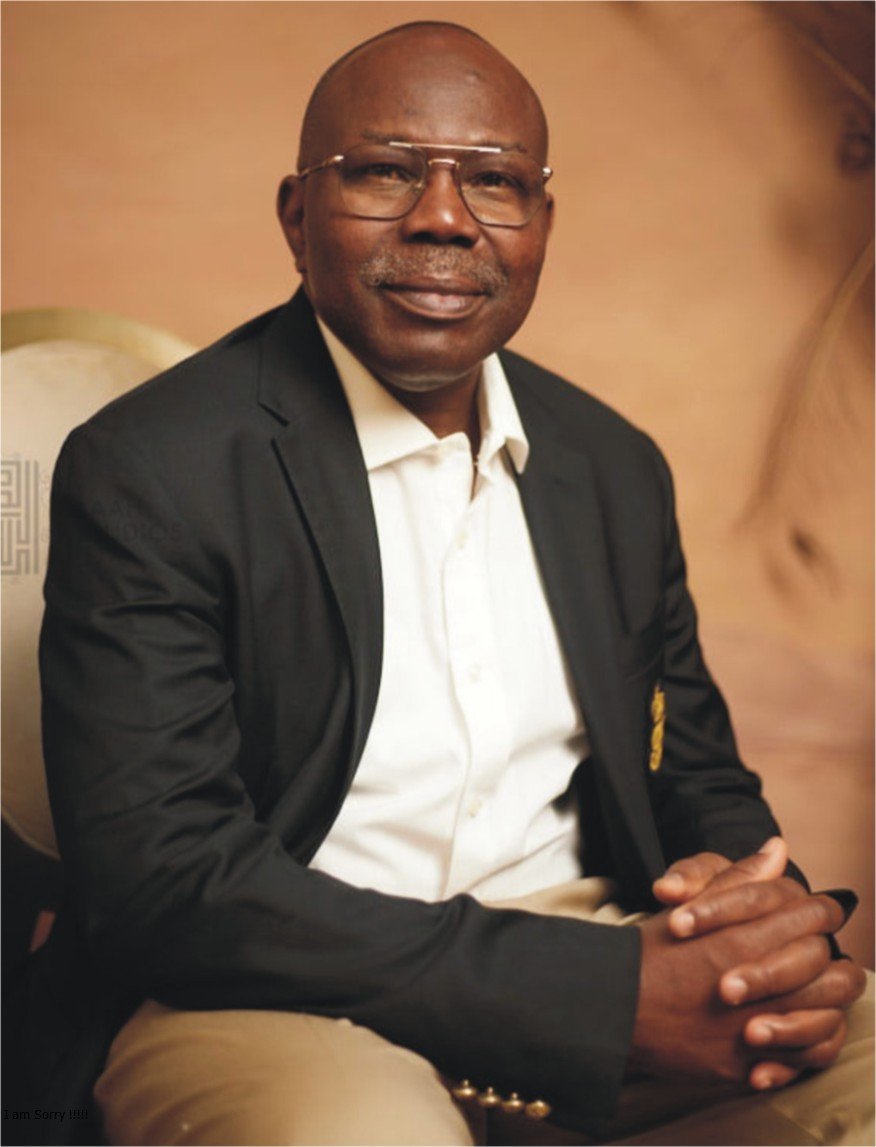
Dr. MUIZ BANIRE’s 60th Birthday Interview
How have you managed to combine law practice, academics, politics and public service?
I must confess, it has not been easy at all. It has involved a lot of sacrifice. The good thing is that I am not particularly enthusiastic about social life, especially nightlife. My friends who go out in places like BGC invite me, but I usually tell them, “I have work to do.” I have had to sacrifice a lot of that social life for work, meetings, research and public engagements. For example, I have a platform convened by my uncle called United Action for Change. The meeting comes up twice a month, and I make time to attend. I also do a lot of programmes that I must find time for. Human rights organisations and civil society groups also involve me in their activities. So, it has been challenging. I have very little time to rest. Sometimes I honestly feel overwhelmed. I just pray for the strength to continue because if you have so many responsibilities, you need to pray that you remain prepared and capable of handling them.
Can you tell us about your childhood and how you grew up?
I grew up in Mushin. It was a very tough terrain and a very harsh environment. But today, I thank God that I grew up there because Mushin gave me something very important: courage. People from that environment are strong and fearless. It gave us the courage to face life. I was not born into privilege. I struggled through school. I used to tell people that I only bought one book in my entire life. If the university had allowed my colleagues to buy the books and I read them on their behalf, I would tell them what the content was. They would buy the books, I would read them, and then come and explain what was inside. It was not easy. My parents did not attend any of my graduations because they did not even fully understand what was going on. As far as my father was concerned, he went to school, finished and came back. That was the extent of his educational experience.
What was life like for your family when you were growing up?
It was challenging. When we were growing up, there were things we thought were punishments but later realised were simply consequences of the difficult economic situation our parents faced. Sometimes, one of us would offend our father and suddenly nobody would eat. As children, we thought, “Why is this man so wicked? What did we all do?” It was only when I grew older that I understood that sometimes he simply did not have enough money to feed us. So, rather than admitting that directly, he would punish all of us. Looking back now, I appreciate what he went through and the sacrifices he made to feed us. We belonged to a generation where watching television was a privilege. We could only watch television on Sundays. There was a padlock on it, and they would open it on Sunday for us to watch programmes. Even eating an egg was a luxury. You might struggle to eat one once a month. Those were the things we were used to while growing up. I also remember one of my teachers, Mrs Awolume, who is still alive. She was my biology teacher and the wife of the late Dr Awolume, who owned a hospital there. She was the person who paid for my job at one point. I have never forgotten her.
How did you eventually decide to study law?
That is another interesting coincidence of life. There is a saying in Islam that before we are born, the ink has already dried. In other words, your journey has been set up and defined by God. As far back as primary school, if you see some of my old notebooks, you would see that I used to write my name and indicate that I wanted to be a lawyer. I did not really understand much about it at the time, but I kept writing it. That continued. After I finished secondary school and had a very good result, I had an uncle, the late Dr Kasim Salam, who wanted to help me further my education abroad. There were arrangements for me to go to the United States, and everything was being put in place. But there were family circumstances that made me reconsider the decision. I was also part of the responsibility of supporting the extended family. Eventually, I made the decision to remain and pursue my education here. That was how the journey into law began.
What has kept you passionate about the legal profession?
Justice. Justice is very important to me. For some of us who grew up in difficult circumstances, we were not afraid to question the establishment when it perpetrated injustice. For me, being a lawyer is an opportunity to ensure that justice is served. That excites me. My academic experience also opened my mind to the wider world. For instance, I studied comparative criminal law, which exposed me to criminal law in other jurisdictions. I also had the privilege of studying international human rights in the South of France. All those experiences gave me the excitement of knowing that you can make an impact in society and correct wrongs through knowledge. You don’t need material things to enjoy the practice of law. When you practise law properly, you enjoy yourself. I also love the rule of law. Without the rule of law, what you have is the rule of man. And when you have the rule of man, you have anarchy. I like rules. I like complying with rules, and I like people complying with rules. In fact, if I had my way, everybody would be a lawyer so that we would all understand the beginning and end of our rights. There would be less friction in society.
How do you feel when you see some of your positions in public discourse being attacked or misunderstood?
Honestly, it used to get to me before. But in recent times, I always tell people that if you want to live long in this environment, learn to laugh everything off. You have to assume that anything is possible in this country. Once you understand that reality, don’t bother yourself about every short statement or transient action. I just laugh it off. What is impossible in this environment? There is almost nothing people cannot do or say. So you shouldn’t honestly bother yourself too much. There is so much to do and so much to correct in the system. We are extremely challenged in all ramifications.
You have been described by some people as controversial or a troublemaker. How do you see yourself?
People don’t really understand me. Some say I am controversial. Some say I am a troublemaker. But I don’t see myself that way. I know myself to be a very gentle man. The challenge is that I have certain fundamentals and boundaries that I cannot cross. I have principles that I cannot compromise, and I can go to any length to defend those principles. When I see injustice, particularly when cases are brought to me, I get annoyed. Sometimes I am prepared to go to any length to ask, “Why must this happen?” I see myself as a religious, friendly and modest human being. To the best of my ability, I am also a philanthropist and a charitable person. I also believe I am endowed with intelligence and knowledge in certain areas. I am not somebody who simply bows to an argument because somebody has presented it. But if you present a superior argument and you are right, I will accept it. One thing I love doing is acquiring knowledge. I love reading like no man’s business. And by extension, I love writing.
You have written extensively over the years. What drives your writing?
I enjoy writing. For example, my writing alone, particularly my columns, has grown into several volumes. In the last few years, we have struggled to compile the collection, and it is now coming out in seven volumes for presentation to the public. I doubt whether there is any area of human endeavour that I have not expressed an opinion about. But I always tell people that you don’t have to be right all the time. Feel free to express your thoughts. When somebody corrects you and gives you a better argument, you should be humble enough to say, “Yes, I think you have a point.” Where I do not have the confidence or competence, I confess quickly: “This is not my area of competence. Forgive me if I say anything wrong. Just correct me.” That is the kind of person I am. I believe in humility and contentment. And if something is my work, it must be done with integrity. You must not compromise it for anything. I am also the first person to acknowledge people when they do well. I admire excellence. When I see fantastic people doing wonderful things, I appreciate them. That is the kind of person I am.
Let us talk about politics. How do you assess the political situation in Nigeria today?
I have always been critical of the political system, particularly the platforms. The major problem is that there is no ideological union. The political parties are largely the same. I would rather associate myself with individuals based on who they are and what they stand for than simply associate myself with a particular platform. Where is the ideology? Look at developed democracies. If you are a member of a particular party, people know what you stand for. If you are a liberal, conservative or republican, there are identifiable principles attached to those positions. Here, people can move from one platform to another without any clear ideological basis. They don’t stand for anything consistently. That is one of the most pathetic aspects of our politics.
How do you assess the opposition parties?
The opposition, for me, is extremely weak. And they are weak because of what I consider to be inordinate ambition. Everybody wants to be president. That is unfortunate. They cannot all be president, and I am yet to see the magic or miracle they intend to perform. As things stand, the opposition is very weak.
