

-
In The Detergent Market
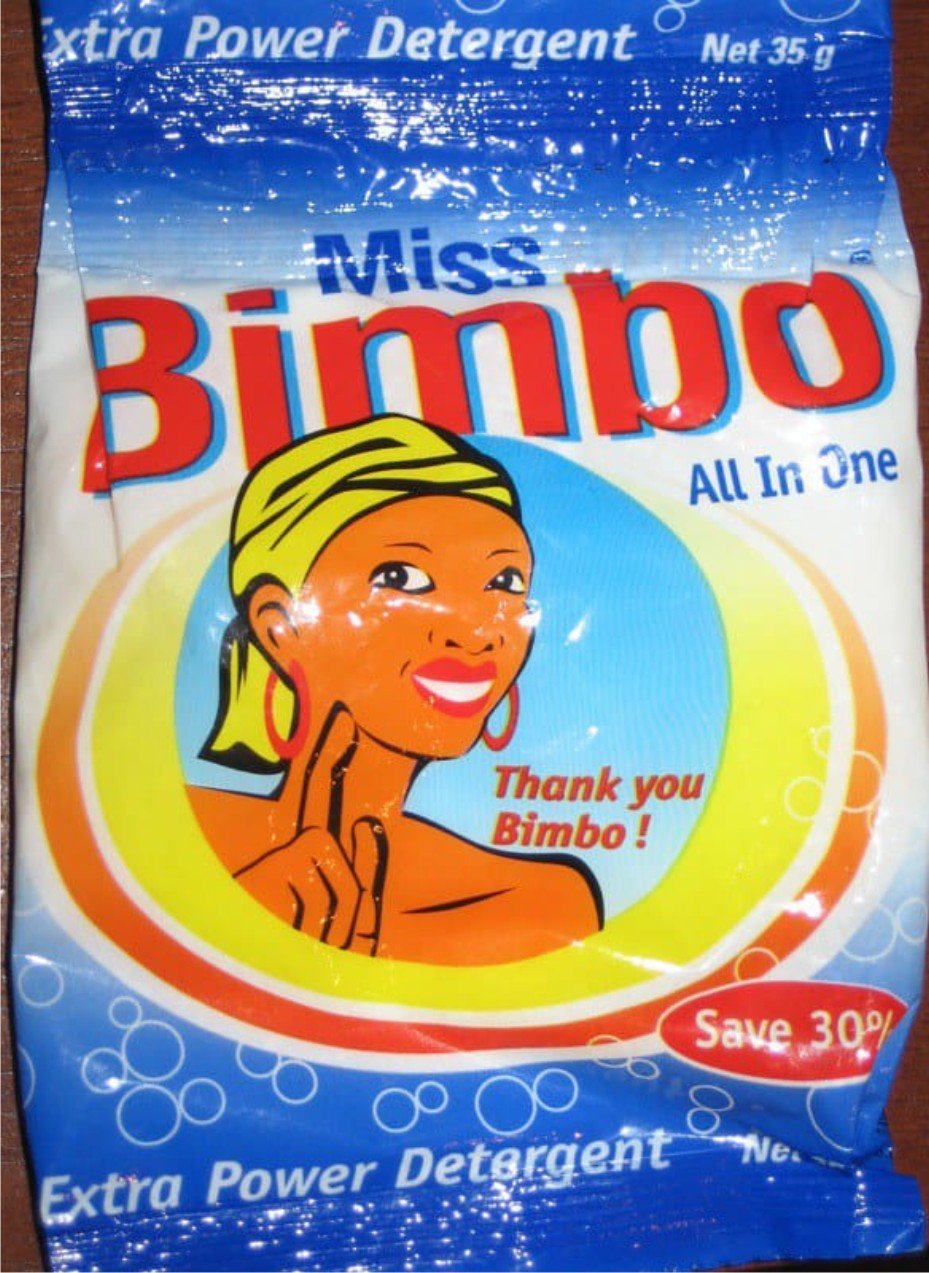
For years, Miss Bimbo detergent was more than just a cleaning product—it was a household staple. From crowded markets in Lagos to small kiosks in semi-urban communities, its bright packaging and affordable price made it a constant presence in Nigerian homes. It stood as proof that a locally made product could compete in a market long dominated by multinational giants.
But today, Miss Bimbo is reportedly gone. Not rebranded. Not relaunched. It has Simply gone into extinction. Behind that silence lies a deeper story—one that goes beyond competition and points to a corporate and financial collapse.
Manufactured by Limex Global Industries Limited, Miss Bimbo detergent rose during a period when indigenous companies were beginning to gain ground in Nigeria’s fast-moving consumer goods sector. Operating out of the Kirikiri Industrial Estate in Lagos, the company positioned Miss Bimbo as a “100 per cent made in Nigeria” product—an identity that resonated strongly with consumers.
At its peak, the brand thrived on a simple but effective formula: Low pricing, Wide accessibility, and Acceptable performance. For many households, it was not just an option—it was the practical choice.
Throughout the 2000s and early 2010s, Miss Bimbo maintained strong visibility in open markets and informal retail networks. Its growth reflected a broader trend: Nigeria’s expanding population and urbanization were driving demand for affordable household products.
But beneath this apparent the success, the foundation may not have been as strong as it seemed. Because in manufacturing, especially in Nigeria, growth without financial resilience can be dangerously fragile.
The most critical development in Miss Bimbo’s extinction story did not happen on supermarket shelves—it happened in the financial and legal corridors.
At some point before 2020, Limex Global Industries Limited reportedly went into receivership. Receivership typically occurs when a company is unable to meet its financial obligations, prompting creditors to take control of its assets in a bid to recover debts.
For a manufacturing company, this often signals: Severe cash flow problems, Mounting debt, and Operational breakdown. And in many cases, it marks the beginning of the end.
In 2020, the situation escalated further. A ruling by the Federal High Court of Nigeria ordered the sale of the company’s assets. Among the assets listed was not just machinery or factory equipment—but something far more symbolic: The intellectual property of the brand itself—
“MISS BIMBO ALL IN ONE EXTRA POWER DETERGENT & LOGO.” This moment is crucial. Because when a brand’s intellectual property is put up for sale, it means:
The company no longer controls its identity. The brand becomes a tradable asset. Its future depends entirely on whether a new investor steps in. In essence, Miss Bimbo ceased to exist as a functioning brand—and became a commodity.
THE SUDDEN MARKET DISAPPEARANCE
While these legal and financial processes unfolded, something noticeable was happening on the streets. Miss Bimbo began to disappear. Retailers stopped stocking it. Wholesalers moved on.
Consumers turned to alternatives.
Social media conversations from that period reflect a common sentiment:
the brand “vanished” almost overnight.
But in reality, the disappearance was not sudden—it was the visible outcome of deeper structural collapse.
It would be easy to blame Miss Bimbo’s exit solely on competition.
And indeed, the detergent market had become more aggressive, with dominant players investing heavily in:
Advertising, Product innovation, and Distribution networks. However, competition alone rarely eliminates a brand completely.
What made Miss Bimbo particularly vulnerable was the combination of: Internal financial distress,
Operational disruption from receivership, and Loss of control over brand assets. Once production slowed or stopped, competitors simply filled the vacuum.
A CLASSIC CASE OF INDUSTRIAL FRAGILITY
Miss Bimbo’s story highlights a recurring challenge in Nigeria’s manufacturing sector: Many local brands succeed in entering the market—but struggle to sustain operations long-term due to key pressures such as High cost of raw materials, Dependence on foreign exchange, Infrastructure challenges, and Limited access to long-term financing.
When these pressures collide with debt, the result can be catastrophic.
Receivership, in this context, is not just a legal term—it is often the final chapter.
As of 2025–2026, Miss Bimbo detergent is no longer in active production. Its brand assets were listed for sale as part of the receivership process, but there is no widely known relaunch or acquisition that has brought it back into the market. This leaves the brand in a kind of limbo: Legally existent as intellectual property, and Commercially absent from consumers’ lives.
In the fast-moving world of consumer goods, brands rise and fall every day.
But the fall of Miss Bimbo stands out because it reveals something deeper:
Sometimes, what disappears from the shelves has already collapsed behind the scenes.
