

Walking through a busy park or sitting in a popular Lagos café, you will notice something interesting: people often place their phones face-down on the table. This is simply because the phones are not iPhones. For many, that triple-camera “stove-top” design isn’t just a camera; it is a badge of success. Over the years, the iPhone has become more than a gadget in Nigeria; it has become a “confidence booster.”
This deep psychological desire to belong to the “elite” has led brands like Tecno, Infinix, itel, and Redmi to stop trying to be different and start modeling their phones exactly like the iPhone.
In real-life social circles, the “iPhone effect” is very real. Take, for instance, a young graduate attending a high-profile job interview or a first date. There is a common belief that pulling out an iPhone makes you look “packaged,” organized, and wealthy. It gives the owner a sense of “I have arrived.” Unfortunately, with the current economy, an iPhone 15 or 16 Pro Max costing nearly N2 million is a dream far out of reach of many. This is where the strategy of brands like Tecno and itel comes in. They aren’t just selling a phone; they are selling affordable confidence.
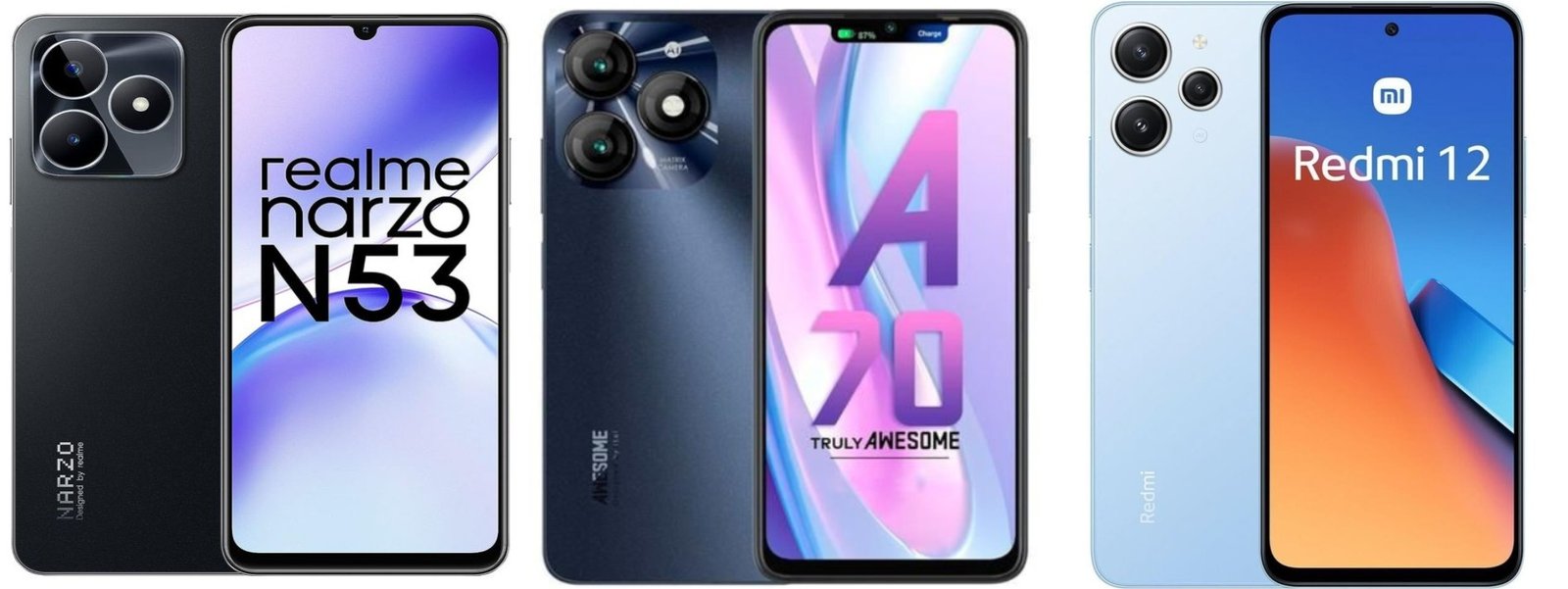
By looking at the list of current market leaders, the imitation is clear and intentional. Devices like the Redmi 12 and Realme C55 have ditched the old-fashioned curved backs for the flat, “boxy” edges that Apple made famous. Even the itel A70, which is one of the most affordable phones on the market, is built with a body structure that mimics the iPhone Pro series. The strategy is simple: if a user can’t afford the N1.5 million “original,” give them a ¦ N100,000 version that looks exactly like it from five feet away. When that user holds the phone, their confidence grows because they feel they are part of the global design trend.
This “Confidence Strategy” also explains why we now see the “Dynamic Island” on almost every new budget phone. On the Infinix Smart 8 HD or the Tecno Spark 20C, you’ll see a little black bubble at the top of the screen that expands when you get a notification or plug in your charger. By copying this “Magic Ring” or “Dynamic Port,” these brands are telling their users, “You don’t need to be a millionaire to enjoy the coolest features in the world.” It removes the “shame” of carrying a budget phone and replaces it with the pride of carrying something “modern.”
Other brands on the list, like the Realme Narzo N53 and the Lava Yuva 3, have also doubled down on the “iPhone Look.” These phones are designed to fit perfectly into the same stylish pouches and cases used by iPhone owners. For a student on campus, being able to buy a fancy “Designer” case that fits their Tecno Pop 8 because it has the same body shape as an iPhone is a huge win. It allows them to blend into “luxury” spaces without feeling out of place.
The list of “iPhone-twins” continues to grow with names like the Oppo F21s Pro and the viral LeEco S1 Pro, which is perhaps the most famous “lookalike” in the world. Even brands that aren’t household names in Nigeria yet are using this blueprint because they know that “The Look” sells faster than “The Specs.” In a market where people are judged by what they hold in their hands, these manufacturers have realized that their job isn’t just to provide a tool for calling it’s to provide a tool for self-esteem.
Critics might call it “copying,” but for the millions of users carrying an Infinix or a Redmi that looks like an iPhone, it feels like a victory. These brands have successfully “democratized” luxury. They have taken a body structure that was once a symbol of the 1% and put it in the hands of the 99%.
As we look at the streets of Nigeria in 2026, the sea of flat-edged, triple-camera phones shows that this strategy has worked perfectly.
The iPhone remains the king of the “dream,” but brands like Tecno, Infinix, and itel have become the kings of the “reality,” giving everyday people the confidence to walk into any room and feel like they belong, one “iPhone-style” body at a time.
-Sarah Matanmi Ojo
