

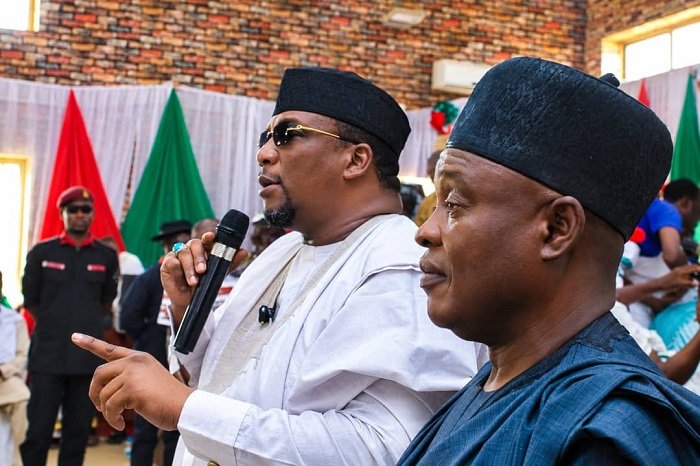
Delivering the P.E.O.P.L.E. Agenda, the PDP Governortorial Candidate, Usman Shehu Bawa, has promised to transform Education differently by involving stakeholders.
Education, he said, is the foundation of security, prosperity, and sustainable development. Yet, overcrowded classrooms, teacher shortages, inadequate facilities, and declining pupil retention threaten Kaduna State’s future. The 2025/2026 Annual School Census records 2.58 million students in public schools across 5,416 institutions. Under The P.E.O.P.L.E Agenda, ‘my administration will guarantee inclusive, quality, and affordable education, ensuring every child has the opportunity to learn and succeed.’He stressed.
The PDP Gubernatorial Candidate said that when sworn into office his first priority will be to improve education financing, planning, and accountability.’ We will align budgets with verified needs and use school census data to guide investment in teachers, classrooms, and learning materials. We will also address census gaps, particularly the 99 non-responsive junior secondary schools, while strengthening collaboration with local governments, communities, and school management committees to ensure resources deliver measurable results.’
Further more,he said he will tackle teacher shortages through needs-based recruitment, equitable deployment, and continuous professional development. With a public primary pupil-teacher ratio of 92:1 and a staggering 398:1 in Kubau’s junior secondary schools, urgent intervention is essential. We will recruit qualified teachers, incentivise service in underserved communities, and strengthen training and supervision to improve teaching quality and learning outcomes.
We will address overcrowded classrooms and inadequate infrastructure through targeted construction, rehabilitation, and maintenance. With an average of 113 pupils per usable public primary classroom and 55 per cent of public primary schools reportedly lacking safe water, we will prioritise classrooms, desks, toilets, clean water, and disability-friendly facilities. Investments will be distributed fairly across all 23 local government areas, with priority given to underserved communities.
To reduce dropout and improve learning, we will strengthen foundational literacy, numeracy, school attendance, and transitions between educational levels. The decline in public primary enrolment from 351,784 pupils in Class One to 258,021 in Class Six demands urgent attention. We will work with families and communities to identify at-risk children, remove barriers to attendance, and promote equitable opportunities for girls, boys, children with disabilities, and learners in vulnerable communities.
I will expand technical and vocational education as a pathway to employment and entrepreneurship. With only 16 public TVET institutions serving 6,229 students and 14 LGAs reportedly lacking public TVET provision, access must improve. We will strengthen existing institutions, recruit instructors, equip workshops, and partner with industries, technology hubs, and businesses to provide market-relevant skills. We will also expand alternative and non-formal education, including appropriate support for Integrated Quranic Schools and out-of-school youth.
His administration,he noted,will strengthen school governance and community participation. Existing School-Based Management Committees, Parent-Teacher Associations, and School Development Plans provide a foundation for improving accountability. We will equip these structures to monitor school performance, track interventions, and promote transparent management. Working with local governments, we will also address access barriers in remote communities and publish progress reports that enable citizens to hold the government accountable for educational outcomes.
Our success will be measured by improvements in teacher availability, classroom conditions, literacy, school completion, technical skills, and equitable access across Kaduna State. Through credible data, transparent budgeting, and community feedback, we will ensure that education spending translates into better learning and greater opportunities.
Finally, under the P.E.O.P.L.E Agenda, education is an investment in human capital, security, and shared prosperity, not merely an expenditure. Together, We Can Do It Differently, building a Kaduna where every child can learn, every teacher can teach effectively, and every young person has a fair opportunity to fulfil their potential.
