

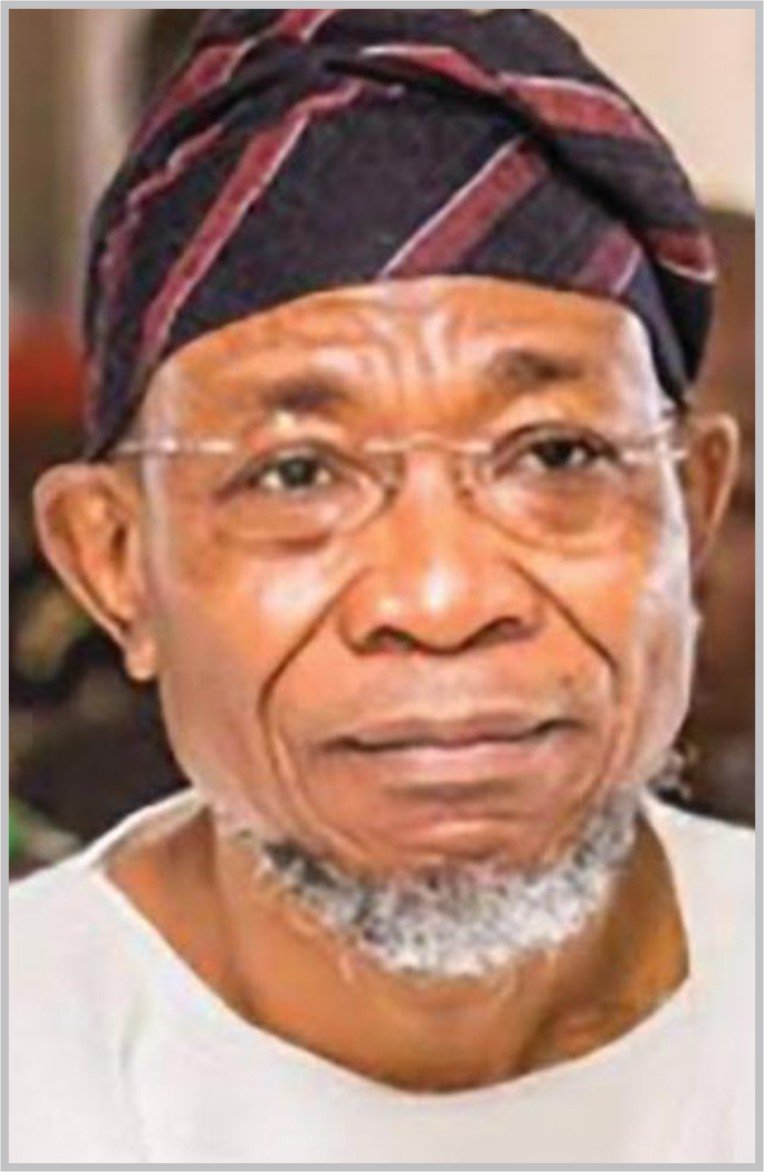
Something interesting is happening around former Osun State Governor, Ogbeni Rauf Aregbesola. The former governor, former Minister of Interior and current National Secretary of the African Democratic Congress (ADC), has suddenly found himself at the centre of political speculation after the party unveiled its much-anticipated Presidential Campaign Council for the 2027 election.
His name was conspiculously missing. And that omission has got political observers talking. Aregbesola is one of the most recognisable political figures in the ADC hierarchy. He is the party’s National Secretary and one of the most prominent South-West politicians associated with the new opposition coalition. Yet, when former Vice President Atiku Abubakar unveiled his presidential campaign structure, Aregbesola was not among the names announced.
Why? Is there more to the omission than meets the eye? Has the power structure within ADC changed? Is Atiku deliberately building a campaign organisation around a different group of politicians? Or is Aregbesola simply being kept where the ADC leadership needs him most — inside the party’s organisational machinery? For now, there is no evidence that Aregbesola has been removed from his position.
In fact, the available evidence points in the opposite direction. But the political questions surrounding his future have become impossible to ignore. The unveiling of Atiku’s Campaign Council was expected to provide a clear picture of the politicians who would drive his 2027 presidential campaign. Several heavyweight names made the list. Former Kaduna State Governor Nasir El-Rufai was named Deputy Chairman. Kashim Ibrahim-Imam emerged as Chairman. Austin Akobundu was named Director-General/Campaign Manager.
Former Edo State Governor Adams Oshiomhole’s name did not feature, while former APC National Chairman John Oyegun was given a role on the Campaign Advisory Board. Media personality Dele Momodu was given a major communications role, while Dino Melaye was assigned responsibility for contact and mobilisation. Several other influential figures were also given responsibilities. But then came the surprise. Rauf Aregbesola was not on the list.
Neither was ADC National Publicity Secretary Bolaji Abdullahi. For a party preparing for one of Nigeria’s most consequential presidential contests, the absence of two senior party officials naturally generated speculation. But is Aregbesola really out? This is where the story becomes more intriguing. The answer, based on the information currently available, is no. There has been no official announcement that Aregbesola has resigned as ADC National Secretary.
There has also been no announcement that he has been removed. The ADC’s own leadership structure continues to identify him as National Secretary. More importantly, Aregbesola has continued to appear publicly with Atiku and other ADC leaders. Only hours after the campaign council controversy erupted, Aregbesola was in Akure alongside Atiku and other ADC leaders as the party welcomed former Ondo State PDP governorship candidate, Eyitayo Jegede, into its fold. That appearance was significant. If there had been a major political rupture between Aregbesola and the Atiku camp, his prominent presence at such an important ADC event would have raised even more questions.
Instead, he was there. And he was active. But the Atiku Camp has explained the omission. The explanation coming from Atiku’s camp is that Aregbesola was not excluded because of any disagreement. Rather, the argument is that the campaign council is an operational structure, while Aregbesola’s role as National Secretary is part of the party’s permanent leadership structure.
That distinction is important. A campaign council has a specific electoral assignment. The National Working Committee has a continuing responsibility to run the party. Aregbesola and Bolaji Abdullahi are members of the ADC National Working Committee and therefore have responsibilities beyond the presidential campaign council. This explanation may calm some of the speculation. But it does not completely eliminate the political questions.
Why is there no big South-West name? Perhaps the most intriguing aspect of the new campaign structure is the question of the South-West. Atiku is seeking to build a national coalition capable of challenging President Bola Tinubu and other presid ential contenders in 2027. The South-West is therefore strategically important. But Aregbesola, arguably one of the most prominent South-West figures in the ADC, is not on the campaign council.
So who will drive the ADC’s South-West presidential campaign? Will Aregbesola eventually be given a separate South-West mobilisation assignment? Will another prominent politician emerge as the face of the campaign in the region? Or is ADC deliberately keeping the South-West structure separate from the presidential campaign council? These questions remain unanswered. Then there is Osun. Aregbesola’s political career is inseparable from Osun. He served as governor from 2010 to 2018 and built one of the strongest political structures in the state during his years in office.
His transition from the APC to the ADC was therefore watched closely by political observers. But the ADC’s recent electoral performance in Osun has generated questions about how much of Aregbesola’s old political machinery remains intact and how effectively the party can convert its alliances into votes. It would, however, be speculative to conclude that his omission from Atiku’s campaign council was a punishment for the party’s performance in Osun. No such connection has been established.
Indeed, Aregbesola’s continued participation in ADC activities suggests that his political relevance within the party has not disappeared. Another issue that makes the development interesting is the relationship between Aregbesola and Atiku. Aregbesola comes from the progressive political tradition that has historically produced some of the strongest opposition politics in the South-West.
Atiku, meanwhile, has spent years building a national political network that cuts across regional and party lines. The new ADC arrangement brings together politicians from different political backgrounds. The challenge is how these personalities will work together without their individual ambitions or political structures becoming sources of friction. Aregbesola’s experience could be particularly useful here.
He understands party organisation. He understands grassroots politics. He understands the South-West. And he has experience operating within a presidential administration. These are qualities that could make him valuable to ADC even if he does not carry a formal campaign council title. What exactly is his next assignment? This is now the question many politicians are asking.
One possibility is that Aregbesola will concentrate on party organisation. As National Secretary, he occupies a strategic position in the ADC’s administrative structure. Another possibility is South-West mobilisation. His appearance in Akure during the reception of Eyitayo Jegede is particularly interesting in this regard.
Jegede’s movement from PDP to ADC gives the party another experienced political figure in Ondo. Aregbesola’s involvement could signal that the ADC wants to strengthen its South-West network through negotiations with influential politicians and political blocs. There is also the possibility that his role will evolve as the campaign gets closer.
Campaign structures are rarely static. More appointments can be made. More directorates can be created. And senior politicians who are absent from the initial list can still receive important responsibilities later. What is Aregbesola’s political future? At 69, Aregbesola remains an important political figure. His political journey has taken him from Lagos politics to the governorship of Osun and subsequently to the federal cabinet.
He has also demonstrated an ability to remain politically relevant even after leaving elective office. His present position in ADC therefore deserves attention. The question is no longer simply whether Aregbesola will contest an election. It is whether he will become one of the key political strategists behind the ADC’s attempt to build a formidable national opposition structure.
And that could be far more consequential than simply having his name on a campaign council. Will he remain ADC National Secretary? For now, all available indications point to yes. There is no verified announcement of his removal. The ADC’s leadership structure continues to recognise him as National Secretary. His continued public participation in party activities also reinforces that position. Therefore, reports suggesting that Aregbesola has already been pushed out of the ADC leadership would be premature. But politics is fluid. The coming months will reveal whether the present arrangement remains unchanged or whether further adjustments are made as the 2027 campaign gathers momentum.
What is happening around Aregbesola also tells a bigger story about the ADC. The party is now attempting to bring together politicians with different histories, ambitions and political constituencies under one platform. Atiku brings his national political network. El-Rufai brings his own political experience and network. Aregbesola brings years of South-West political organisation.
Other former governors, ministers, legislators and political leaders bring their own constituencies. Managing all these interests will be one of the biggest challenges facing the new ADC structure. And Aregbesola’s position within that arrangement will be worth watching closely.
So, what next for Ogbeni? For now, Aregbesola remains National Secretary of ADC. He remains active in the party. He remains publicly engaged with Atiku. And he remains one of the most recognisable ADC figures from the South-West. His absence from the campaign council is therefore a development worth watching, but it is not, by itself, proof of a political divorce.
The real story may unfold in the coming months. Will Aregbesola become the man charged with rebuilding ADC’s South-West machinery? Will he be given a major mobilisation assignment? Will he remain focused on the National Working Committee? Or will the party eventually bring him into the presidential campaign structure in another capacity?
For now, one thing is clear: Aregbesola may not be on Atiku’s campaign council — but he is certainly not out of the ADC story.
