

-
The Battle Of The 2 Cement Giants
For decades, Nigeria’s cement industry has been the scene of one of the fiercest battles in the country’s manufacturing sector, with Dangote Cement and the company formerly known as Lafarge Africa emerging as two of the biggest names in the market. Their competition has stretched beyond Nigeria into other parts of Africa, with both companies fighting for market share, production capacity, distribution networks, strategic locations and influence in one of the continent’s most important industries.
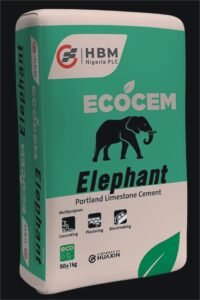
Today, the company Nigerians have known for years as Lafarge Africa is no longer called Lafarge Africa. Following its acquisition by China-based Huaxin Cement, the company changed its name to HBM Nigeria Plc in June 2026. The name may be new, but the business has a long history in Nigeria and remains one of Dangote Cement’s major competitors.
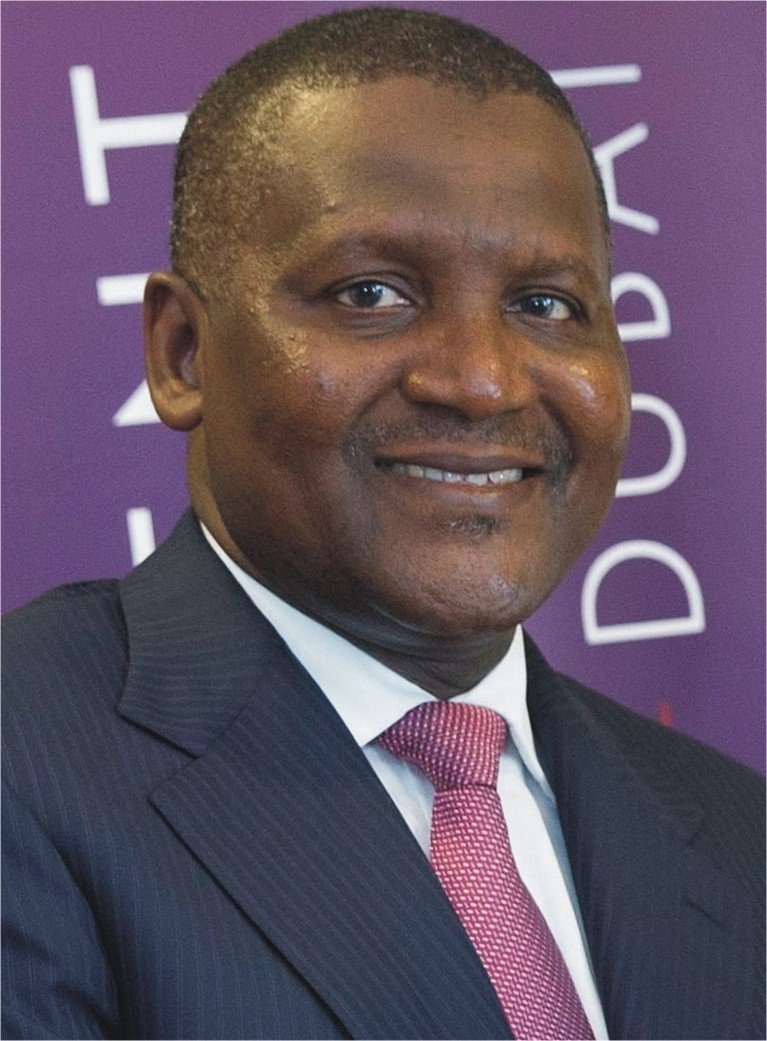
The rivalry came into sharp focus again after former President Olusegun Obasanjo made a remarkable revelation about the challenges Aliko Dangote allegedly faced when he began expanding his cement business across Africa.
Speaking in Kenya recently at an event surrounding Dangote’s expansion plans, Obasanjo said there was a major international cement company that did not want Dangote to succeed.
“One group that really didn’t want Aliko to succeed in cement production is a French company called Lafarge. They put every obstacle in Aliko’s way,” Obasanjo said.
He specifically recalled what he described as a traumatic experience Dangote encountered in Senegal after completing a cement plant with a production capacity of five million tonnes.
According to Obasanjo, Dangote had completed the plant but was unable to begin full operations because a dispute emerged over the land on which the factory was built. He alleged that Lafarge instigated local people to challenge Dangote’s ownership of the land.
“Lafarge instigated some local people and said the land on which he built the cement factory is their land. They went to court. Aliko won,” Obasanjo said.
He added that even after Dangote won the case, the matter did not immediately end. According to him, Dangote eventually had to pay about $12 million before he could operate the factory.
“Lafarge, who wanted Aliko not to produce cement in Africa, they want to monopolise. Lafarge is out of Africa today. Aliko dominates cement production in Africa,” the former president said.
Obasanjo’s comments have reignited interest in the long-running competition between the two companies. However, the allegations about Lafarge’s role in the Senegal land dispute remain Obasanjo’s account and should not be treated as an established court finding.
The story of Dangote Cement itself began long before the company became the dominant force it is today. Aliko Dangote started Dangote Industries in 1981 as a trading business, importing and distributing commodities such as cement, rice, sugar, flour and salt.
For years, importing cement was considered a profitable business, but Dangote eventually moved towards manufacturing. One of the major turning points came in the early 2000s when the Federal Government began encouraging local production and reducing Nigeria’s dependence on imported cement.
Obasanjo, who was president between 1999 and 2007, recently recalled that he challenged Dangote over why he was importing cement rather than producing it in Nigeria. According to the former president, Dangote told him that importing was more profitable.
The government subsequently introduced a policy linking cement import licences to plans for domestic production. That policy became an important part of Dangote’s transformation from a major importer into a manufacturing giant.
Dangote acquired Benue Cement Company in 2000 and later took control of Obajana Cement in Kogi State. The Obajana plant eventually became one of the largest cement factories in Africa. Dangote Cement was formed through the merger of Dangote Cement and Benue Cement, setting the stage for the company’s aggressive expansion.
From Nigeria, Dangote moved into other African markets. Senegal, Tanzania, Ethiopia, Zambia, Cameroon, Congo, Ghana, South Africa and other countries became part of the group’s continental expansion.
The company was no longer simply competing with established manufacturers inside Nigeria. It was beginning to challenge some of the biggest international cement companies operating across Africa.
That was where the competition with Lafarge became particularly significant.
The roots of HBM Nigeria go much further back than Dangote’s cement manufacturing business. The company’s Nigerian history can be traced to West African Portland Cement Company, popularly known as WAPCO, which was incorporated in 1959 and began production at Ewekoro in Ogun State in 1961.
Over the years, the company expanded its operations and became an important part of Nigeria’s cement industry. Lafarge entered the picture more strongly after its acquisition of Blue Circle in 2001, giving it control of Blue Circle’s Nigerian interests.
The company subsequently became Lafarge Cement WAPCO Nigeria and expanded its Nigerian operations through businesses including Ashaka Cement and United Cement Company of Nigeria, popularly known as UniCem.
In 2014, Lafarge Africa Plc was created following the consolidation of Lafarge’s interests in Nigeria and South Africa. The company later became part of LafargeHolcim after the global merger between Lafarge and Holcim.
LafargeHolcim eventually changed its name to Holcim, and the Nigerian business remained a major player in the country’s cement market.
Another dramatic change came when Holcim agreed to sell its Nigerian business to Huaxin Cement, one of China’s major cement manufacturers. The acquisition was completed in 2025, effectively bringing the long Lafarge era in Nigeria to an end.
In June 2026, Lafarge Africa officially became HBM Nigeria Plc after shareholders approved the change and the Corporate Affairs Commission issued the new certificate.
So, technically, the company now competing with Dangote is HBM Nigeria, not Lafarge. But its history, factories, brands and much of the public identity associated with the business remain closely linked to the Lafarge name.
That history explains why Obasanjo’s comments have generated so much interest.
For years, Dangote and Lafarge operated as two of the biggest forces in the Nigerian cement industry. Dangote built enormous new plants and expanded production, while Lafarge relied on its established manufacturing facilities, brands and distribution network.
The competition was not simply about who could sell more bags of cement. It was about who could control more of the market.
Cement is one of the most strategically important products in Nigeria. Every major construction project requires it, from private homes and estates to roads, bridges, airports, schools, hospitals and commercial buildings. Whoever has substantial control over production therefore has considerable influence over the construction industry.
That is why the rivalry became so intense.
Dangote pursued scale. The company invested heavily in huge integrated plants, limestone deposits, power generation, transportation and distribution. Its strategy was to produce cement on a massive scale and take advantage of Nigeria’s huge demand.
HBM, on the other hand, entered the new phase of the competition with decades of experience, established factories and a recognised portfolio of cement and building materials. Its new Chinese ownership also provides access to the resources and experience of Huaxin Cement, a major global cement manufacturer.
The latest figures show that Dangote remains comfortably ahead, but the gap is being challenged.
In the first half of 2026, Dangote Cement accounted for about 64 percent of the combined revenue-based market share of Nigeria’s three major listed cement manufacturers. BUA Cement followed with about 18.6 percent, while HBM Nigeria accounted for about 17.3 percent.
Interestingly, HBM recorded the fastest revenue growth among the three during the period. Its revenue increased by more than 31 percent, compared with about 21 percent for Dangote Cement. That has given the industry something new to watch: whether the new HBM ownership can turn growth into a sustained challenge to Dangote’s dominance.
Industry observers have pointed out that Dangote’s lead remains enormous, but they also believe the Nigerian market is becoming more competitive. The emergence of BUA as a major force has changed the old two-company battle into a three-way contest.
Some analysts believe this competition is healthy because it forces manufacturers to improve efficiency, expand production and fight harder for customers. Others argue that the concentration of the industry remains too high because Dangote, BUA and HBM together control the overwhelming majority of the market.
Consumers have a different way of judging the competition.
For many Nigerians, the real question is not which company has the biggest factory or the largest market share. It is how much a bag of cement costs.
Builders and dealers have continued to complain about rising cement prices, particularly as energy, transportation, foreign exchange and other production costs increase. Cement prices moved significantly higher during 2026, putting additional pressure on people building houses and contractors handling major projects.
Some consumers say the presence of several large manufacturers should translate into stronger price competition. Others argue that despite the presence of Dangote, HBM and BUA, cement remains too expensive for the average Nigerian.
One major industry concern is logistics. Cement is heavy and expensive to transport, meaning that the price paid by a consumer can depend heavily on distance from the factory, haulage charges and the availability of distributors.
Energy costs are another major factor. Cement production requires huge amounts of heat and electricity, and manufacturers have repeatedly pointed to energy and logistics expenses as major pressures on their businesses.
The manufacturers themselves argue that the industry is investing heavily to increase production and meet demand.
Dangote maintains that its continued investments are necessary because Nigeria’s infrastructure and housing needs remain enormous. HBM has similarly indicated that it intends to expand production, improve plant reliability and strengthen its distribution network under its new ownership.
The competition is therefore entering a new phase.
The French Lafarge that Obasanjo accused of standing in Dangote’s way is no longer the owner of the Nigerian business. The company has passed through several ownership and identity changes, from Lafarge to LafargeHolcim, then Holcim, and eventually to Huaxin, with its Nigerian subsidiary now operating as HBM Nigeria.
But the commercial rivalry has survived the change in ownership.
In fact, it may become even more interesting.
Dangote is now defending a market position built over more than two decades, while HBM is attempting to use its established Nigerian footprint and new Chinese ownership to grow. BUA is simultaneously expanding its own presence and narrowing the gap with the market leader.
For Dangote, the story represents the transformation of a Nigerian businessman who once imported cement into one of the largest cement producers in Africa. For HBM, it represents the continuation of a business that has been producing cement in Nigeria since the early 1960s.
And for people watching the industry, the most interesting part is that the old rivalry has not disappeared. It has simply acquired new owners, new names and a new dimension.
Obasanjo’s account has added another chapter to that history by portraying Dangote’s rise as a battle against an established international competitor that allegedly did everything it could to prevent him from expanding across Africa.
Dangote ultimately succeeded in becoming the dominant cement producer on the continent.
Now, HBM Nigeria has a different challenge. It must prove that the company once known as Lafarge can reinvent itself under Huaxin and become a stronger competitor in Nigeria.
The battle is no longer simply Dangote versus Lafarge. It is Dangote versus HBM, BUA and any other manufacturer capable of challenging the market leader.
The stakes are enormous because cement is at the foundation of Nigeria’s development.
Whoever wins the battle for production, distribution and market share will not only control a major manufacturing business but will also have an enormous influence on the cost of building in Africa’s most populous country.
For consumers, the hope is simple: that competition will eventually mean more supply, better service, improved quality and, most importantly, more affordable cement.
For the companies, however, the battle is about something much bigger: who will control the future of Nigeria’s cement industry.
By Benprince Ezeh
08068599879
