
-
Gov. UMO ENO Gives Reasons
-
Excerpts Of His Yoruba Tennis Club Speech
Chairman, Trustees, distinguished members of the Yoruba Tennis Club, let me begin by thanking you for the honour of this invitation. To be asked to speak to a club on the day it turns one hundred is a huge responsibility and I do not take it lightly. On behalf of the Government and people of Akwa Ibom State, I bring you our warmest congratulations.
Before I go further, permit me to say a few things about the foundational principles of this noble Club. In 1926, a handful of Lagosians met at 75 Tokunboh Street and formed what they then called the Orelodun Tennis Club. They did so for a reason none of us should ever forget.
The Europeans in this city had their own club, and no African, however educated, however accomplished, was thought fit to walk through its doors. Our fathers did not stand at that gate and beg. They went and built their own house. They approached the colonial government for a piece of land at Onikan. They raised the money for the first court from their own pockets, in cash and in kind, and they opened it before that year was out. At a general meeting in September of that same year, several names were put forward, but the members chose the Yoruba Tennis Club, a name it still answers to today.
(3) Consider carefully what that was. It was not simply a social decision. It was an act of self-government. A group of citizens looked at an injustice, organised themselves, raised their own resources, built an institution, wrote rules for it, and handed it down so faithfully that one hundred years later we are seated inside it. And having called it “Yoruba”, they deliberately kept its doors open to Nigerians of every origin who could keep its creed of honesty, integrity and industry.
Ladies and gentlemen, if I were asked to define Good Governance in a single sentence, I could do a great deal worse than point at this club and sit down.
Permit me therefore to salute your founding fathers, and in particular Victor Adejumo Allen, one of the founding members of this club, who led it through its earliest years. Vision is common. Vision that outlives the visionary is rare, and that’s what this Club embodies.
(5) I have been asked to speak on “Democracy and the Imperative of Good Governance: Renewing Hope in Challenging Times”. I am well aware of who is in this room. There are men and women seated here who have sat on the bench, run ministries, led boardrooms and built professions. So I do not pretend to be teaching this room any new thoughts. . I have come to compare notes with people who know exactly where the shoe pinches. And I want to put a single proposition to you and then spend the rest of my time defending it: that the worth of a democracy is measured not by the fact of its elections, but by the quality of the governance those elections produce.
And the shoe does pinch. Around the world, democracies are being tested as they have not been tested in a generation. Economic pressure, insecurity, climate shocks, youth unemployment, technological disruption and a steady erosion of public trust have made citizens everywhere anxious and impatient, which breeds apathy. Nigeria is not exempt from that mood. But history is consistent on one point: the seasons that feel most like decline are usually the seasons in which renewal is quietly being built.
Our task, therefore, is not merely to preserve democracy. It is to make democracy mean something. A citizen does not experience democracy on election day alone. He experiences it at the hospital gate, in his child’s classroom, on the road to his farm, and in the price of what he eats. A democracy that never reaches those places loses its moral authority long before it loses an election.
That is why Good Governance is not an accessory to democracy. It is the bridge between the promise and the delivery. Elections confer Legitimacy; Governance justifies it.
Let me be precise about terms. The World Bank, in 1992, defined Governance as the manner in which power is exercised in the management of a country’s economic and social resources for development. The United Nations Development Programme, five years later, set out the characteristics that distinguish governance which may properly be called good: participation, accountability, transparency, the rule of law, responsiveness, equity, inclusiveness, consensus orientation, effectiveness and efficiency. It is a serviceable list and I would not quarrel with a single item on it. But a list is not a practice. In the actual running of a government these things reduce to a handful of habits which an administration either keeps or does not keep, and I want to take five of them.
The first is Accountability. Public office is held in trust, and a trustee must be able to explain himself. In Akwa Ibom we submit to this in public. Every month, for two full days, we hold Delivery Review Sessions to which we invite stakeholders, elected officials, journalists, civil society organisations and the ordinary citizen.
Project by project, we put up the cost, the timeline and the status, and then we take questions. It is not always a comfortable exercise. That is rather the point. A government questioned only once every four years will behave like a government questioned only once every four years.
The second is Transparency, which is simply what makes accountability possible. Citizens cannot judge what they cannot see. Where budgets and procurement are opaque, corruption is not merely likely; it has been structurally invited.
The Third is Participation. Representative democracy is necessary, but on its own it is thin. We therefore hold town hall meetings where citizens sit and argue about their own future before the decisions are taken. This is not ceremony. Government does not possess grassroots knowledge; it has to go and collect it. And it is in those halls that we hear the voices our budgets would otherwise miss: the widow, the market woman, the young man holding a certificate and no job.
And let me be clear that these meetings are not advisory theatre. In those halls our communities tell us which projects actually matter to them. Not the ones we imagined for them from Uyo, but the road, the borehole, the classroom block, the health post or the market that they themselves have been waiting for. Those are the projects we take away and cost. Those are the projects that will appear in next year’s budget, and those are the projects that form the backbone of ARISE Agenda 2.0. A development plan that the people have helped to write is the only kind that survives contact with reality.
The fourth is the rule of law, applied without fear or favour, resting on an independent judiciary and a genuine separation of powers.
And the fifth is Equity. Equity in governance ensures fair and inclusive decision-making, so that the decisions taken do not exclude any group or any individual within the governance structure. It asks three things of a government. First, that it recognise the diverse entities within its own populace.
Second, that it ensure procedural fairness in participation, which means full, effective and inclusive participation in decision-making rather than the quiet exclusion of vulnerable voices. And third, that it ensure the fair sharing of resources, benefits and costs among all stakeholders in society, so that the benefits of development reach every segment of it, including the communities that did not vote for you.
These are not abstractions. They are the whole difference between a “Government that announces and a Government that delivers.
Nigeria’s democratic record since 1999 is honestly mixed. Our institutions have grown more stable, but unemployment, insecurity, infrastructure deficits and the misconduct of some of those entrusted with public office have opened a serious trust deficit between the government and the governed. Any speech that pretends otherwise is not worth the paper it is printed on.
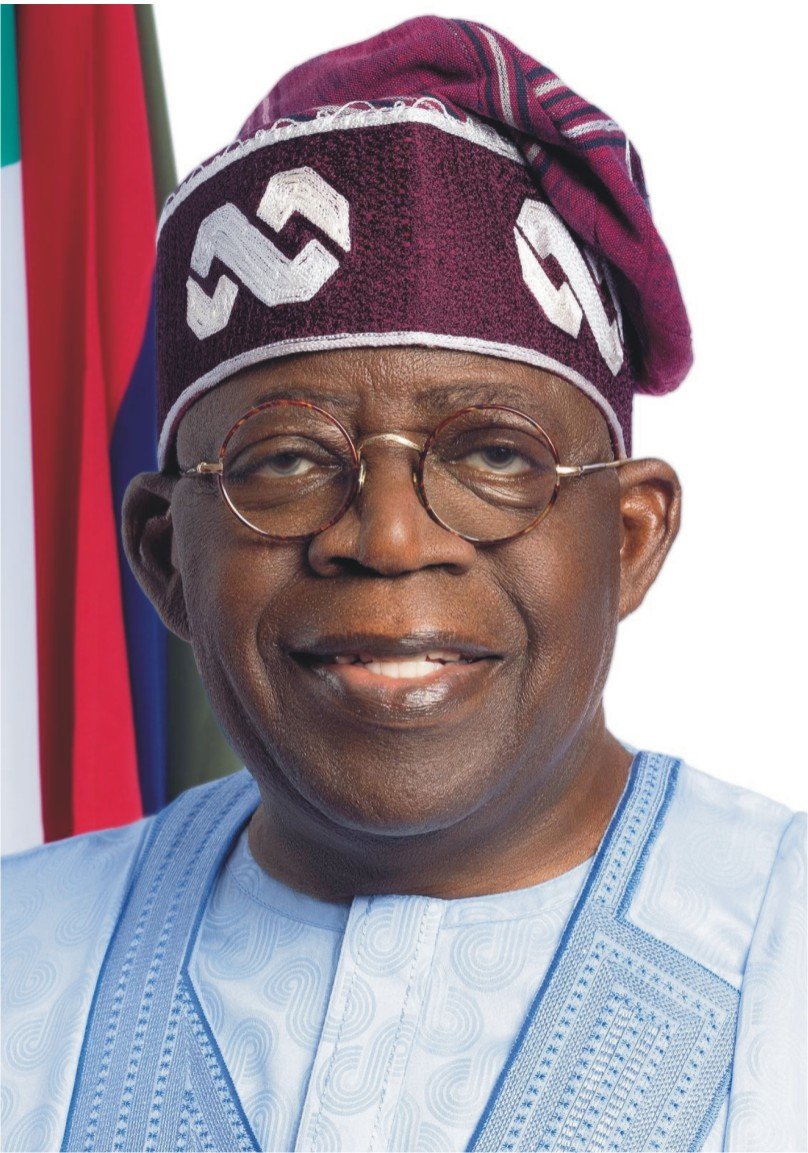
Moments like this one tend to call forward leaders willing to take decisions that are correct before they are popular. Franklin Delano Roosevelt did it in 1933, and the New Deal rescued both American democracy and the economic system beneath it. President Bola Ahmed Tinubu, GCFR, came into office on 29 May 2023 with a comparable declaration. He described it as a journey “propelled by a burst of hope”, and he undertook to confront this country’s problems rather than defer them to another administration.
The reforms have been painful, and I will not pretend otherwise in this room, because you have felt them in your own businesses. But there is a difference between pain that merely costs and pain that buys something, and what these decisions bought is already on the table. Fiscal discipline has been restored. The exchange rate has stopped shifting under our feet. Tax reform is under way. And the fuel subsidy that was quietly swallowing money belonging to our schools, our hospitals and our roads is gone, and that money is now being spent on Nigerians rather than on a distortion.
The results are beginning to show. Federal allocations to the states have risen substantially, which is precisely why sub-national governments can now attempt projects that were unthinkable five years ago. Let me give you our own example rather than a general one. In Akwa Ibom we took a seventy-hectare site that gully erosion had been eating alive for years. That land was, in every practical sense, a liability on our books. We have turned it into the ARISE Palm Resort. Five years ago that project would not have survived its first budget meeting. In September it will be commissioned by the President. That is what fiscal room at the sub-national level looks like once it reaches the ground. Domestic refining has begun to turn Nigeria from a chronic importer of refined fuel into an exporter of it. In 2024 our total merchandise trade crossed N138 trillion and the country recorded its largest trade surplus in seventeen years. Work has continued on the Lagos-Calabar Coastal Highway, the East-West Road, the Second Niger Bridge and the Lagos-Ibadan Expressway, on the Special Agro-Industrial Processing Zones, and on more than one hundred thousand Renewed Hope housing units.
On Security, the operational divisions of the Nigerian Army are being expanded from eight to twelve to improve coordination. And after nearly three decades of argument, the constitutional alteration bill establishing State Police has now passed both chambers of the National Assembly.
Let us be honest about how that happened. State Police was debated by administration after administration and left exactly where it was found. It moved because a President was willing to transmit the bill himself and to spend his own political capital on it. It must still be cleared by State Houses of Assembly and receive presidential assent, and Akwa Ibom will play its full part in that. But history will record that an argument nearly three decades old was settled under Bola Ahmed Tinubu.
In Akwa Ibom, beyond establishing a standalone Ministry of Internal Security and Waterways, we have engaged and enrolled 2,272 Village Youth Presidents into the State Security Architecture to strengthen community surveillance, intelligence gathering, and the protection of public assets and critical infrastructure across our communities.
To ensure effectiveness and accountability, we have developed a structured training programme for them, and they will be placed on the state payroll to support sustained collaboration with our mainstream security agencies.
Reforms of this kind take longer than a single term to bear their full fruit, and the greatest danger to them is not Opposition. It is interruption.
So let me say plainly where Akwa Ibom stands: we are supporting President Bola Ahmed Tinubu, GCFR, to return to Aso Rock next year and complete the work of national renewal he has begun.
