


The story of transport business in Nigeria is closely tied to the entrepreneurial journey of Igbo traders whose early involvement in commerce helped shape one of the most influential road transport industries in West Africa. What is today a structured, multi-billion-naira sector began as a survival strategy driven by a few determined individuals who saw opportunity in movement, trade, and connectivity.
Long before modern transport systems emerged, Igbo traders were already active in inter-regional commerce across eastern Nigeria. With the arrival of colonial infrastructure in the early 1900s, lorries and buses introduced by Europeans created a new opening. Indigenous businessmen quickly entered the space. Among the earliest names associated with transport development are J.C. Ulasi from Nnewi and Louis Odumegwu Ojukwu, who built massive commercial influence in mid-20th century Nigeria and invested heavily in logistics and haulage.
Another important figure was Augustine Ilodibe, founder of Ekene Dili Chukwu, who began operations in 1955 after starting out as a spare parts dealer before acquiring his first lorry to transport goods and passengers across towns. His company eventually grew into one of the most dominant transport brands in Nigeria, helping to define interstate travel for decades.
From those early beginnings, transport gradually became a natural fit for Igbo entrepreneurship because it required relatively low entry capital compared to manufacturing, yet offered daily cash flow and room for expansion. After the Nigerian Civil War ended in 1970, many Igbo businessmen had to rebuild their lives and businesses from scratch. Transport quickly became one of the fastest ways to regain financial stability. A single vehicle could generate steady income, and profits could be reinvested into additional buses or trucks, creating a chain of growth that many entrepreneurs found attractive.
One of the most prominent examples from the post-war era is Chief Godwin Ubaka Okeke, founder of GUO Transport. He started in the early 1970s using his father’s Peugeot 404 car to carry passengers between eastern cities. From that humble beginning, he built one of the largest transport networks in West Africa, expanding into interstate and cross-border operations. He once explained his beginning in simple terms: “I started transportation business at 21 with my father’s Peugeot 404 car.” That statement captures the foundation of the industry itself, starting small and growing through consistency and reinvestment.
Another key figure in the evolution of transport in Nigeria is Augustine Ilodibe, whose company Ekene Dili Chukwu became a household name across the country. He started as a spare parts trader, moved into vehicle maintenance, and later expanded into full transport operations. His approach reflected a common Igbo business pattern of moving from small trading activities into scalable enterprise systems. Ekene Dili Chukwu became one of the most dominant transport companies during the 1980s and 1990s, helping to shape modern interstate travel in Nigeria.

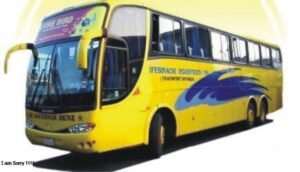
As the industry expanded, more Igbo-owned companies entered the space and built strong national presence. Chisco Transport, founded by Chief Dr. Chidi Anyaegbu in 1981, started as a small auto parts business before evolving into a major logistics and transport company serving Nigeria and West Africa. The company now operates across multiple countries with structured terminals and a large fleet. Anyaegbu once described the vision behind the business by saying, “Our goal was to bridge the gap in transportation and logistics with reliable service delivery.” Today, Chisco is widely regarded as one of the most organised transport operators in the region.
Peace Mass Transit also emerged as a major player, starting in the mid-1990s with just a few buses before expanding into a nationwide network. It now operates thousands of vehicles and moves tens of thousands of passengers daily. Many travellers describe it as affordable and reliable, with one passenger saying, “They are always available when others are not.” That consistency has made it one of the most widely used transport services in Nigeria.
ABC Transport, founded in 1993, represents another stage in the evolution of the industry. It introduced a more corporate and structured approach to road travel, offering luxury intercity services with terminals across Nigeria and beyond. Frequent users often describe it as one of the smoothest travel experiences on the road, with a passenger noting, “It feels like organised aviation on the road.” This reflects how the sector has moved from informal roadside loading to structured ticketing systems and corporate management.
In more recent years, GIG Mobility, originally known as God is Good Motors, introduced technology into the transport system. Founded in 1998, it later transformed into a digital mobility platform operating in Nigeria and Ghana. Customers can now book trips through mobile applications, making the process more efficient and modern. One user described it simply by saying, “With GIG, everything is digital now. You book like flight tickets.”
Across all these developments, a clear pattern emerges. Many of the most successful transport companies in Nigeria are either founded or heavily influenced by Igbo entrepreneurs. This is not accidental but shaped by history, culture, and economic necessity. After the civil war, transport offered a fast route to recovery and rebuilding. It required less capital compared to industries like manufacturing, yet provided daily returns that could be reinvested into expansion.
Another reason is the reinvestment mindset common among Igbo businessmen. Transport allows gradual scaling, where one vehicle becomes two, then five, then a full fleet. Over time, this creates large structured businesses from small beginnings. A transport analyst once described it by saying, “The Igbo businessman understands scale. Transport gives him the fastest ladder to scale.”
Cultural factors also play a role. Igbo commerce has always been rooted in movement, trade, and market connectivity. Transport naturally fits into this system because it connects people, goods, and markets across regions. A trader in Onitsha once explained it simply by saying, “If you don’t move people and goods, you cannot understand how money moves in Nigeria.”
Resilience is another key reason. Transport remains active regardless of economic conditions because people must always travel. Whether the economy is strong or weak, buses continue to move. An industry observer once noted, “In recession or boom, people still travel. That is why transport never dies.”
From pioneers like J.C. Ulasi and Augustine Ilodibe to modern giants like GUO Transport, Chisco, Peace Mass Transit, ABC Transport, and GIG Mobility, the industry reflects decades of continuous growth, adaptation, and reinvention.
Today, many wealthy Igbo businessmen still see transport not just as a business but as a foundation. It generates steady income while also serving as a base for expansion into logistics, real estate, importation, and other sectors. One transport owner once summarised it by saying, “Transport is not just business for us. It is the engine that drives everything else.”
That is why, across generations, transport continues to attract Igbo entrepreneurs, not as a fallback, but as a deliberate and strategic pathway to wealth, stability, and long-term expansion.
By Benprince Ezeh
08068599879
