

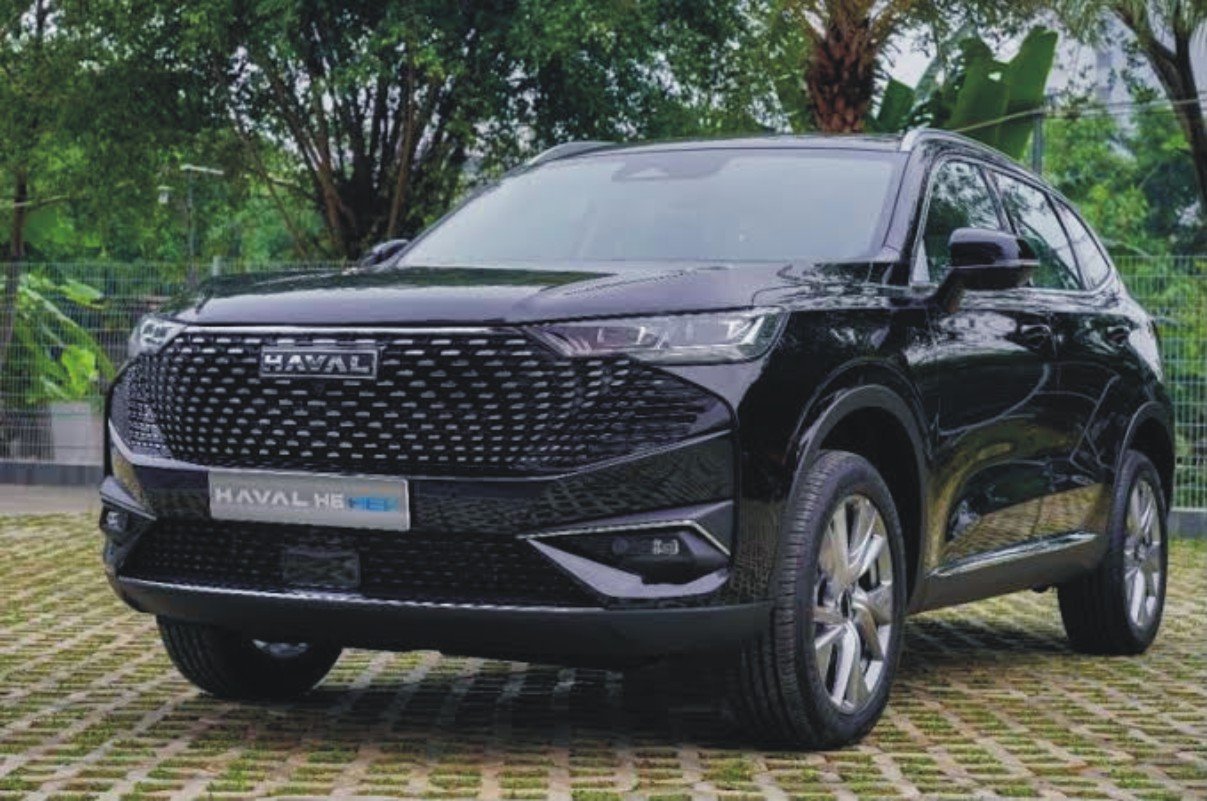
For decades, Toyota has enjoyed a dominant position in Nigeria’s automobile market. From the Corolla and Camry to the Highlander, Prado, Land Cruiser and Hilux, the Japanese brand has become almost synonymous with reliability and durability in the minds of Nigerian motorists. But a new generation of Chinese automobile manufacturers is steadily changing the market, and one of the brands attracting growing attention is Great Wall Motor, popularly known as GWM.
GWM is not a new automobile manufacturer. The Chinese company has built its reputation over several decades, developing from a relatively small vehicle operation into one of China’s major automobile groups. Its portfolio now covers sport utility vehicles, pickup trucks, off-road vehicles, luxury SUVs, electric vehicles and hybrid models.
The company traces its origins to Baoding in Hebei Province, China. Its roots go back to the 1970s, while Great Wall Motor developed into an automobile manufacturer in the 1980s. Wei Jianjun became the central figure in its development and transformed the company from a small operation into an international automobile group.
Over the years, GWM created several brands to serve different segments of the market. Haval became its major SUV brand, Tank was developed around rugged and premium off-road vehicles, Poer became one of its important pickup brands, while Ora was developed around electric vehicles and Wey around premium automobiles.
The company also expanded beyond China. GWM says it now has a presence across more than 170 countries and regions, with millions of vehicles sold outside its home market. That international expansion has become one of the reasons the company believes it can challenge established automobile manufacturers in markets such as Nigeria.
GWM actually has a history in Nigeria. The brand previously entered the Nigerian market through CFAO CICA Nigeria Limited, with vehicles such as the Wingle pickup, Haval H3 SUV, Florid hatchback and Voleex C30 sedan introduced to Nigerian customers.
Its current return, however, is being driven with a much broader product range and a more ambitious strategy.
One of the companies helping to drive this renewed push is Afia Group, whose Chairman and Chief Executive Officer is Engr. Abduljelyl Adekunle Karheem, also known as Mogaji Adanla.
Karheem is an engineer and businessman whose professional background includes extensive experience in the United Kingdom’s housing and construction sector. He later returned to Nigeria and established Afia Group, which has interests including construction, real estate and other businesses. His company is based in Ibadan and has developed several property projects in the city.
Karheem recently spoke about the group’s growing business interests at the Business Times CEO Excellence Awards held at the Lagos Oriental Hotel, Victoria Island, Lagos, on Friday, October 2, 2026. The occasion coincided with his 54th birthday, and he was honoured as the Real Estate Development & Building Engineering CEO of the Year 2026.
While speaking at the ceremony, Karheem explained that Afia Group had diversified into the automobile business through its partnership with Great Wall Motors. He subsequently handed the automotive part of his presentation to Mr. Alex Wang, Chairman of Sino Trust Group.
Wang spoke about GWM’s products, its international growth, customer-oriented approach, warranty and after-sales arrangements, as well as flexible purchase options for customers. He also discussed plans to expand GWM’s presence in Ibadan, reinforcing the importance of the Afia-GWM partnership to the company’s Nigerian expansion.
For Afia Group, the automobile business represents a significant move beyond its established construction and real estate operations. For GWM, the partnership provides an opportunity to establish stronger roots in one of Nigeria’s most important commercial centres.
Ibadan is particularly important because of its size, location and connection to other parts of the South-West. A strong presence in the city gives GWM an opportunity to reach customers in Oyo State and neighbouring states while complementing its activities in other parts of Nigeria.
This is important because selling cars in Nigeria is not simply about bringing vehicles into the country. Buyers want to know where they can service their cars, where they can obtain spare parts, who will repair them when they develop faults and whether the manufacturer will still be around several years after the purchase.
Toyota has enjoyed a huge advantage in this area. Its vehicles are familiar to Nigerian mechanics, spare parts are readily available and millions of Nigerians already understand how the vehicles perform.
GWM is now trying to build the same confidence.
Its current portfolio gives it a significant advantage because it is not relying on just one type of vehicle. Haval models such as the Jolion and H6 are targeted at families, professionals and everyday SUV users. The Dargo appeals to motorists who want a tougher and more adventurous SUV.
The Tank range is positioned higher and is particularly designed for customers who want powerful and rugged off-road vehicles without giving up modern comfort and technology. Models such as the Tank 300 and Tank 500 are aimed at a market where Toyota’s Prado and Land Cruiser have traditionally been very strong.
The Poer pickup, meanwhile, is designed for another category of Nigerian users. Farmers, contractors, construction companies, businessmen, logistics operators and people who need to carry goods can use the pickup for both work and personal transportation.
GWM’s older Wingle pickup range also continues to appeal to buyers looking for a practical work vehicle.
The wider GWM group also produces Ora electric cars and Wey premium vehicles, showing just how broad the company has become.
The strength of the brand is therefore not only in the appearance of its cars but also in the variety of uses they serve.
The Haval SUVs can be used for everyday city driving, family transportation, business trips, school runs and long-distance journeys. The Tank models are suited to motorists who travel on difficult roads, go on adventures, operate in rural areas or simply want a large and powerful SUV. The Poer and Wingle pickups can be used for agriculture, construction, logistics, transportation and other businesses requiring a vehicle capable of carrying loads.
Another reason GWM is attracting attention is the amount of technology and equipment it puts into its vehicles.
Depending on the model, customers can get turbocharged engines, automatic transmissions, multiple driving modes, advanced infotainment systems, modern safety technology, driver-assistance features, high ground clearance and four-wheel-drive capability.
This is where GWM believes it can compete strongly with established brands.
In China, the competition is already intense. Toyota has a major presence in the Chinese market through its joint ventures, but GWM has built its own strong domestic manufacturing and consumer base.
GWM’s challenge is not to prove that Toyota is a bad car. Instead, it is trying to convince consumers that there is now another option offering strong engineering, modern technology, attractive design and competitive prices.
That same strategy is now being brought to Nigeria.
The company is particularly attractive to customers who want a new vehicle but are finding the prices of established brands increasingly difficult to afford.
Some GWM vehicles in the Nigerian market can be found around the ¦ 30 million mark, depending on the particular model, specification, year, condition and whether the vehicle is brand-new or foreign-used. This has created another important advantage for the brand.
A Nigerian buyer who might previously have had to choose between an expensive brand-new Japanese SUV and a used Japanese vehicle can now consider a newer Chinese vehicle with modern features and competitive pricing.
For many buyers, however, the attraction is not just the price.
One GWM owner said, “What attracted me first was the price, but after driving the car, I became more interested in the features. It does not feel like a cheap car.”
Another owner said, “The interior surprised me. The technology, screen, comfort and way the vehicle drives are much better than I expected from a Chinese car.”
A businessman who uses a GWM pickup for work said, “For my business, I need something strong. I don’t want a vehicle that looks good only in the city. I need something that can carry things, enter bad roads and still come back.”
Another customer said, “People still ask me why I bought a Chinese car, but after they enter it and see the features, the questions change.”
Among automobile enthusiasts, there is also growing acceptance of Chinese vehicles.
One Nigerian motorist said, “The competition is good for Nigerians. If Toyota sells a car for a particular price and another company gives you more features for less money, Toyota also has to think about what it is offering.”
Another person who follows the automobile market said, “The biggest issue is not whether the Chinese cars are good. The question is whether the companies will remain in Nigeria long enough to support the customers.”
That is perhaps the biggest test facing GWM.
Nigerians have seen several automobile brands enter the market with impressive vehicles, attract attention for a few years and later struggle to maintain their presence. For a Chinese brand seeking to compete with Toyota, longevity, spare parts and after-sales service will be just as important as the quality of the vehicle.
This is why GWM’s emphasis on warranty and after-sales support is important.
At the October 2 event in Lagos, Alex Wang highlighted the company’s commitment to customer service and warranty arrangements while discussing the partnership with Afia Group. He also spoke about flexible purchasing arrangements and plans to expand the company’s presence in Ibadan.
A Nigerian car dealer said, “Toyota has the name, but the Chinese brands are coming with the features. If GWM continues to provide spare parts, warranty and good after-sales service, people will continue to try it.”
Another dealer said, “Customers are now asking questions about GWM. Before, they would only ask for Toyota, Lexus or Mercedes. Now they want to know about Haval, Tank and Poer.”
The company is also benefiting from a broader change in the Nigerian automobile market. Younger motorists are increasingly interested in technology, large screens, connectivity, modern interiors, safety features and distinctive designs. They are not necessarily willing to buy a vehicle simply because it has been on Nigerian roads for decades.
This creates an opening for GWM.
The company has also demonstrated internationally that it is not a small manufacturer trying to survive from one market to another. It has invested heavily in research and development and operates manufacturing and research facilities in several countries.
Its global strategy increasingly focuses on new-energy vehicles, hybrid technology, electric vehicles and advanced automobile systems. This gives it the opportunity to compete not only with traditional Japanese and European manufacturers but also with other rapidly growing Chinese automobile companies.
GWM’s global growth also gives Nigerian customers some confidence that the company has the resources to sustain its operations.
But the battle against Toyota in Nigeria will not be easy.
Toyota has decades of brand loyalty behind it. A Nigerian who has owned three Toyota vehicles may naturally want to buy a fourth Toyota because of his previous experience. Many families also pass the preference from one generation to another.
GWM therefore has to create its own generation of loyal customers.
If customers who buy Haval, Tank or Poer vehicles continue to have good experiences, recommend the cars to friends and relatives, find spare parts easily and obtain reliable servicing, the brand could gradually develop the same kind of loyalty enjoyed by Toyota.
One motorist summed up the changing market by saying, “The Chinese brands are no longer what many Nigerians thought they were years ago. The technology has improved, the designs are attractive and the prices are competitive. What they need now is to prove that they can stay.”
That may ultimately determine how far GWM goes in Nigeria.
The company has the products. It has SUVs, pickups, off-road vehicles, luxury models, hybrids and electric cars. It has international experience and a growing Nigerian partnership network. It also has the advantage of competitive pricing, with some vehicles available around the ¦ 30 million range depending on the model and market.
What remains is to turn curiosity into long-term trust.
GWM’s Nigerian expansion is therefore more than another Chinese car brand entering a crowded automobile market. It represents part of a much bigger shift in the industry, where Chinese manufacturers are increasingly challenging Japanese, European and American brands through competitive pricing, technology, design and aggressive expansion.
For Toyota, the emergence of GWM and other Chinese manufacturers means the Nigerian market will no longer be as easy to dominate through familiarity alone.
For Nigerian consumers, however, the competition could be good news.
As one automobile enthusiast put it, “At the end of the day, competition benefits the customer. If GWM can give Nigerians strong cars, good technology, reasonable prices and dependable after-sales service, people will buy them.”
And that is exactly the opportunity Great Wall Motor is now pursuing in Nigeria, one vehicle, one customer and one city at a time.
By Benprince Ezeh
08068599879
