

-
Where Hausa Movies Are Shot!
For decades, Kano has been the beating heart of Hausa-language filmmaking. From the early home-video era to the modern Kannywood industry, the ancient city has produced some of Northern Nigeria’s biggest actors, filmmakers, producers and stories.
But while the industry continued to grow, one major challenge remained: where do they actually make these films?
For years, Kannywood productions have been shot in ordinary houses, streets, rented locations, hotels and other spaces that filmmakers had to adapt for the demands of a movie. Producers often had to move from one location to another, spending more money and time in the process.
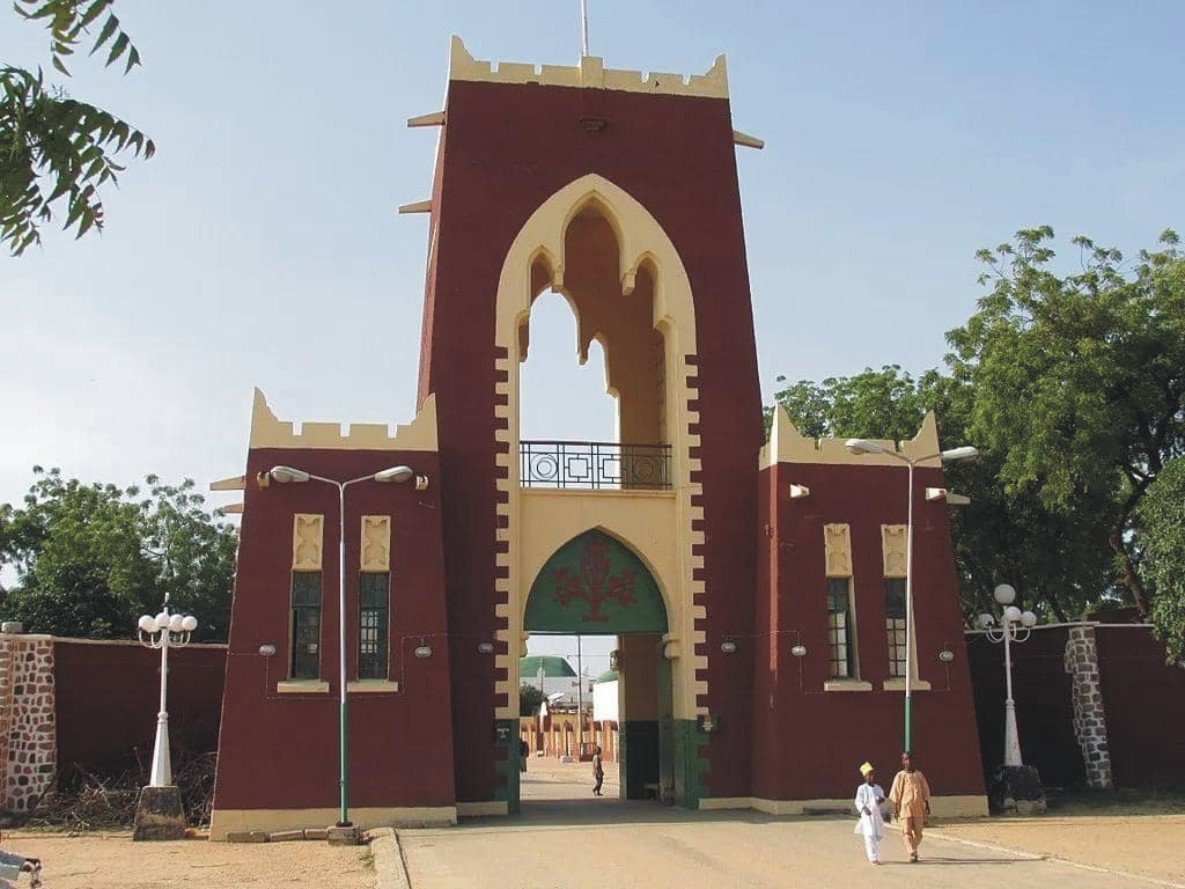
Today, there is a different story emerging in Kano. It is the story of the Kano Film Village, a dedicated production facility developed by veteran broadcaster and filmmaker Abdullaziz Dansmall.
Unlike the ambitious Federal Government film village proposed for Kano in 2016, which was planned as a massive 20-hectare project with studios, a cinema, hotel, training facilities, hostels, shopping facilities and other infrastructure but was eventually shelved, the present Kano Film Village is a privately developed project that has been growing gradually from actual film production. And that is what makes its story particularly interesting.
THE MAN BEHIND THE VILLAGE
At the centre of the Kano Film Village story is Abdullaziz Dansmall, a broadcaster and filmmaker who decided that Kannywood needed more than just talented actors and good stories. It needed a place where those stories could be made. Dansmall did not build the facility overnight. According to him, the project started from the proceeds of filmmaking itself. His first major production was Gidang Haya. Rather than simply spend the money earned from the project, he reinvested part of the revenue into developing the facility. Little by little, the site expanded. Dansmall has explained that the long-term ambition is to transform the location into a fully developed film village capable of handling larger productions. It is an interesting example of a filmmaker attempting to solve one of the problems confronting his own industry. Instead of waiting for a government-backed mega project to arrive, he began building a production environment from the proceeds of the business itself.
WHY A FILM VILLAGE MATTERS
For people outside the Hausa film industry, a film village may sound like nothing more than a large location where actors go to shoot movies. It is much more than that. A film production involves dozens of people working behind the scenes. There are directors, cinematographers, sound engineers, editors, makeup artists, costume designers, production assistants, lighting technicians, set designers, location managers and numerous other workers. When production facilities are unavailable, filmmakers have to improvise. They rent houses. They negotiate access to hotels. They shut down portions of streets. They move equipment from one location to another. They search for appropriate backgrounds and settings for every scene. A dedicated production environment can make that process easier. This is one of the reasons the Kano Film Village has attracted attention beyond Kannywood.
THE EU VISIT
In June 2026, a Team Europe delegation visited Kano as part of discussions around the creative industry, jobs, skills development and social change. One of the places they visited was the Kano Film Village. During the tour, Dansmall explained how the facility had grown from the proceeds of Gidang Haya and how he had continued expanding it over time. The visit placed the facility in a much bigger conversation about the economic potential of Nigeria’s creative industries.
KANNYWOOD IS BIGGER THAN MOVIES
According to star actor, Ali Nuhu, Managing Director of the Nigerian Film Corporation, research indicates that film production is the second-largest source of youth employment in Kano State after agriculture. That means the industry provides opportunities far beyond the people whose faces appear on movie posters. Every production requires people working behind the camera and businesses supplying services to the production. From transportation to catering, costumes, makeup, equipment rental, locations, editing and digital distribution, a movie can support an entire chain of economic activity. The Kano State Films and Video Censorship Board has also said it has approved more than 10,000 films over the years and continues to support practitioners through training programmes, workshops and stakeholder engagement. So when a facility such as the Kano Film Village grows, the conversation is not only about where actors shoot their next movie. It is also about infrastructure for an industry that employs and supports thousands of people.
FROM VHS TO DIGITAL
Kannywood itself has travelled a long way. The Hausa-language home-video movement gained major momentum in the 1990s. One of the films frequently identified as an important early commercial Hausa home movie is Ibrahim Mandawari’s Turmin Danya, released in 1990. The success of such productions helped establish the home-video culture that eventually became a major part of Kannywood. For years, VHS and later VCD and DVD sales were central to the business. But the market has changed. Digital platforms have transformed how films are distributed and consumed, while the traditional DVD business has declined. Ali Nuhu also identified distribution and access to production facilities among the challenges still facing the industry. Kannywood filmmakers have increasingly turned towards digital platforms and online distribution channels as the old distribution model weakened.
THE FILM VILLAGE THAT NEVER HAPPENED
There is another fascinating chapter to the Kano Film Village story. In 2016, the Federal Government announced plans for a massive film village in Kano. The proposed project was reportedly backed by a budget of N3 billion and was expected to sit on about 20 hectares of land. Plans included a cinematography centre, sound stage, 400-capacity auditorium, hostels, hotel accommodation, shopping facilities, eateries, a clinic and other infrastructure. It was supposed to become a major filmmaking and training centre for Kannywood and the wider Nigerian film industry. But the project never became the film village that had been promised. The proposal generated controversy at the time, including opposition from some Islamic clerics who argued that such a project could promote values they considered inappropriate. The project was subsequently shelved.
BUILDING FROM THE GROUND UP
The current Kano Film Village may not yet be the gigantic, all-in-one entertainment city imagined in the original government proposal. But its significance lies in how it came into existence. It has been developed gradually, with money generated from filmmaking being put back into filmmaking infrastructure. That makes the project a reflection of the industry’s own journey. Kannywood has spent decades creating stars, producing thousands of movies and developing an audience across Northern Nigeria and beyond. Now, the industry is also beginning to build some of the physical infrastructure required to support its next stage. Dansmall’s ambition is for the facility to continue expanding until it can support larger productions. That means the Kano Film Village may still be a work in progress. But so is Kannywood itself.
THE PEOPLE BEHIND THE CAMERA
One of the easiest things to forget when watching a Hausa movie is how many people it takes to create what eventually appears on screen. The actor gets the applause. The director gets the credit. The producer gets the headlines. But filmmaking is a team sport. There are people handling cameras, lights, sound, costumes, makeup, continuity, props, transportation and post-production. There are also the people who provide food, accommodation, logistics and other services. A permanent production environment potentially brings many of these activities closer together.
A NEW CHAPTER FOR KANNYWOOD?
Kannywood has survived several major changes. It moved from early television drama and theatrical traditions into home video. It embraced VHS. Then VCD and DVD became the dominant distribution channels. Now streaming, social media and digital platforms are changing the way Hausa films reach audiences. The next stage may be about infrastructure. The Kano Film Village represents one attempt to answer that need. It is not simply about constructing buildings where actors can stand in front of cameras. It is about creating an environment where filmmakers can produce more efficiently, reduce some of the logistical challenges of production and eventually take on larger projects. For an industry that has often had to improvise its way forward, having a dedicated production environment is a significant development. And perhaps the most remarkable part of the story is how different the journey has been from the original government dream till this day.
By Emmanuel Daniji
