

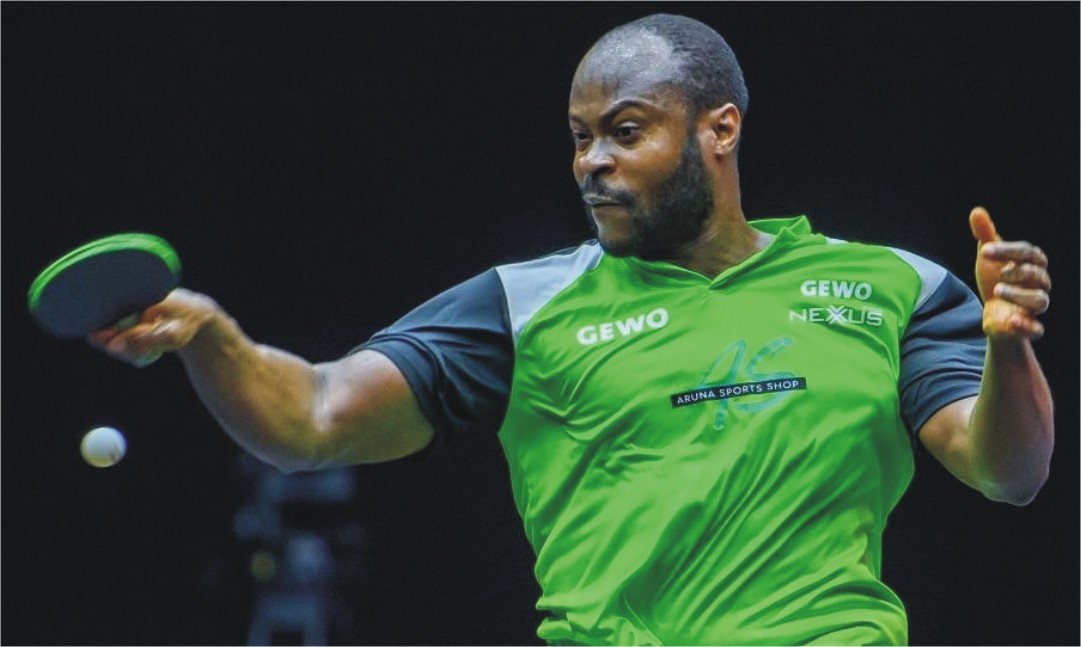
The story of Nigeria’s greatest table tennis export did not start at the Sports Hall of the National Stadium in Surulere or the famous Rowe Park in Yaba, Lagos where he ruled tirelessly before luck smiled on him.It started on a cement table in Oyo Town, with a cracked bat and a dream bigger than the town itself.
Today, that boy is Haruna Quadri, former World No. 10, former Africa No 1 and Nigeria’s richest ever table tennis player with an estimated net worth of about $5 million. Born on August 9, 1988 in Oyo, Oyo State, Quadri was not born rich. He learned to play in the streets, where tables were made of concrete and nets were pieces of wood.
Coaches remember him for one thing,his forehand. A ferocious, looping forehand that sounded like a whip. They nicknamed him Rocky and Quadri Balboa after Rocky Balboa in the blockbuster 1976 American Sports Drama movie by Sylvester Stallone, because ‘he never went down’.
Quadri dominated local tournaments but had no sponsor. In Nigeria, table tennis was and still is a poor man’s sport compared to football. To be the best, Aruna had to leave.
In 2010, with help from Barrister Wahid Enitan Oshodi, President of Africa Table Tennis Federation, who paid for his first international tickets, he left Nigeria for Lisbon, Portugal to join the Portuguese Super League. He arrived alone. No coach. No manager.For years, he grinded in Portugal playing club matches every weekend, sleeping in small apartments and sending money home. Then came 2014. At the ITTF World Cup, he became the first African ever to reach the quarter-finals.The ITTF named him Star Player of the Year. The world finally noticed.
The peak came at Rio Olympics in 2016. Ranked outside the top 20, he shocked the world. He beat Slovakia’s Wang Yang, then World No. 7, Chuang Chih-Yuan of Chinese Taipei, then European legend ,Timo Boll, a man who had won four World Tour titles. Quadri marched into the quarter-finals, losing only to eventual gold medalist, Ma Long of China. He was the only African in the last eight in any racket sport at that year’s Olympics. That run changed his bank account forever.
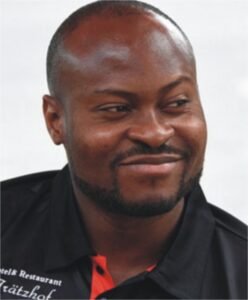
Table tennis does not pay like football, but at the top, it pays well if you are smart. European clubs pay premium for an African superstar. In Portugal for 10 years, then in Russia’s Gazprom Fakel Orenburg ,one of the richest clubs in the world ,his salary hit 6 figures including bonuses. In 2023, he signed a lucrative short-term deal in Saudi Arabia. Quadri has played over 300 international events and still counting.
Quadri knows that without investing his wealth,the future looks uncertain. He has been around for such a long time and had witnessed ex players suffer long after dropping their bats. And he is not just Nigeria’s richest table tennis player,he is also quietly building one of the most solid property portfolios among Nigerian sportsmen outside football. This is because he is simply thinking like a Landlord.
Close associates say Aruna’s property strategy started about 15 years ago when he moved to Portugal to play professional table tennis after conquering the national and regional competitions and won all there is to win.”I arrived in Portugal to play professionally,” he once reflected. That move exposed him to how European clubs play and how European Athletes preserve wealth, not in cars but in houses and solid Property for the rainy days.
Sources told City people that in his hometown, Oyo and elsewhere in Ibadan, Aruna has invested heavily in land and a private family estate. Unlike many athletes who rent in Europe, he owns his own house and has built bungalows and mini-flats for rental income in his native Oyo town.
Aruna, like many diaspora returnees, has keyed into the Lagos property business.Insiders say he owns numerous serviced mini-estate units in the Mowe-Ofada axis and in Ajah/Ibeju-Lekki corridor, where detached houses now sell for between N150m to over N400m. He leases them to young professionals and corporate tenants, turning prize money into yearly alerts.
After over a decade in Portugal’s Super League, Aruna has acquired property in Lisbon , a smart move for residency and for rental income in Euros. While playing for clubs like Gazprom Fakel Orenburg in Russia and Saudi Arabian clubs, he kept his European base as an investment property and not just a home.
Aruna himself exposed why athletes like him must think beyond the table. In a candid interview in 2025, he complained about the brutal economics of professional table tennis.”With zero support, I played 99% of tournaments alone, without a coach. I had to fund most of my travels myself,” he said, noting how $8,000 prize money shrinks to $3,000 after 20% tax, €1,600 flights and hotels.
For Aruna, property is security. Unlike footballers with weekly wages, table tennis players have no pension. One injury can end it. Real estate ,as a yield-generating investment vehicle offers fractional income, rental yield and appreciation, especially in a market so unpredictable such as in Nigeria. Aruna fits perfectly as an athlete who thinks about life after the table.
His wife, Ganiyat Olatunde Aruna, also a table tennis player and coach, manages the home front and the properties when he is on tour in Europe or Asia. Together they are building a family investment. At 37, Haruna has dropped to Africa’s No. 4 while his perennial rival, Omar Assar of Egypt remains in No 1. He is World No. 98 as of September 2026.Aruna is planning retirement on his own terms. This is how Nigeria’s richest table tennis star is winning off the table.
Wole Alakija
08055001823
